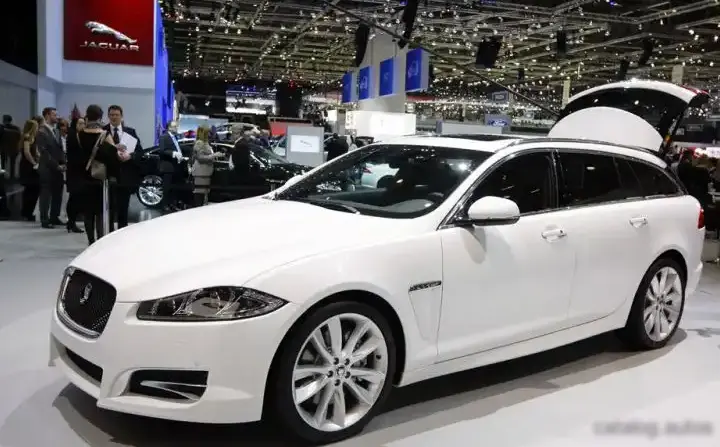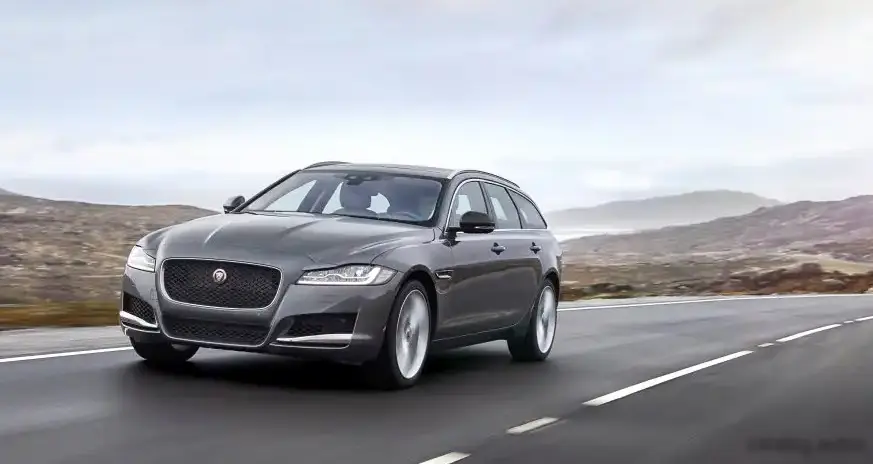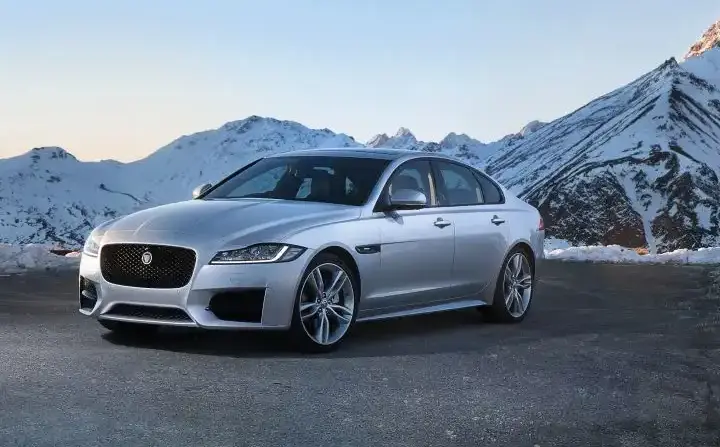
The Jaguar XF (X260) 2.0, producing 250 horsepower, represents a significant step in the evolution of Jaguar’s mid-size executive sedan. Introduced for the 2017 and 2018 model years, this variant utilized Jaguar Land Rover’s Ingenium engine family, marking a shift towards more efficient and technologically advanced powertrains. Positioned as a mainstream offering within the X260 range, it aimed to balance performance, fuel economy, and luxury, appealing to a broader customer base than the higher-performance or diesel-powered models. The X260 generation itself was a substantial redesign of the original XF, moving to an aluminum-intensive construction for reduced weight and improved rigidity.
Technical Specifications
| Brand | Jaguar |
| Model | XF |
| Generation | XF (X260) |
| Type (Engine) | 2.0 (250 Hp) Automatic |
| Start of production | 2017 |
| End of production | 2018 |
| Powertrain Architecture | Internal Combustion engine |
| Body type | Sedan |
| Seats | 5 |
| Doors | 4 |
| Fuel consumption (combined) | 6.8 l/100 km (34.6 US mpg, 41.5 UK mpg, 14.7 km/l) |
| CO2 emissions | 154 g/km |
| Fuel Type | Petrol (Gasoline) |
| Acceleration 0 – 100 km/h | 6.6 sec |
| Acceleration 0 – 62 mph | 6.6 sec |
| Acceleration 0 – 60 mph | 6.3 sec |
| Maximum speed | 244 km/h (151.61 mph) |
| Emission standard | Euro 6 |
| Weight-to-power ratio | 6.5 kg/Hp, 152.9 Hp/tonne |
| Weight-to-torque ratio | 4.5 kg/Nm, 223.2 Nm/tonne |
| Power | 250 Hp @ 5500 rpm |
| Power per litre | 125.2 Hp/l |
| Torque | 365 Nm @ 1200-4500 rpm (269.21 lb.-ft. @ 1200-4500 rpm) |
| Engine layout | Front, Longitudinal |
| Engine Model/Code | Ingenium / PT204 |
| Engine displacement | 1997 cm3 (121.86 cu. in.) |
| Number of cylinders | 4 |
| Engine configuration | Inline |
| Cylinder Bore | 83 mm (3.27 in.) |
| Piston Stroke | 92.4 mm (3.64 in.) |
| Compression ratio | 10.5:1 |
| Number of valves per cylinder | 4 |
| Fuel injection system | Direct injection |
| Engine aspiration | Twin-Turbo, Intercooler |
| Valvetrain | DOHC |
| Engine oil capacity | 7 l (7.4 US qt | 6.16 UK qt) |
| Kerb Weight | 1635 kg (3604.56 lbs.) |
| Trunk (boot) space – minimum | 540 l (19.07 cu. ft.) |
| Fuel tank capacity | 74 l (19.55 US gal | 16.28 UK gal) |
| Length | 4954 mm (195.04 in.) |
| Width with mirrors folded | 1880 mm (74.02 in.) |
| Width including mirrors | 2091 mm (82.32 in.) |
| Height | 1457 mm (57.36 in.) |
| Wheelbase | 2960 mm (116.54 in.) |
| Front track | 1605 mm (63.19 in.) |
| Rear (Back) track | 1594 mm (62.76 in.) |
| Drivetrain Architecture | Rear wheel drive |
| Number of gears and type of gearbox | 8 gears, automatic transmission |
| Front suspension | Double wishbone |
| Rear suspension | Independent coil spring |
| Front brakes | Ventilated discs |
| Rear brakes | Ventilated discs |
| Steering type | Steering rack and pinion |
| Power steering | Electric Steering |
Powertrain & Engine Architecture
The heart of the XF 2.0 is Jaguar Land Rover’s Ingenium PT204 engine. This 2.0-liter inline-four cylinder engine utilizes direct injection and a twin-turbocharger setup. The use of two turbochargers, a conventional exhaust-driven turbo and an electrically driven supercharger, provides near-instantaneous boost response, minimizing turbo lag and delivering a more linear power delivery. The engine features a DOHC (Double Overhead Camshaft) valvetrain and a compression ratio of 10.5:1. The Ingenium engine was designed for modularity and scalability, allowing for various power outputs and configurations. Paired with the engine is an 8-speed automatic transmission, sourced from ZF. This transmission is known for its smooth shifting and efficiency, contributing to the overall refinement of the driving experience. The transmission’s gear ratios are tuned to balance acceleration and fuel economy, with a focus on maximizing torque availability in everyday driving situations.
Driving Characteristics
The 250 horsepower and 365 Nm (269 lb-ft) of torque provided by the 2.0-liter Ingenium engine deliver respectable performance. Acceleration from 0-60 mph takes approximately 6.3 seconds, making it a competitive performer in its class. However, it’s noticeably less potent than the XF’s supercharged V6 or diesel variants. The automatic transmission contributes to a relaxed driving experience, particularly in city traffic. The close gear ratios allow the engine to stay within its optimal torque band, providing ample power for overtaking maneuvers. Compared to the manual transmission options available on other XF models, the automatic prioritizes comfort and ease of use over outright driver engagement. While the manual offered a more connected feel, the automatic’s smoothness and convenience appealed to a wider range of buyers.
Equipment & Trim Levels
The XF 2.0 typically came well-equipped, reflecting Jaguar’s commitment to luxury. Standard features generally included leather upholstery, a touchscreen infotainment system with navigation, automatic climate control, and a suite of safety features such as emergency braking and lane departure warning. Higher trim levels offered upgrades such as premium leather, heated and ventilated seats, a panoramic sunroof, and a more advanced audio system. Optional extras included adaptive cruise control, a head-up display, and various cosmetic enhancements. The interior design emphasized a minimalist aesthetic with high-quality materials and a focus on driver ergonomics.
Chassis & Braking
The XF X260 benefited from a lightweight aluminum chassis, contributing to its agile handling. The suspension system featured double wishbones at the front and an independent coil spring setup at the rear. The suspension was tuned to provide a balance between comfort and handling, offering a composed ride quality without sacrificing responsiveness. Braking duties were handled by ventilated discs on all four wheels, providing ample stopping power. Anti-lock braking system (ABS) was standard, enhancing safety and control during emergency braking situations. The XF 2.0’s weight distribution was well-balanced, contributing to its neutral handling characteristics.
Market Reception & Comparison
The Jaguar XF 2.0 Automatic was generally well-received by automotive critics. It was praised for its refined driving experience, comfortable interior, and attractive styling. However, some reviewers noted that the 2.0-liter engine, while capable, lacked the outright performance of the higher-powered options. Fuel economy was a strong point, with the XF 2.0 achieving around 34.6 US mpg in combined driving. Compared to its rivals, such as the BMW 5 Series and Mercedes-Benz E-Class, the XF 2.0 offered a compelling combination of luxury, performance, and value. The Ingenium engine proved to be relatively reliable, although some early examples experienced minor software glitches that were addressed through updates.
Legacy
The Jaguar XF (X260) 2.0 Automatic represents a pivotal moment in Jaguar’s history, showcasing the brand’s commitment to efficiency and technological innovation. The Ingenium engine family has become a cornerstone of Jaguar Land Rover’s powertrain strategy, powering a wide range of vehicles. In the used car market, the XF 2.0 remains a popular choice for buyers seeking a luxurious and refined sedan at a reasonable price. The powertrain, while not without its minor quirks, has proven to be generally durable and reliable, making it a sensible option for long-term ownership. The X260 generation, and specifically the 2.0 variant, helped to broaden the XF’s appeal and establish it as a serious contender in the executive sedan segment.