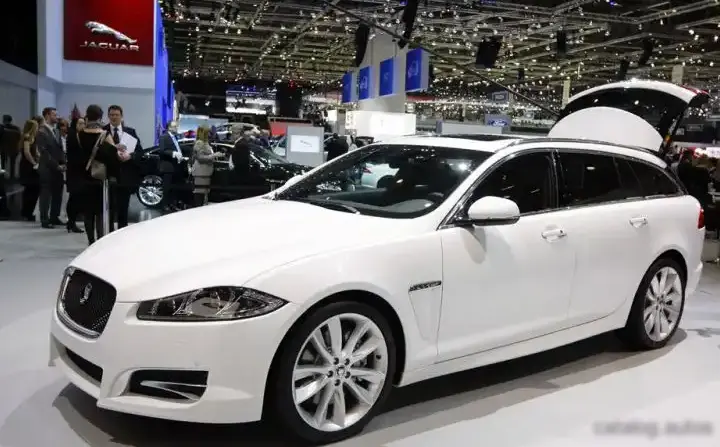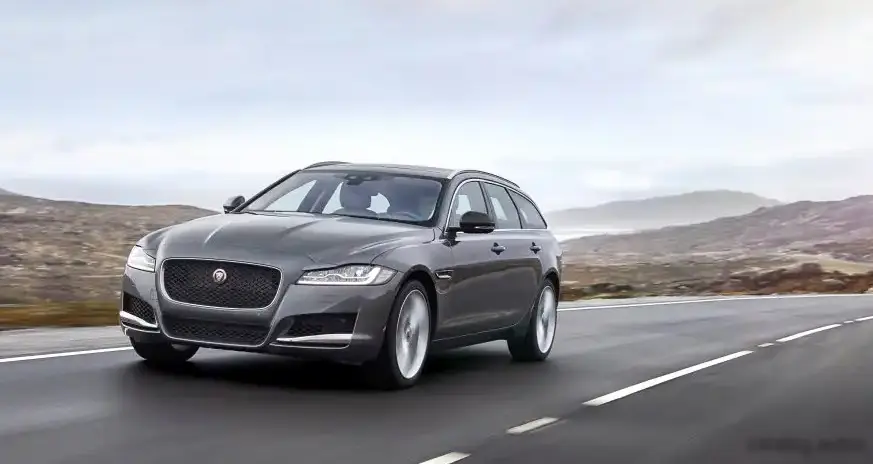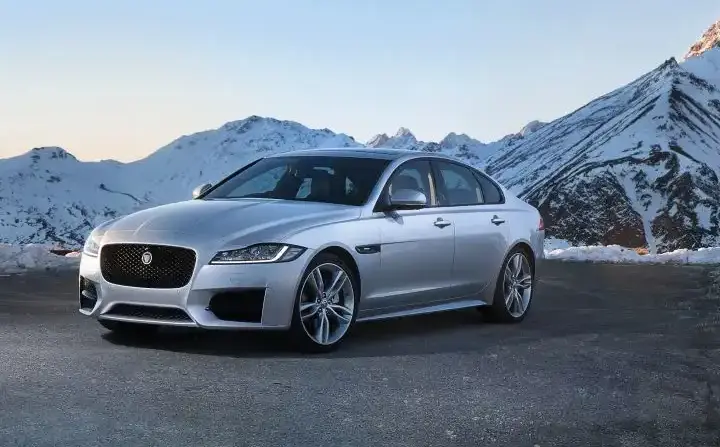
The Jaguar XF (X260) 2.0d, producing 180 horsepower, was a key variant in the second generation of Jaguar’s mid-size executive car, produced from 2015 to 2018. Positioned as an entry-level offering within the X260 range, it aimed to broaden the XF’s appeal by providing a more fuel-efficient and accessible option alongside the more powerful petrol and higher-output diesel engines. This model represented Jaguar’s move towards utilizing its own in-house developed Ingenium engine family, marking a significant step in the brand’s powertrain strategy. The X260 generation itself was a substantial departure from its predecessor, featuring an aluminum-intensive construction for reduced weight and improved dynamics.
Technical Specifications
| Brand | Jaguar |
| Model | XF |
| Generation | XF (X260) |
| Type (Engine) | 2.0d (180 Hp) |
| Start of production | 2015 |
| End of production | 2018 |
| Powertrain Architecture | Internal Combustion engine |
| Body type | Sedan |
| Seats | 5 |
| Doors | 4 |
| Fuel consumption (urban) | 5.1 l/100 km (46.1 US mpg) |
| Fuel consumption (extra urban) | 3.9 l/100 km (60.3 US mpg) |
| Fuel consumption (combined) | 4.3 l/100 km (54.7 US mpg) |
| CO2 emissions | 114 g/km |
| Fuel Type | Diesel |
| Acceleration 0 – 100 km/h | 8 sec |
| Acceleration 0 – 62 mph | 8 sec |
| Acceleration 0 – 60 mph | 7.6 sec |
| Maximum speed | 230 km/h (142.92 mph) |
| Emission standard | Euro 6 |
| Weight-to-power ratio | 8.8 kg/Hp |
| Weight-to-torque ratio | 3.7 kg/Nm |
| Power | 180 Hp @ 4000 rpm |
| Torque | 430 Nm @ 1750-2500 rpm (317.15 lb.-ft.) |
| Engine layout | Front, Longitudinal |
| Engine Model/Code | Ingenium / 204DTH |
| Engine displacement | 1999 cm3 (121.99 cu. in.) |
| Number of cylinders | 4 |
| Engine configuration | Inline |
| Cylinder Bore | 83 mm (3.27 in.) |
| Piston Stroke | 92.35 mm (3.64 in.) |
| Compression ratio | 15.5:1 |
| Number of valves per cylinder | 4 |
| Fuel injection system | Diesel Commonrail |
| Engine aspiration | Turbocharger, Intercooler |
| Engine oil capacity | 6.5 l (6.87 US qt | 5.72 UK qt) |
| Kerb Weight | 1585 kg (3494.33 lbs.) |
| Max. weight | 2250 kg (4960.4 lbs.) |
| Max load | 665 kg (1466.07 lbs.) |
| Trunk (boot) space – minimum | 505 l (17.83 cu. ft.) |
| Fuel tank capacity | 66 l (17.44 US gal | 14.52 UK gal) |
| Length | 4954 mm (195.04 in.) |
| Width | 1987 mm (78.23 in.) |
| Width including mirrors | 2091 mm (82.32 in.) |
| Height | 1457 mm (57.36 in.) |
| Wheelbase | 2960 mm (116.54 in.) |
| Front track | 1605 mm (63.19 in.) |
| Rear (Back) track | 1594 mm (62.76 in.) |
| Ride height (ground clearance) | 116 mm (4.57 in.) |
| Minimum turning circle | 11.61 m (38.09 ft.) |
| Drivetrain Architecture | Rear wheel drive |
| Number of gears | 6 |
| Type of gearbox | Manual transmission |
| Front brakes | Ventilated discs |
| Rear brakes | Ventilated discs |
Powertrain & Engine Architecture
The XF 2.0d utilized Jaguar’s Ingenium engine family, specifically the 204DTH code. This 2.0-liter inline-four diesel engine was a significant development for Jaguar Land Rover, designed for modularity and efficiency. The engine featured a cast aluminum block, direct injection, and a low-pressure exhaust gas recirculation (EGR) system to reduce NOx emissions. A single turbocharger with variable geometry technology provided a good balance of responsiveness and power. The fuel injection system was a common rail diesel injection (CRDI) system, operating at very high pressures to optimize combustion. The 6-speed manual transmission was chosen for this variant, offering a more engaging driving experience compared to the optional 8-speed automatic found in higher-spec models. The engine’s design prioritized refinement and reduced noise, vibration, and harshness (NVH) levels, a key characteristic expected of a Jaguar.
Driving Characteristics
The 180 horsepower and 430 Nm (317 lb-ft) of torque delivered by the 2.0d engine provided adequate performance for everyday driving. Acceleration from 0-60 mph took around 7.6 seconds, making it competitive within its class. However, it was noticeably slower than the more powerful XF variants, such as the 3.0-liter V6 models. The manual transmission, while offering more driver involvement, had relatively long throws. The gear ratios were tuned for fuel efficiency, meaning the engine didn’t feel particularly eager to rev. In real-world conditions, the 2.0d XF excelled in cruising on highways, offering a comfortable and refined ride. The rear-wheel-drive configuration contributed to balanced handling, although it wasn’t as sporty as some of its competitors.
Equipment & Trim Levels
The 2.0d typically served as the entry point to the XF range. Standard equipment included leather upholstery, dual-zone climate control, an 8-inch touchscreen infotainment system, and front and rear parking sensors. Optional extras included a panoramic sunroof, heated seats, upgraded sound systems, and advanced driver-assistance features like adaptive cruise control and lane departure warning. Trim levels varied by market, but generally, the 2.0d was offered in SE, Prestige, and Portfolio trims, with each successive trim adding more luxury features and technology. The interior design was characterized by Jaguar’s signature blend of wood veneer, aluminum trim, and high-quality materials.
Chassis & Braking
The XF X260 benefited from the aluminum-intensive construction of the body shell, resulting in a relatively lightweight chassis. The suspension consisted of double wishbones at the front and a multi-link setup at the rear, providing a comfortable yet controlled ride. The 2.0d models typically featured ventilated disc brakes on all four wheels, providing ample stopping power. Anti-lock Braking System (ABS) and Electronic Stability Control (ESC) were standard safety features. The rear suspension often utilized coil springs, and stabilizer bars were fitted front and rear to reduce body roll during cornering.
Market Reception & Comparison
The XF 2.0d was generally well-received by critics as a sensible and efficient addition to the XF lineup. It offered a compelling alternative to its German rivals, such as the BMW 5 Series and Audi A6, particularly for buyers prioritizing fuel economy and lower running costs. Compared to the higher-output diesel and petrol XF variants, the 2.0d offered significantly better fuel economy, achieving around 54.7 US mpg on the combined cycle. However, it lacked the outright performance and refinement of its more expensive siblings. Reliability proved to be generally good, although some owners reported minor issues with the infotainment system and diesel particulate filter (DPF).
Legacy
The Jaguar XF 2.0d (X260) represents an important step in Jaguar’s development of its Ingenium engine family. The powertrain, while not the most powerful in the XF range, proved to be reliable and fuel-efficient. On the used car market, these models offer a relatively affordable entry point into Jaguar ownership. The 2.0d XF remains a popular choice for buyers seeking a comfortable, refined, and economical executive car. Regular maintenance, particularly concerning the DPF system, is crucial for long-term reliability. The X260 generation, as a whole, is remembered for its stylish design, aluminum construction, and improved driving dynamics compared to its predecessor.