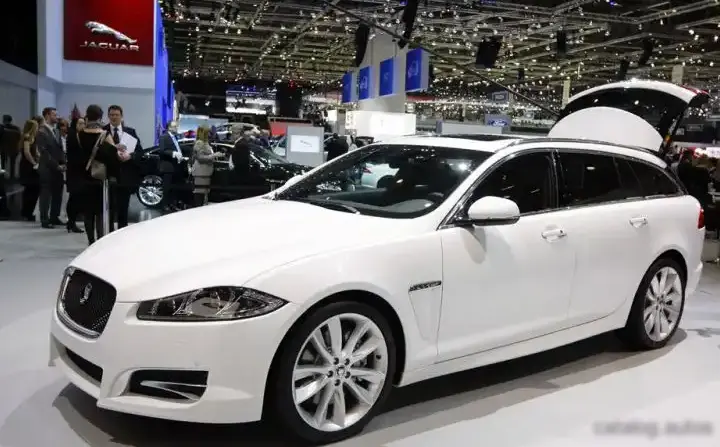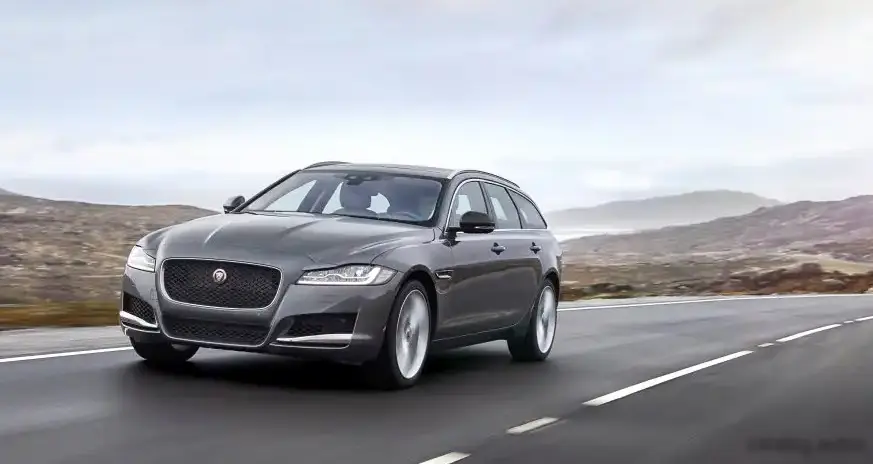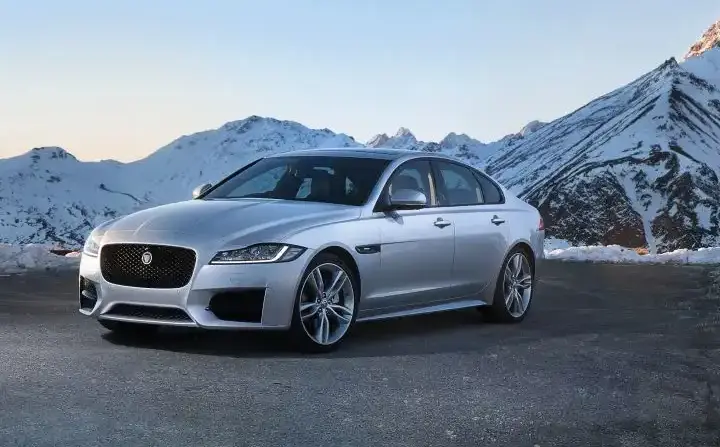
The Jaguar XF (X260) 2.0d, produced from 2017 to 2018, represents a significant iteration of Jaguar’s mid-size executive sedan. Positioned as a more efficient alternative within the X260 range, which spanned from 2015 to 2024, this variant utilized Jaguar Land Rover’s Ingenium engine family. It aimed to broaden the XF’s appeal by offering a diesel-powered option with a balance of performance and fuel economy, catering to European markets and buyers prioritizing lower running costs. The 2.0d sat in the middle of the XF lineup, offering a step down in power and price from the higher-output petrol engines, but providing a more refined experience than the base diesel models.
Technical Specifications
| Brand | Jaguar |
| Model | XF |
| Generation | XF (X260) |
| Type (Engine) | 2.0d (240 Hp) Automatic |
| Start of production | 2017 |
| End of production | 2018 |
| Powertrain Architecture | Internal Combustion engine |
| Body type | Sedan |
| Seats | 5 |
| Doors | 4 |
| Fuel consumption (combined) | 5.3 l/100 km |
| Fuel consumption (US mpg) | 44.4 US mpg |
| Fuel consumption (UK mpg) | 53.3 UK mpg |
| Fuel consumption (km/l) | 18.9 km/l |
| CO2 emissions | 139 g/km |
| Fuel Type | Diesel |
| Acceleration 0 – 100 km/h | 6.5 sec |
| Acceleration 0 – 62 mph | 6.5 sec |
| Acceleration 0 – 60 mph | 6.2 sec |
| Maximum speed | 246 km/h (152.86 mph) |
| Emission standard | Euro 6 |
| Weight-to-power ratio | 7 kg/Hp |
| Weight-to-torque ratio | 3.4 kg/Nm |
| Power | 240 Hp @ 4000 rpm |
| Power per litre | 120.1 Hp/l |
| Torque | 500 Nm @ 1500 rpm (368.78 lb.-ft. @ 1500 rpm) |
| Engine layout | Front, Longitudinal |
| Engine Model/Code | Ingenium / 204DTA |
| Engine displacement | 1999 cm3 (121.99 cu. in.) |
| Number of cylinders | 4 |
| Engine configuration | Inline |
| Cylinder Bore | 83 mm (3.27 in.) |
| Piston Stroke | 92.4 mm (3.64 in.) |
| Compression ratio | 15.5:1 |
| Number of valves per cylinder | 4 |
| Fuel injection system | Diesel Commonrail |
| Engine aspiration | Turbocharger, Intercooler |
| Valvetrain | DOHC |
| Engine oil capacity | 6.5 l (6.87 US qt | 5.72 UK qt) |
| Kerb Weight | 1680 kg (3703.77 lbs.) |
| Trunk (boot) space – minimum | 540 l (19.07 cu. ft.) |
| Fuel tank capacity | 66 l (17.44 US gal | 14.52 UK gal) |
| Length | 4954 mm (195.04 in.) |
| Width with mirrors folded | 1880 mm (74.02 in.) |
| Width including mirrors | 2091 mm (82.32 in.) |
| Height | 1457 mm (57.36 in.) |
| Wheelbase | 2960 mm (116.54 in.) |
| Front track | 1605 mm (63.19 in.) |
| Rear (Back) track | 1594 mm (62.76 in.) |
| Drivetrain Architecture | Rear wheel drive |
| Number of gears and type of gearbox | 8 gears, automatic transmission |
| Front suspension | Double wishbone |
| Rear suspension | Independent coil spring |
| Front brakes | Ventilated discs |
| Rear brakes | Ventilated discs |
| Assisting systems | ABS (Anti-lock braking system) |
| Steering type | Steering rack and pinion |
| Power steering | Electric Steering |
Powertrain & Engine Architecture
The heart of the XF 2.0d is Jaguar Land Rover’s Ingenium engine family, specifically the 204DTA. This 2.0-liter inline-four diesel engine is a modern design, featuring a low-pressure exhaust gas recirculation (LPEGR) system to reduce NOx emissions and meet stringent Euro 6 standards. The engine utilizes a sophisticated common-rail direct injection system, operating at pressures up to 2,200 bar, for precise fuel delivery and efficient combustion. A single turbocharger with variable geometry turbine (VGT) technology provides a broad torque curve and responsive performance. The engine also incorporates a cast aluminum block and cylinder head, contributing to weight reduction. Paired with the engine is an eight-speed automatic transmission, developed by ZF. This transmission offers smooth and quick shifts, contributing to both performance and fuel efficiency. The transmission’s programming is tailored to the diesel engine’s characteristics, prioritizing fuel economy during normal driving and providing responsive downshifts when needed.
Driving Characteristics
The 240 horsepower and 500 Nm (368 lb-ft) of torque delivered by the 2.0d powertrain provide a comfortable and capable driving experience. Acceleration from 0-60 mph takes approximately 6.2 seconds, making it adequately quick for most drivers. The engine’s peak torque is available from a low 1500 rpm, resulting in strong pulling power for overtaking and effortless cruising. Compared to the higher-output petrol versions of the XF, the 2.0d offers less outright performance, but its lower weight and efficient powertrain contribute to improved fuel economy. The eight-speed automatic transmission generally shifts smoothly and intelligently, although some drivers may find it slightly hesitant in certain situations. The rear-wheel-drive configuration provides a balanced and engaging driving experience, although it can be less forgiving in slippery conditions compared to all-wheel-drive variants.
Equipment & Trim Levels
The XF 2.0d typically came equipped with a generous level of standard features. Interior appointments included leather upholstery, power-adjustable front seats, and a premium audio system. Standard technology features included an 8-inch touchscreen infotainment system with navigation, Bluetooth connectivity, and a rearview camera. Optional extras included a panoramic sunroof, upgraded leather trim, adaptive cruise control, and a surround-view camera system. Trim levels varied depending on the market, but generally included a base model and a higher-specification version with additional features and cosmetic enhancements. The XF 2.0d was often positioned as a business-oriented trim, focusing on comfort and technology rather than outright sporting pretensions.
Chassis & Braking
The XF 2.0d utilizes a double wishbone front suspension and an independent coil spring rear suspension, providing a comfortable and controlled ride. The suspension is tuned to balance ride comfort with handling precision. Braking duties are handled by ventilated discs on all four wheels, providing ample stopping power. Anti-lock braking system (ABS) and electronic stability control (ESC) are standard features, enhancing safety and stability. The XF 2.0d’s curb weight of approximately 1680 kg (3703.77 lbs) is relatively low for a vehicle of its size, contributing to its agile handling characteristics.
Market Reception & Comparison
The Jaguar XF 2.0d was generally well-received by automotive critics. It was praised for its refined engine, comfortable ride, and spacious interior. Fuel economy was a key selling point, with the XF 2.0d achieving around 44.4 US mpg on the combined cycle. Compared to the petrol-powered XF models, the 2.0d offered significantly better fuel economy, making it a more attractive option for high-mileage drivers. However, some critics noted that the engine lacked the refinement and performance of its competitors, such as the BMW 520d and the Audi A6 2.0 TDI. Reliability was generally good, although some owners reported minor issues with the infotainment system.
Legacy
The Ingenium engine family has proven to be a reliable and durable powertrain. The 2.0d variant in the XF has generally demonstrated good long-term reliability, with many examples still in service today. On the used car market, the XF 2.0d represents a good value proposition, offering a luxurious and well-equipped sedan at a competitive price. However, potential buyers should be aware of the potential for diesel particulate filter (DPF) issues, particularly on vehicles that have primarily been used for short journeys. Regular servicing and maintenance are essential to ensure the continued reliability of this powertrain.