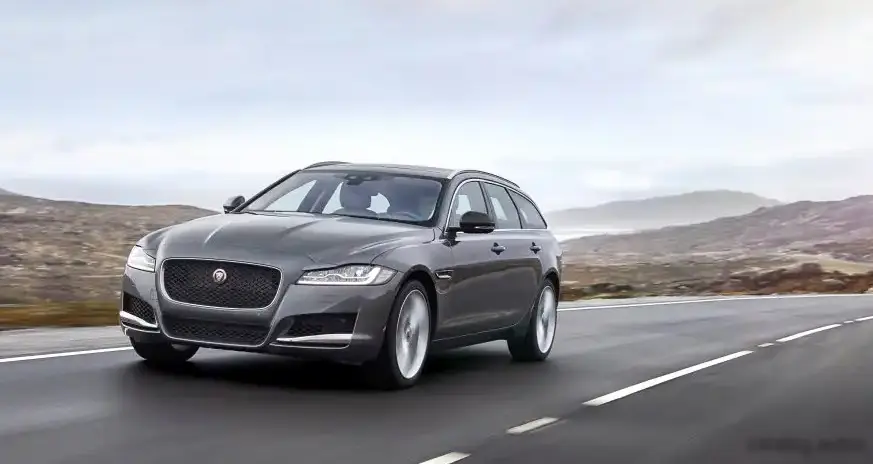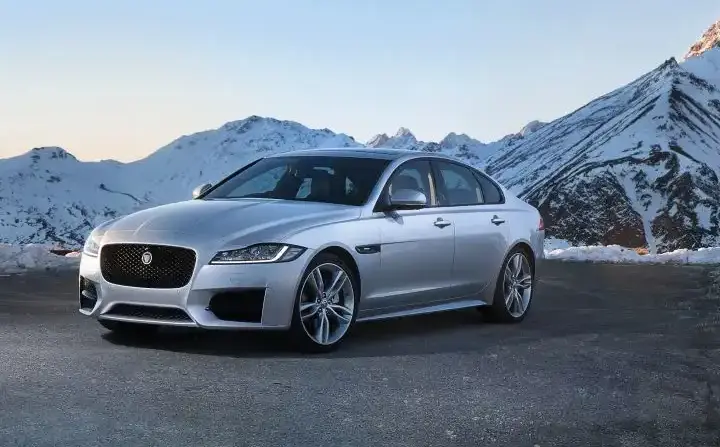
The Jaguar XF (X260) 25d, produced from 2019 to October 2020, represented a key offering in Jaguar’s mid-size luxury sedan lineup. Positioned as a diesel-powered, all-wheel-drive variant, it aimed to balance performance with fuel efficiency, appealing to buyers seeking a refined driving experience with lower running costs. This model falls within the second generation of the XF (X260), which introduced a lighter aluminum-intensive construction compared to its predecessor, enhancing both handling and efficiency. The 25d trim occupied a middle ground in the XF range, offering a step up in power and refinement from the base models while remaining more accessible than the higher-performance petrol variants.
Technical Specifications
| Brand | Jaguar |
| Model | XF |
| Generation | XF (X260) |
| Type (Engine) | 25d (240 Hp) AWD Automatic |
| Start of production | 2019 |
| End of production | October, 2020 |
| Powertrain Architecture | Internal Combustion engine |
| Body type | Sedan |
| Seats | 5 |
| Doors | 4 |
| Fuel consumption (urban) | 7.3-7.4 l/100 km (32.2 – 31.8 US mpg) |
| Fuel consumption (extra urban) | 4.8-5.0 l/100 km (49 – 47 US mpg) |
| Fuel consumption (combined) | 5.6-5.7 l/100 km (42 – 41.3 US mpg) |
| CO2 emissions | 151-155 g/km |
| Fuel Type | Diesel |
| Acceleration 0 – 100 km/h | 6.9 sec |
| Acceleration 0 – 62 mph | 6.9 sec |
| Acceleration 0 – 60 mph | 6.6 sec |
| Maximum speed | 246 km/h (152.86 mph) |
| Emission standard | Euro 6d-Temp |
| Weight-to-power ratio | 7.2 kg/Hp |
| Weight-to-torque ratio | 3.5 kg/Nm |
| Power | 240 Hp @ 4000 rpm |
| Torque | 500 Nm @ 1500 rpm (368.78 lb.-ft. @ 1500 rpm) |
| Engine layout | Front, Longitudinal |
| Engine Model/Code | Ingenium / 204DTA |
| Engine displacement | 1999 cm3 (121.99 cu. in.) |
| Number of cylinders | 4 |
| Engine configuration | Inline |
| Cylinder Bore | 83 mm (3.27 in.) |
| Piston Stroke | 92.4 mm (3.64 in.) |
| Compression ratio | 15.5:1 |
| Number of valves per cylinder | 4 |
| Fuel injection system | Diesel Commonrail |
| Engine aspiration | Turbocharger, Intercooler |
| Engine oil capacity | 6.5 l (6.87 US qt | 5.72 UK qt) |
| Kerb Weight | 1733 kg (3820.61 lbs.) |
| Max. weight | 2370 kg (5224.96 lbs.) |
| Max load | 637 kg (1404.34 lbs.) |
| Fuel tank capacity | 66 l (17.44 US gal | 14.52 UK gal) |
| Permitted trailer load with brakes (12%) | 2000 kg (4409.25 lbs.) |
| Permitted trailer load without brakes | 750 kg (1653.47 lbs.) |
| Length | 4954 mm (195.04 in.) |
| Width | 1987 mm (78.23 in.) |
| Width including mirrors | 2091 mm (82.32 in.) |
| Height | 1457 mm (57.36 in.) |
| Wheelbase | 2960 mm (116.54 in.) |
| Front track | 1605 mm (63.19 in.) |
| Rear track | 1594 mm (62.76 in.) |
| Ride height (ground clearance) | 116 mm (4.57 in.) |
| Minimum turning circle | 11.94 m (39.17 ft.) |
| Drive wheel | All wheel drive (4×4) |
| Number of gears and type of gearbox | 8 gears, automatic transmission |
| Front brakes | Disc |
| Rear brakes | Disc |
| Assisting systems | ABS (Anti-lock braking system) |
| Tires size | 225/55 R17; 245/45R18 |
| Wheel rims size | 7.5J x 17; 8J x 18 |
Powertrain & Engine Architecture
The XF 25d is powered by Jaguar Land Rover’s Ingenium engine family, specifically the 204DTA 2.0-liter inline-four cylinder diesel. This engine is a highly modular design, featuring a low-friction architecture and advanced technologies to maximize efficiency and reduce emissions. The 204DTA utilizes a sophisticated common-rail direct injection system operating at pressures up to 2,500 bar, ensuring precise fuel delivery and optimized combustion. A single turbocharger with variable geometry technology (VGT) provides a broad torque curve and responsive performance. The engine also incorporates an intercooler to further enhance efficiency. The eight-speed automatic transmission, sourced from ZF, is a crucial component of the powertrain. It offers smooth and quick gear changes, contributing to both performance and fuel economy. The transmission is electronically controlled and adapts its shift patterns based on driving conditions and driver input.
Driving Characteristics
The 240 horsepower and 500 Nm (368 lb-ft) of torque delivered by the 25d powertrain provide a comfortable and capable driving experience. Acceleration from 0-60 mph takes approximately 6.6 seconds, making it adequately quick for most driving situations. The all-wheel-drive system ensures excellent traction in various weather conditions. Compared to the higher-output petrol versions of the XF, the 25d prioritizes torque delivery over outright horsepower. This results in strong mid-range acceleration, making it well-suited for overtaking and highway cruising. While not as sporty as the XF 30t or the XFR, the 25d offers a refined and relaxed driving experience. The eight-speed automatic transmission contributes to this, providing seamless gear changes and helping to keep the engine in its optimal power band. The gear ratios are tuned for efficiency, but also provide enough punch for confident acceleration.
Equipment & Trim Levels
The XF 25d typically came well-equipped as standard. Common features included leather upholstery, a touchscreen infotainment system with navigation, automatic climate control, and a suite of driver-assistance technologies such as lane departure warning and emergency braking. Trim levels varied depending on the market, but generally included SE, HSE, and Portfolio. The HSE trim added features like heated seats, a panoramic sunroof, and upgraded audio system. The Portfolio trim offered the highest level of luxury, with premium leather, wood veneer trim, and advanced driver-assistance features. Optional extras included adaptive cruise control, a head-up display, and a premium sound system from Meridian.
Chassis & Braking
The XF (X260) benefited from Jaguar’s extensive use of aluminum in its construction, resulting in a lighter and more rigid chassis. The 25d model featured a double-wishbone front suspension and a multi-link rear suspension, providing a comfortable ride and precise handling. The all-wheel-drive system distributes torque between the front and rear axles as needed, optimizing traction and stability. Braking duties were handled by disc brakes on all four wheels, with ABS and electronic stability control as standard. The suspension tuning was generally geared towards comfort, but still provided a reasonably engaging driving experience. Stabilizer bars were fitted front and rear to reduce body roll during cornering.
Market Reception & Comparison
The XF 25d was generally well-received by automotive critics. It was praised for its refined driving experience, fuel efficiency, and comfortable interior. However, some reviewers noted that the diesel engine lacked the excitement of the petrol variants. Compared to the XF 30t (2.0-liter petrol), the 25d offered superior fuel economy and torque, but slightly slower acceleration. Against the XFR (3.0-liter supercharged petrol), the 25d was significantly less powerful but more affordable and fuel-efficient. In terms of reliability, the Ingenium engine family has proven to be generally robust, although some owners have reported issues with the diesel particulate filter (DPF) system, particularly on vehicles used primarily for short journeys.
Legacy
The Jaguar XF 25d (X260) represents a significant step forward in diesel engine technology and efficiency for the brand. The Ingenium engine family has become a mainstay of Jaguar Land Rover’s powertrain lineup. On the used car market, the XF 25d offers a compelling combination of luxury, performance, and fuel economy. While diesel car values have fluctuated in recent years, well-maintained examples of the XF 25d remain desirable, particularly for drivers who prioritize long-distance comfort and low running costs. The longevity of the Ingenium engine, coupled with the XF’s overall build quality, suggests that these vehicles should provide reliable service for many years to come, provided they are properly maintained.