Technical Specifications
| Brand | Jaguar |
| Model | XF |
| Generation | XF (X260) |
| Type (Engine) | 3.0 V6 (340 Hp) Automatic |
| Start of production | 2015 |
| End of production | 2017 |
| Powertrain Architecture | Internal Combustion engine |
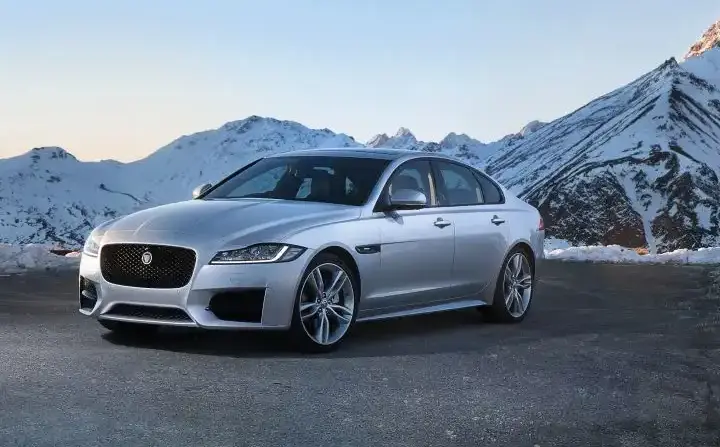
| Body type | Sedan |
| Seats | 5 |
| Doors | 4 |
| Fuel consumption (urban) | 11.7 l/100 km (20.1 US mpg) |
| Fuel consumption (extra urban) | 6.3 l/100 km (37.3 US mpg) |
| Fuel consumption (combined) | 8.3 l/100 km (28.3 US mpg) |
| CO2 emissions | 198 g/km |
| Fuel Type | Petrol (Gasoline) |
| Acceleration 0 – 100 km/h | 5.4 sec |
| Acceleration 0 – 62 mph | 5.4 sec |
| Acceleration 0 – 60 mph | 5.1 sec |
| Maximum speed | 250 km/h (155.34 mph) |
| Emission standard | Euro 6 |
| Weight-to-power ratio | 5 kg/Hp |
| Weight-to-torque ratio | 3.8 kg/Nm |
| Power | 340 Hp @ 6500 rpm |
| Torque | 450 Nm @ 4500 rpm (331.9 lb.-ft. @ 4500 rpm) |
| Engine layout | Front, Longitudinal |
| Engine Model/Code | 306PS |
| Engine displacement | 2995 cm3 (182.77 cu. in.) |
| Number of cylinders | 6 |
| Engine configuration | V-engine |
| Cylinder Bore | 84.5 mm (3.33 in.) |
| Piston Stroke | 89 mm (3.5 in.) |
| Compression ratio | 10.5:1 |
| Number of valves per cylinder | 4 |
| Fuel injection system | Direct injection |
| Engine aspiration | Supercharger, Intercooler |
| Engine oil capacity | 7.25 l (7.66 US qt | 6.38 UK qt) |
| Kerb Weight | 1710 kg (3769.9 lbs.) |
| Max. weight | 2330 kg (5136.77 lbs.) |
| Max load | 620 kg (1366.87 lbs.) |
| Trunk (boot) space – minimum | 505 l (17.83 cu. ft.) |
| Fuel tank capacity | 74 l (19.55 US gal | 16.28 UK gal) |
| Length | 4954 mm (195.04 in.) |
| Width | 1987 mm (78.23 in.) |
| Width including mirrors | 2091 mm (82.32 in.) |
| Height | 1457 mm (57.36 in.) |
| Wheelbase | 2960 mm (116.54 in.) |
| Front track | 1605 mm (63.19 in.) |
| Rear (Back) track | 1594 mm (62.76 in.) |
| Ride height (ground clearance) | 116 mm (4.57 in.) |
| Minimum turning circle | 11.61 m (38.09 ft.) |
| Drivetrain Architecture | Rear wheel drive |
| Number of gears | 8 |
| Gearbox type | Automatic transmission |
| Front brakes | Ventilated discs |
| Rear brakes | Ventilated discs |
The Jaguar XF (X260) 3.0 V6 Automatic, produced from 2015 to 2017, represented a significant evolution of Jaguar’s mid-size luxury sedan. Falling within the second generation of the XF (introduced for the 2016 model year), this variant occupied a performance-oriented position in the lineup, slotting above the 2.0L four-cylinder models and below the even more potent XFR and XJ Supercharged trims. The X260 generation marked a shift towards greater use of aluminum in the body structure, resulting in a lighter and more rigid chassis compared to its predecessor. This particular 3.0 V6 model aimed to deliver a blend of refined British luxury, spirited performance, and relatively reasonable fuel efficiency for its class.
Powertrain & Engine Architecture
At the heart of the XF 3.0 V6 was Jaguar’s AJ126 engine, a 3.0-liter supercharged V6. This engine, part of the AJ-V6 family, utilized a sixth-generation Eaton supercharger, providing near-instantaneous boost and a characteristic Jaguar power delivery. Direct fuel injection, combined with variable valve timing on both intake and exhaust sides, optimized both performance and efficiency. The engine code 306PS indicates the metric horsepower rating. The transmission paired with this engine was a ZF 8HP80 eight-speed automatic, known for its smooth shifts and responsiveness. This transmission offered a manual shift mode, allowing drivers to exert more control over gear selection. The longitudinal engine placement and rear-wheel drive configuration contributed to the car’s balanced handling characteristics.
Driving Characteristics
The 340 horsepower and 331 lb-ft of torque delivered by the supercharged V6 and eight-speed automatic resulted in brisk acceleration. The 0-60 mph time of around 5.1 seconds was competitive for the segment. The automatic transmission was well-tuned, providing seamless gear changes during normal driving and quick downshifts when needed for overtaking or spirited driving. While not as raw or engaging as the six-speed manual available on some XF models, the automatic offered a more relaxed and refined driving experience, appealing to a broader range of buyers. The supercharger provided a broad torque curve, making the car feel responsive at almost any engine speed. The rear-wheel drive layout contributed to a balanced feel, although traction could be a concern in inclement weather.
Equipment & Trim Levels
The XF 3.0 V6 Automatic typically came well-equipped, positioning it as a mid-to-upper trim level. Standard features included leather upholstery, power-adjustable front seats with memory function, a touchscreen infotainment system with navigation, a premium sound system, and a suite of safety features such as automatic emergency braking and lane departure warning. Optional extras included adaptive cruise control, a panoramic sunroof, upgraded leather trim, and various appearance packages. Interior color options were plentiful, allowing buyers to personalize their vehicle. The dashboard layout was generally considered elegant and driver-focused, with a blend of traditional Jaguar styling and modern technology.
Chassis & Braking
The X260 XF benefited from a significantly increased use of aluminum in its construction, resulting in a lighter and stiffer chassis. The suspension consisted of double wishbones at the front and a multi-link setup at the rear. The 3.0 V6 models typically featured slightly stiffer springs and dampers compared to the base 2.0L models, enhancing handling performance. Braking duties were handled by ventilated discs on all four wheels, providing ample stopping power. Anti-lock brakes (ABS) and electronic stability control (ESC) were standard features. The steering was electrically assisted, offering a good balance of feel and responsiveness.
Market Reception & Comparison
The Jaguar XF 3.0 V6 Automatic was generally well-received by automotive critics. It was praised for its refined driving experience, powerful engine, and luxurious interior. Compared to its rivals, such as the BMW 5 Series and Mercedes-Benz E-Class, the XF offered a unique blend of British style and performance. Fuel economy was respectable for a V6-powered luxury sedan, but not class-leading. Reliability was generally considered average, with some reports of minor electrical issues. The 3.0 V6 offered a significant performance upgrade over the base 2.0L models, but came at a higher price point. Compared to the even more powerful XFR, the 3.0 V6 provided a more balanced and accessible performance experience.
Legacy
The Jaguar XF (X260) 3.0 V6 Automatic remains a desirable used car option. The supercharged V6 engine, coupled with the ZF eight-speed automatic, has proven to be relatively reliable, although regular maintenance is crucial. The aluminum-intensive construction of the X260 generation helped to improve its long-term durability. Today, these vehicles can be found in good condition at reasonable prices, offering a compelling combination of luxury, performance, and British charm. The X260 generation represented a pivotal moment for Jaguar, showcasing its commitment to innovation and design, and the 3.0 V6 variant remains a particularly appealing example of this era.