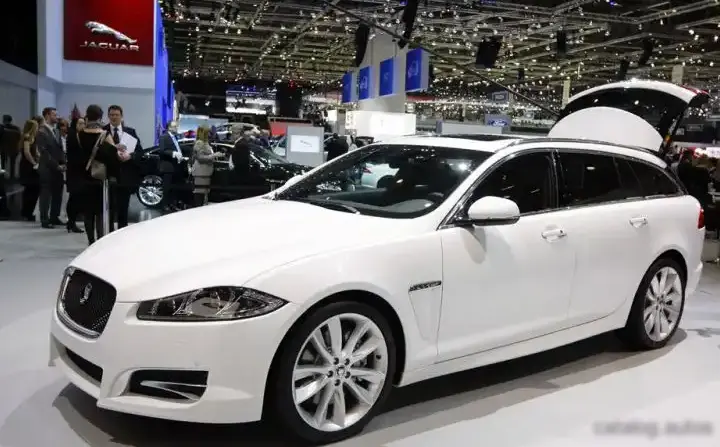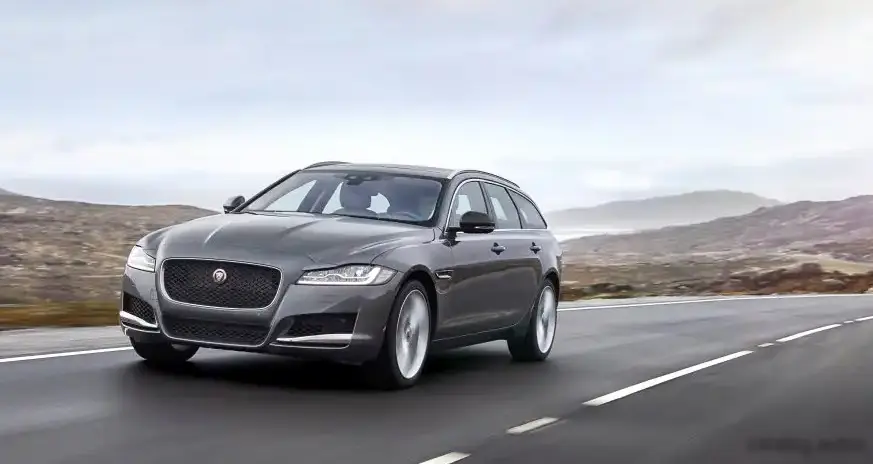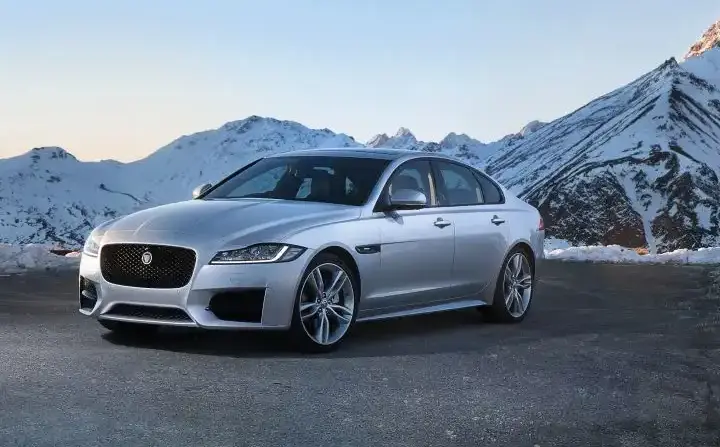
The Jaguar XF (X260) 30d V6 Automatic, produced from 2019 to October 2020, represents a sophisticated iteration of Jaguar’s mid-size luxury sedan. Positioned as a high-performance diesel variant within the X260 generation (launched in 2015), it aimed to deliver a blend of refined power, efficiency, and long-distance comfort. This model occupied a premium slot in the XF lineup, sitting above the 2.0L Ingenium engines and offering a more potent alternative to the gasoline-powered six-cylinder options. The X260 generation itself was a significant redesign, moving away from the XF’s earlier association with the S-Type and embracing a more contemporary, sport-focused aesthetic and a lighter aluminum-intensive construction.
Technical Specifications
| Brand | Jaguar |
| Model | XF |
| Generation | XF (X260) |
| Type (Engine) | 30d V6 (300 Hp) Automatic |
| Start of production | 2019 |
| End of production | October, 2020 |
| Powertrain Architecture | Internal Combustion engine |
| Body type | Sedan |
| Seats | 5 |
| Doors | 4 |
| Fuel consumption (urban) | 7.4 l/100 km (31.8 US mpg, 38.2 UK mpg, 13.5 km/l) |
| Fuel consumption (extra urban) | 5.1 l/100 km (46.1 US mpg, 55.4 UK mpg, 19.6 km/l) |
| Fuel consumption (combined) | 5.9 l/100 km (39.9 US mpg, 47.9 UK mpg, 16.9 km/l) |
| CO2 emissions | 157 g/km |
| Fuel Type | Diesel |
| Acceleration 0 – 100 km/h | 6.4 sec |
| Acceleration 0 – 62 mph | 6.4 sec |
| Acceleration 0 – 60 mph | 6 sec |
| Maximum speed | 250 km/h (155.34 mph) |
| Emission standard | Euro 6d-TEMP |
| Weight-to-power ratio | 6 kg/Hp, 166.4 Hp/tonne |
| Weight-to-torque ratio | 2.6 kg/Nm, 388.2 Nm/tonne |
| Power | 300 Hp @ 4000 rpm |
| Power per litre | 100.2 Hp/l |
| Torque | 700 Nm @ 2000 rpm (516.29 lb.-ft. @ 2000 rpm) |
| Engine layout | Front, Longitudinal |
| Engine Model/Code | 306DT |
| Engine displacement | 2993 cm3 (182.64 cu. in.) |
| Number of cylinders | 6 |
| Engine configuration | V-engine |
| Cylinder Bore | 84 mm (3.31 in.) |
| Piston Stroke | 90 mm (3.54 in.) |
| Compression ratio | 16.1:1 |
| Number of valves per cylinder | 4 |
| Fuel injection system | Diesel Commonrail |
| Engine aspiration | BiTurbo, Intercooler |
| Valvetrain | DOHC |
| Engine oil capacity | 6.6 l (6.97 US qt | 5.81 UK qt) |
| Kerb Weight | 1803 kg (3974.93 lbs.) |
| Max. weight | 2390 kg (5269.05 lbs.) |
| Max load | 587 kg (1294.11 lbs.) |
| Trunk (boot) space – minimum | 540 l (19.07 cu. ft.) |
| Trunk (boot) space – maximum | 885 l (31.25 cu. ft.) |
| Fuel tank capacity | 66 l (17.44 US gal | 14.52 UK gal) |
| Permitted trailer load with brakes (12%) | 2000 kg (4409.25 lbs.) |
| Permitted trailer load without brakes | 750 kg (1653.47 lbs.) |
| Length | 4954 mm (195.04 in.) |
| Width with mirrors folded | 1982 mm (78.03 in.) |
| Width including mirrors | 2091 mm (82.32 in.) |
| Height | 1457 mm (57.36 in.) |
| Wheelbase | 2960 mm (116.54 in.) |
| Front track | 1597-1605 mm (62.87 – 63.19 in.) |
| Rear (Back) track | 1586-1605 mm (62.44 – 63.19 in.) |
| Ride height (ground clearance) | 116 mm (4.57 in.) |
| Minimum turning circle (turning diameter) | 11.94 m (39.17 ft.) |
| Drivetrain Architecture | Rear wheel drive |
| Drive wheel | Rear wheel drive |
| Number of gears and type of gearbox | 8 gears, automatic transmission |
| Front suspension | Coil spring, Double wishbone, Transverse stabilizer |
| Rear suspension | Independent multi-link spring suspension with stabilizer |
| Front brakes | Ventilated discs, 325 mm |
| Rear brakes | Ventilated discs, 325 mm |
| Assisting systems | ABS (Anti-lock braking system) |
| Steering type | Steering rack and pinion |
| Power steering | Electric Steering |
| Tires size | 245/45 R18; 245/40 R19; 255/35 R20 |
| Wheel rims size | 8J x 18; 8J x 19; 8.5J x 20 |
Powertrain & Engine Architecture
The heart of the XF 30d is Jaguar’s 306DT engine, a 3.0-liter V6 turbodiesel. This engine utilizes a sequential twin-turbocharger setup, employing a smaller turbocharger for immediate response at low engine speeds and a larger turbocharger to deliver peak power. The engine features a cast aluminum block and cylinder heads, contributing to its relatively lightweight construction. Fuel is delivered via a high-pressure common rail direct injection system, optimized for efficient combustion and reduced emissions. The 306DT engine boasts a compression ratio of 16.1:1 and a double overhead camshaft (DOHC) valvetrain with four valves per cylinder. Paired with this engine is an eight-speed automatic transmission (ZF 8HP70), known for its smooth shifting and efficiency. This transmission offers both fully automatic operation and manual control via paddle shifters.
Driving Characteristics
The 300 horsepower and 516 lb-ft of torque produced by the 30d powertrain translate into brisk acceleration. The 0-60 mph sprint takes approximately 6 seconds, and the car feels confident during highway overtaking maneuvers. The eight-speed automatic transmission is well-tuned, providing seamless gear changes and contributing to a relaxed driving experience. Compared to the 2.0L Ingenium diesel, the 30d offers significantly more power and torque, resulting in a more effortless driving experience, particularly when fully loaded or towing. While not as overtly sporty as the supercharged gasoline variants, the 30d provides a good balance of performance and fuel economy. The rear-wheel-drive configuration contributes to a balanced chassis and engaging handling characteristics.
Equipment & Trim Levels
The XF 30d typically came well-equipped, reflecting its position as a premium trim level. Standard features included leather upholstery, power-adjustable front seats with memory function, a touchscreen infotainment system with navigation, a premium sound system, and a suite of driver-assistance technologies such as lane departure warning and automatic emergency braking. Optional extras included a panoramic sunroof, adaptive cruise control, and upgraded interior trim materials. Trim levels varied slightly by market, but generally offered increasing levels of luxury and technology.
Chassis & Braking
The XF X260 utilizes an aluminum-intensive chassis, contributing to its relatively low weight. The front suspension features a double wishbone design with coil springs and a transverse stabilizer bar, while the rear suspension employs an independent multi-link setup, also with coil springs and a stabilizer bar. Braking duties are handled by ventilated discs on all four wheels, providing ample stopping power. The XF 30d typically featured larger brake rotors compared to the lower-spec models. The steering system is an electric power-assisted rack and pinion, offering precise and responsive steering feel.
Market Reception & Comparison
The XF 30d was generally well-received by automotive critics, who praised its refined engine, comfortable ride, and luxurious interior. The diesel engine offered competitive fuel economy, making it an attractive option for long-distance drivers. Compared to the gasoline-powered XF variants, the 30d provided superior torque and fuel efficiency. However, some critics noted that the diesel engine lacked the aural excitement of the supercharged gasoline engines. Reliability reports have been generally positive, although diesel engines can be more susceptible to issues with the fuel injection system and particulate filter.
Legacy
The Jaguar XF 30d V6 Automatic represents a compelling blend of luxury, performance, and efficiency. On the used car market, these models hold their value reasonably well, particularly those with low mileage and a full service history. The 306DT engine, while complex, has proven to be relatively durable when properly maintained. The XF X260 generation, including the 30d variant, helped to solidify Jaguar’s reputation as a manufacturer of sophisticated and desirable luxury sedans. The combination of a powerful diesel engine, a refined chassis, and a luxurious interior continues to appeal to buyers seeking a premium driving experience.