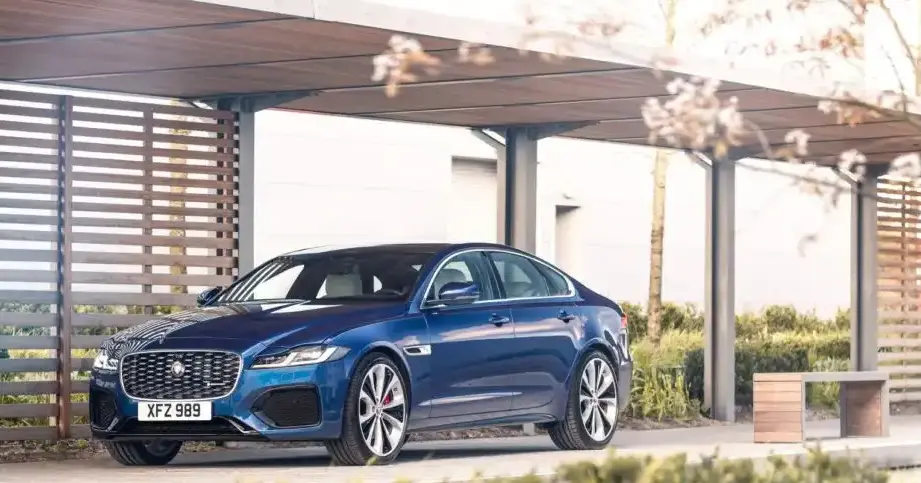
The Jaguar XF (X260) facelift, introduced in October 2020 and continuing through 2024, represented a significant refresh of Jaguar’s mid-size luxury sedan. Among the engine options available, the 2.0i variant, producing 250 horsepower and paired with an 8-speed automatic transmission, occupied a crucial position in the lineup. This configuration aimed to balance performance with efficiency, appealing to a broader customer base than the more potent six-cylinder models. The X260 facelift brought updated styling, enhanced technology, and a refined interior, solidifying the XF’s presence in the competitive executive sedan segment.
Technical Specifications
| Brand | Jaguar |
| Model | XF |
| Generation | XF (X260, facelift 2020) |
| Type (Engine) | 2.0i (250 Hp) Automatic |
| Start of production | October, 2020 |
| End of production | 2024 |
| Powertrain Architecture | Internal Combustion engine |
| Body type | Sedan |
| Seats | 5 |
| Doors | 4 |
| Combined fuel consumption (WLTP) | 8-8.9 l/100 km |
| Combined fuel consumption (US mpg) | 29.4 – 26.4 |
| Combined fuel consumption (UK mpg) | 35.3 – 31.7 |
| Combined fuel consumption (km/l) | 12.5 – 11.2 |
| CO2 emissions (WLTP) | 181-200 g/km |
| Fuel Type | Petrol (Gasoline) |
| Acceleration 0 – 100 km/h | 6.9 sec |
| Acceleration 0 – 62 mph | 6.9 sec |
| Acceleration 0 – 60 mph | 6.5 sec |
| Maximum speed | 250 km/h (155.34 mph) |
| Emission standard | Euro 6d |
| Weight-to-power ratio | 6.6 kg/Hp, 150.6 Hp/tonne |
| Weight-to-torque ratio | 4.5 kg/Nm, 219.9 Nm/tonne |
| Power | 250 Hp @ 5500 rpm |
| Power per litre | 125.2 Hp/l |
| Torque | 365 Nm @ 1300-4500 rpm (269.21 lb.-ft. @ 1300-4500 rpm) |
| Engine layout | Front, Longitudinal |
| Engine Model/Code | Ingenium / PT204 |
| Engine displacement | 1997 cm3 (121.86 cu. in.) |
| Number of cylinders | 4 |
| Engine configuration | Inline |
| Cylinder Bore | 83 mm (3.27 in.) |
| Piston Stroke | 92.29 mm (3.63 in.) |
| Compression ratio | 10.5:1 |
| Number of valves per cylinder | 4 |
| Fuel injection system | Direct injection |
| Engine aspiration | Turbocharger, Intercooler |
| Engine oil capacity | 7 l (7.4 US qt | 6.16 UK qt) |
| Kerb Weight | 1660 kg (3659.67 lbs.) |
| Trunk (boot) space – minimum | 459 l (16.21 cu. ft.) |
| Trunk (boot) space – maximum | 1484 l (52.41 cu. ft.) |
| Fuel tank capacity | 74 l (19.55 US gal | 16.28 UK gal) |
| Permitted trailer load with brakes (12%) | 1900 kg (4188.78 lbs.) |
| Permitted trailer load without brakes | 750 kg (1653.47 lbs.) |
| Length | 4962 mm (195.35 in.) |
| Width with mirrors folded | 1982 mm (78.03 in.) |
| Width including mirrors | 2089 mm (82.24 in.) |
| Height | 1456 mm (57.32 in.) |
| Wheelbase | 2960 mm (116.54 in.) |
| Front track | 1602 mm (63.07 in.) |
| Rear (Back) track | 1605 mm (63.19 in.) |
| Front overhang | 847 mm (33.35 in.) |
| Rear overhang | 1155 mm (45.47 in.) |
| Drag coefficient (Cd) | 0.26 |
| Minimum turning circle (turning diameter) | 11.65 m (38.22 ft.) |
| Drivetrain Architecture | Rear wheel drive |
| Number of gears and type of gearbox | 8 gears, automatic transmission ZF |
| Front suspension | Double wishbone |
| Rear suspension | Independent coil spring |
| Front brakes | Ventilated discs, 325-350 mm |
| Rear brakes | Ventilated discs, 325 mm |
INTRODUCTION
The Jaguar XF (X260) facelift’s 2.0i 250 hp Automatic model, launched in 2020, was positioned as the entry point to the XF range for many buyers. Built on the Jaguar’s aluminum-intensive architecture, the X260 aimed to deliver a blend of sporting dynamics and luxurious comfort. This variant was particularly important in markets where smaller displacement engines were favored due to taxation or fuel efficiency concerns. It represented a shift towards more efficient powertrains while maintaining the core Jaguar driving experience. The facelift brought a more modern aesthetic, improved interior materials, and upgraded technology, enhancing the XF’s appeal in a competitive segment.
Powertrain & Engine Architecture
At the heart of the 2.0i XF lies Jaguar’s Ingenium engine family, specifically the PT204 code. This 1997cc inline-four cylinder engine utilizes direct injection and is coupled with a single twin-scroll turbocharger and intercooler. The Ingenium engines were designed for modularity and efficiency, featuring lightweight construction and advanced combustion technologies. The 250 hp output is achieved through careful tuning of the engine management system and turbocharger boost. The engine’s valvetrain employs four valves per cylinder, contributing to its responsive nature. The engine is mated to a ZF 8-speed automatic transmission, known for its smooth shifts and efficiency. This transmission is a crucial component in optimizing fuel economy and delivering a refined driving experience. The transmission’s gear ratios are tuned to provide a balance between acceleration and cruising comfort.
Driving Characteristics
The 2.0i Automatic XF delivers a respectable driving experience, though it differs noticeably from the more powerful six-cylinder variants. Acceleration to 60 mph takes approximately 6.5 seconds, making it adequately quick for most driving situations. The turbocharger provides a good surge of torque from low engine speeds, making everyday driving effortless. However, the engine can feel slightly strained when pushed hard, lacking the effortless power delivery of the larger engines. The 8-speed automatic transmission contributes to a smooth and refined ride, with quick and precise gear changes. Compared to the manual transmission options (available on other XF variants), the automatic prioritizes comfort and ease of use over outright driver engagement. The rear-wheel-drive configuration provides a balanced handling characteristic, though it doesn’t offer the same level of dynamic precision as some of its competitors.
Equipment & Trim Levels
The 2.0i Automatic XF typically came equipped with a generous level of standard features. These included leather upholstery, a touchscreen infotainment system with navigation, automatic climate control, and a suite of driver-assistance systems such as lane departure warning and emergency braking. Higher trim levels offered upgrades such as premium leather, heated and ventilated seats, a panoramic sunroof, and a more powerful audio system. Optional extras included adaptive cruise control, a head-up display, and various cosmetic enhancements. The interior design of the X260 facelift was refined, with improved materials and a more modern layout compared to the pre-facelift models.
Chassis & Braking
The XF’s chassis utilizes a double wishbone front suspension and an independent coil spring rear suspension. This setup provides a comfortable ride while maintaining good handling characteristics. The 2.0i variant typically featured ventilated disc brakes on all four wheels, providing ample stopping power. The front brakes were often sized between 325-350mm depending on the specific trim level. Anti-lock braking system (ABS) and electronic stability control (ESC) were standard features, enhancing safety and control. The XF’s steering system is an electric power-assisted rack and pinion, offering precise and responsive steering feel.
Market Reception & Comparison
The 2.0i Automatic XF was generally well-received by critics as a sensible and efficient option within the XF range. It offered a good balance of performance, comfort, and fuel economy. However, some reviewers noted that the engine lacked the refinement and power of the six-cylinder alternatives. Compared to the XF 3.0t, the 2.0i offered significantly better fuel economy (around 8-8.9 l/100km vs. 10-12 l/100km for the 3.0t) but at the expense of performance. The 2.0i also represented a more affordable entry point into the XF lineup, making it accessible to a wider range of buyers. Reliability reports suggest that the Ingenium engine is generally robust, though regular maintenance is crucial.
Legacy
The 2.0i Automatic XF (X260) has established itself as a reliable and relatively affordable luxury sedan in the used car market. The Ingenium engine has proven to be durable, and the ZF 8-speed automatic transmission is known for its longevity. However, as with any luxury vehicle, regular maintenance and timely repairs are essential to ensure long-term reliability. The X260 facelift, including the 2.0i variant, represents a significant step forward in Jaguar’s efforts to deliver a compelling blend of British luxury and modern technology. Its continued presence in the used car market reflects its enduring appeal and value proposition.