
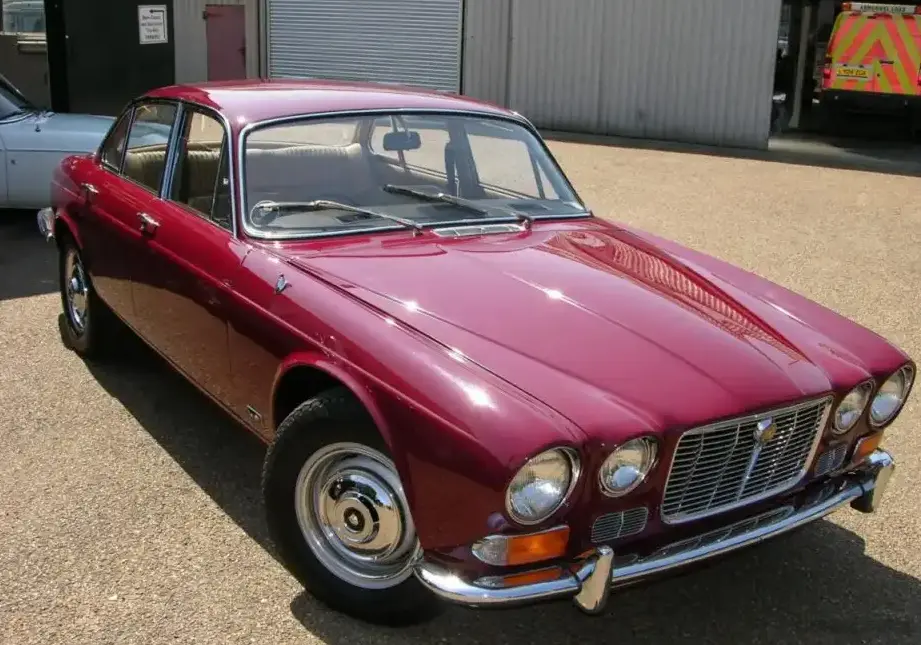
The Jaguar XJ 12 5.3, produced between 1973 and 1976, represented a significant evolution in the XJ lineage, solidifying Jaguar’s reputation for luxury grand touring. This variant, powered by the newly developed 5.3-liter V12 engine, was the flagship of the XJ range during its production run, replacing the earlier straight-six models as the performance leader. It was part of the first generation (Series I) XJ, internally designated as the XJ6 and XJ12, and distinguished itself through its sophisticated engineering, elegant styling, and powerful engine. The XJ12 5.3 aimed to compete directly with contemporary luxury sedans from Rolls-Royce and Mercedes-Benz, offering a blend of British craftsmanship and high performance.
Technical Specifications
| Brand | Jaguar |
| Model | XJ |
| Generation | XJ (Series I) |
| Type (Engine) | 12 5.3 (253 Hp) |
| Start of production | 1973 |
| End of production | 1976 |
| Powertrain Architecture | Internal Combustion Engine |
| Body type | Sedan |
| Seats | 5 |
| Doors | 4 |
| Fuel Type | Petrol (Gasoline) |
| Power | 253 Hp |
| Engine Aspiration | Naturally Aspirated |
Powertrain & Engine Architecture
The heart of the XJ12 5.3 was the Jaguar V12 engine, designated the XK engine family. This 5.3-liter (5344cc) engine was a 60-degree V12, featuring a lightweight alloy block and cylinder heads. It produced 253 horsepower at 6,000 rpm and 288 lb-ft of torque at 4,000 rpm. The engine utilized a SOHC (Single Overhead Camshaft) design per bank, with two valves per cylinder. Fuel delivery was managed by three SU carburetors, a system known for its responsiveness but also requiring careful tuning. The V12’s smooth power delivery was a hallmark of the XJ12, providing effortless acceleration and a refined driving experience. The engine was mated to a three-speed automatic transmission, a Borg-Warner unit, which was standard for the XJ12. This transmission, while providing convenience, wasn’t known for its particularly quick shifts compared to manual options available in other Jaguar models.
Driving Characteristics
The XJ12 5.3 offered a distinctly grand touring experience. The V12 engine provided ample power for comfortable highway cruising and brisk acceleration. While not a sports car in the modern sense, the XJ12 could achieve 0-60 mph times in around 7.5 seconds, respectable for a large luxury sedan of the era. The automatic transmission, while smooth, did detract somewhat from the engine’s potential, resulting in a slightly less engaging driving experience than the manual transmission offered in the XJ6 models. The car’s weight, approximately 4,200 lbs, contributed to a feeling of substantiality and stability on the road. Steering was power-assisted, providing a light and effortless feel, but lacked the precision of more modern systems. The suspension, featuring independent front suspension and a live axle rear suspension, prioritized ride comfort over sharp handling, resulting in a smooth and compliant ride, even on imperfect road surfaces.
Equipment & Trim Levels
The XJ12 5.3 was positioned as the top-of-the-line XJ model, and as such, came standard with a comprehensive list of luxury features. Standard equipment included Connolly leather upholstery, walnut veneer trim, electric windows, central locking, and a sophisticated heating and ventilation system. Air conditioning was a common option. The interior was designed with a focus on comfort and elegance, featuring deep pile carpets and carefully crafted wood trim. Optional extras included a sunroof, a stereo system, and various customization options for the leather and wood trim. The exterior was typically finished in a range of classic Jaguar colors, with chrome trim accentuating the car’s elegant lines. The XJ12 5.3 was a statement of luxury and refinement, reflecting Jaguar’s commitment to providing a premium driving experience.
Chassis & Braking
The XJ12 5.3 utilized a monocoque chassis construction, providing a strong and rigid platform. The front suspension featured independent double wishbones with coil springs and telescopic dampers, while the rear suspension employed a live axle with leaf springs and telescopic dampers. Braking was initially provided by Dunlop disc brakes all around, although some early models featured rear drum brakes. Power steering was standard, making the car easy to maneuver at low speeds. The braking system, while adequate for the car’s weight and performance, lacked the sophistication of more modern anti-lock braking systems. The XJ12 5.3’s chassis and suspension were designed to prioritize ride comfort and stability, rather than outright handling performance.
Market Reception & Comparison
The XJ12 5.3 was generally well-received by critics and buyers alike. It was praised for its luxurious interior, smooth ride, and powerful V12 engine. However, it also faced criticism for its relatively high price and the complexity of the V12 engine, which could lead to higher maintenance costs. Compared to the XJ6 models, the XJ12 offered significantly more performance and a more prestigious image, but at a considerable price premium. The XJ12 competed directly with luxury sedans from Rolls-Royce and Mercedes-Benz, offering a more sporting alternative to the traditional British and German luxury cars. Fuel economy was predictably poor, averaging around 12-15 mpg, a significant drawback even in the 1970s. Reliability, while generally good for a complex engine, was a concern, with the V12 requiring regular maintenance and careful attention to detail.
Legacy
The Jaguar XJ12 5.3 holds a significant place in Jaguar’s history as the first V12-powered XJ. It established the XJ as a true luxury grand tourer and cemented Jaguar’s reputation for engineering excellence. Today, the XJ12 5.3 is a sought-after classic car, prized by collectors for its elegant styling, powerful engine, and luxurious interior. While maintenance can be expensive due to the complexity of the V12 engine, well-maintained examples command high prices in the used car market. The V12 engine, despite its complexity, is considered a masterpiece of engineering and continues to be admired by enthusiasts. The XJ12 5.3 remains a symbol of British luxury and automotive craftsmanship, representing a golden age of Jaguar design and engineering. Finding one in truly original condition is becoming increasingly rare, making these cars a valuable piece of automotive history.
