
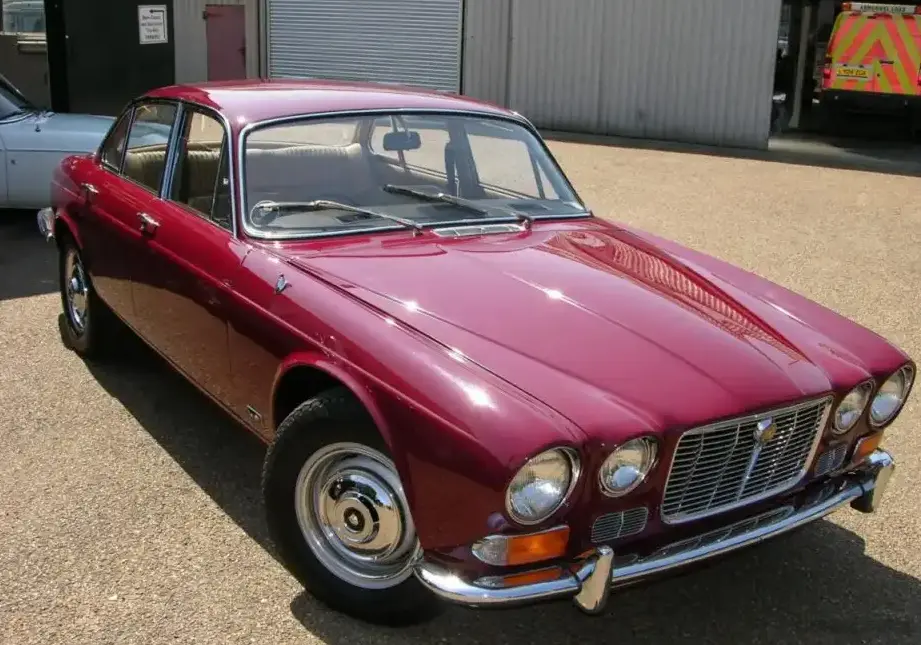
The Jaguar XJ 12 5.3, produced between 1975 and 1982, represented the pinnacle of British luxury motoring during its era. This variant, powered by the renowned Jaguar 5.3-liter V12 engine, was a flagship model within the XJ series (specifically the Series III), succeeding the earlier 6-cylinder XJ models. It aimed to provide a supremely comfortable and powerful grand touring experience, competing directly with Rolls-Royce and Mercedes-Benz in the luxury sedan segment. The XJ12 5.3 was a statement of engineering prowess and opulent design, embodying Jaguar’s commitment to performance and refinement. It was a significant evolution of the XJ lineage, introducing a more modern aesthetic and improved engineering compared to its predecessors.
Technical Specifications
| Brand | Jaguar |
| Model | XJ |
| Generation | XJ Series III |
| Engine Type | V12 5.3L |
| Start of Production | 1975 |
| End of Production | 1982 |
| Powertrain Architecture | Internal Combustion Engine |
| Body Type | Sedan |
| Number of Seats | 5 |
| Number of Doors | 4 |
| Fuel Type | Petrol (Gasoline) |
| Power Output | 287 hp |
| Engine Aspiration | Naturally Aspirated |
Powertrain & Engine Architecture
The heart of the XJ12 5.3 was Jaguar’s all-aluminum 5.3-liter V12 engine, designated the Jaguar engine code ‘JEC’. This engine was a marvel of engineering for its time, featuring a 60-degree V-angle and dual overhead camshafts operating four valves per cylinder. The aluminum construction significantly reduced weight compared to traditional cast-iron blocks, contributing to the car’s relatively nimble handling for its size. Fuel delivery was managed by a Bosch mechanical fuel injection system, a complex but effective system for the era. This system, while providing precise fuel metering, was known for requiring meticulous maintenance. The V12 produced 287 horsepower and a substantial 304 lb-ft of torque, providing effortless acceleration and a high top speed. The engine was mated to a three-speed automatic transmission (Borg-Warner Model 35), chosen for its smoothness and suitability for the luxury market. While not particularly fuel-efficient by modern standards, the transmission complemented the V12’s power delivery, offering a refined driving experience. The engine’s design prioritized smoothness and quiet operation, hallmarks of the Jaguar brand.
Driving Characteristics
The XJ12 5.3 offered a driving experience characterized by effortless power and a remarkably smooth ride. The V12 engine delivered strong acceleration across the rev range, making overtaking a breeze. The three-speed automatic transmission, while lacking the responsiveness of a manual gearbox, provided seamless gear changes and contributed to the car’s overall refinement. The XJ’s independent suspension, featuring coil springs and dampers, provided a comfortable and controlled ride, even on imperfect road surfaces. However, the car’s considerable weight (approximately 4,200 lbs) meant that handling was not as sharp as some of its European competitors. Steering was power-assisted, providing light and easy maneuverability, but lacked significant road feel. Compared to the XJ6 models with inline-six engines, the XJ12 5.3 offered a significantly more powerful and refined driving experience, albeit at the cost of increased fuel consumption and complexity. The V12’s torque allowed for relaxed cruising at highway speeds, while the automatic transmission eliminated the need for constant gear changes.
Equipment & Trim Levels
The XJ12 5.3 was lavishly equipped, reflecting its status as a luxury vehicle. Standard features included power-assisted steering, power windows, central locking, and a high-quality sound system. The interior was trimmed in Connolly leather, with wood veneer accents on the dashboard and door panels. Air conditioning was standard, as were electric adjustable seats. Optional extras included a sunroof, a rear seat entertainment system, and upgraded audio equipment. The XJ12 5.3 was available in a range of exterior colors, with a focus on classic Jaguar hues such as British Racing Green, Regency Red, and Old English White. Trim levels were relatively limited, with most customization occurring through the selection of optional extras. The emphasis was on providing a bespoke experience for the discerning buyer. The interior design prioritized comfort and elegance, with a focus on high-quality materials and craftsmanship.
Chassis & Braking
The XJ12 5.3 utilized a monocoque chassis construction, providing a strong and rigid platform. The suspension system consisted of independent double wishbones at the front and a fully independent rear suspension, contributing to the car’s comfortable ride. Braking was initially provided by Dunlop disc brakes all around, although some earlier models featured rear drum brakes. Power assistance was standard. The braking system was adequate for the car’s weight and performance, but lacked the stopping power of more modern systems. Anti-lock braking systems (ABS) were not available on the XJ12 5.3. The car’s steering system was a recirculating ball system, providing light and easy steering but lacking the precision of rack-and-pinion steering. Stabilizer bars were fitted to both the front and rear axles to reduce body roll during cornering.
Market Reception & Comparison
The Jaguar XJ12 5.3 was generally well-received by critics, who praised its luxurious interior, smooth ride, and powerful engine. However, the car’s complexity and potential for mechanical issues were also noted. Compared to the XJ6 models, the XJ12 5.3 offered a more prestigious and powerful driving experience, but at a significantly higher price point. Fuel economy was a major drawback, particularly in the context of the 1970s energy crisis. Reliability was also a concern, with the Bosch fuel injection system and the V12 engine itself requiring regular maintenance. Against its rivals, such as the Rolls-Royce Silver Shadow and Mercedes-Benz 450SEL, the XJ12 5.3 offered a more sporting driving experience and a more contemporary design, but lacked the ultimate prestige and build quality of its competitors.
Legacy
The Jaguar XJ12 5.3 remains a highly sought-after classic car today, appreciated for its elegant design, powerful engine, and luxurious interior. However, the car’s complexity and potential for mechanical issues mean that ownership requires a dedicated enthusiast with the resources to maintain it properly. The V12 engine, while renowned for its smoothness and power, is known to be prone to overheating and requires regular servicing. Parts availability can be a challenge, although a thriving aftermarket exists. Well-maintained examples of the XJ12 5.3 command high prices in the used car market, reflecting their rarity and desirability. The car represents a high point in Jaguar’s engineering and design history, and continues to be admired by enthusiasts around the world. Its influence can be seen in subsequent generations of the XJ, which have continued to uphold Jaguar’s reputation for luxury and performance.
