
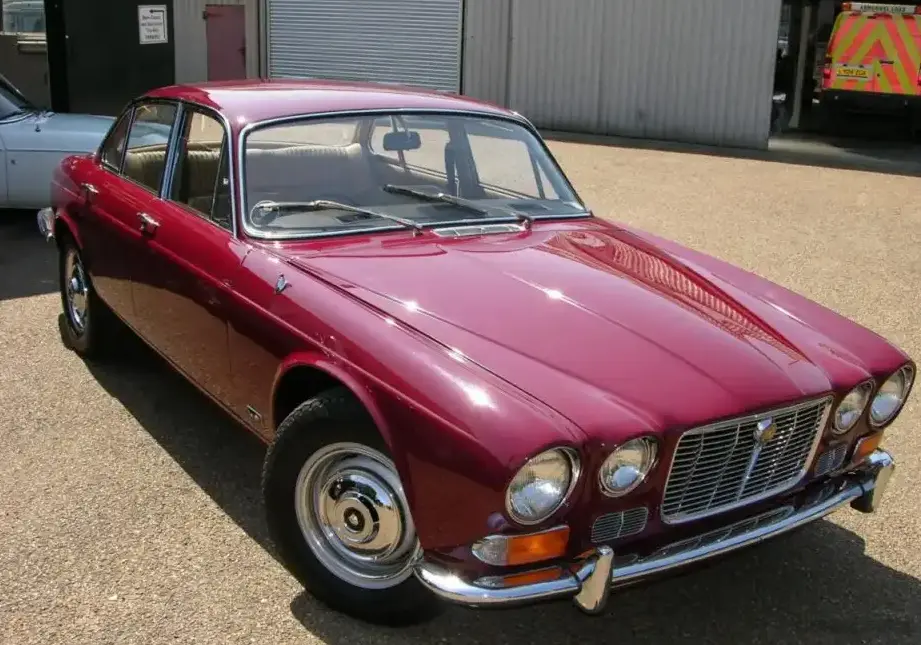
The Jaguar XJ12 HE, produced between 1981 and 1992, represents a refined and powerful iteration of the iconic XJ series. Positioned as the flagship of the XJ range during its production run, the HE (High Efficiency) model was Jaguar’s response to increasing fuel costs and emissions regulations while maintaining the luxury and performance expected of the brand. It was part of the Series III XJ line, known for its more angular styling compared to its predecessors, and represented a significant evolution in Jaguar’s engineering and design philosophy. The XJ12 HE aimed to deliver a blend of grand touring comfort and respectable performance, appealing to a discerning clientele who valued both luxury and a sophisticated driving experience.
Technical Specifications
| Brand | Jaguar |
| Model | XJ |
| Generation | XJ Series III |
| Type (Engine) | 12 H.E. (295 Hp) |
| Start of production | 1981 |
| End of production | 1992 |
| Powertrain Architecture | Internal Combustion Engine |
| Body type | Sedan |
| Seats | 5 |
| Doors | 4 |
| Fuel Type | Petrol (Gasoline) |
| Power | 295 Hp |
| Number of cylinders | 12 |
| Engine aspiration | Naturally Aspirated |
Powertrain & Engine Architecture
The heart of the XJ12 HE is its 5.3-liter V12 engine, designated as the AJ6. This engine was a significant departure from the earlier V12s used in the XJ series. The “HE” designation refers to the Lucas fuel injection system and a revised cylinder head design aimed at improving fuel economy. Unlike earlier Bosch fuel injection systems, the Lucas system was more sophisticated, offering improved control over fuel delivery and combustion. The engine featured a 60-degree V-angle, contributing to its relatively compact size for a V12. It utilized a single overhead camshaft per cylinder bank, operating four valves per cylinder. The compression ratio was 9.2:1. The engine produced 295 horsepower at 5,500 rpm and 360 lb-ft of torque at 3,500 rpm. The transmission was a three-speed Chrysler TorqueFlite automatic, chosen for its robustness and smoothness. While not the most modern transmission available at the time, it was well-suited to the V12’s torque characteristics and provided a comfortable driving experience. The drivetrain was rear-wheel drive.
Driving Characteristics
The XJ12 HE offered a distinctly grand touring experience. The V12 engine provided smooth, effortless acceleration, although it wasn’t particularly quick by contemporary standards. The three-speed automatic transmission, while reliable, meant that the engine lacked the responsiveness of more modern gearboxes. Gear ratios were optimized for cruising comfort rather than outright performance. The car felt substantial and planted on the road, thanks to its relatively heavy weight and well-tuned suspension. Steering was power-assisted, providing a light and easy feel, but lacked the precision of some competitors. The XJ12 HE wasn’t a sports car, but it offered a refined and comfortable ride, making it ideal for long-distance journeys. Compared to the six-cylinder XJ6 models, the XJ12 HE offered significantly more power and a smoother, more refined driving experience. However, it came at the cost of increased fuel consumption and complexity.
Equipment & Trim Levels
The XJ12 HE was positioned as the top-of-the-line XJ model, and as such, came standard with a comprehensive list of features. Interior appointments included Connolly leather upholstery, wood veneer trim, and electric windows and mirrors. Air conditioning was standard, as was a premium sound system. The dashboard layout was classic Jaguar, with elegant gauges and a refined design. Optional extras included a sunroof, heated seats, and a more advanced sound system. Trim levels were relatively limited, with most variations coming down to color choices and optional equipment. The emphasis was on providing a luxurious and comfortable environment for both the driver and passengers. Later models saw the introduction of features like trip computers and upgraded audio systems.
Chassis & Braking
The XJ12 HE utilized a monocoque chassis construction, providing a strong and rigid platform. Suspension was independent on all four wheels, with double wishbones at the front and a semi-trailing arm setup at the rear. Anti-roll bars were fitted to both the front and rear axles, helping to reduce body roll during cornering. Braking was provided by power-assisted disc brakes on all four wheels, although some earlier models featured rear drum brakes. The braking system was generally effective, but lacked the sophistication of more modern anti-lock braking systems (ABS), which were not standard equipment on the XJ12 HE until later in its production run. The steering was a recirculating ball system, providing a comfortable but somewhat vague feel.
Market Reception & Comparison
The XJ12 HE was generally well-received by critics, who praised its luxurious interior, smooth ride, and powerful engine. However, it was also criticized for its relatively high price, fuel consumption, and somewhat dated technology. Compared to its rivals, such as the Mercedes-Benz S-Class and BMW 7 Series, the XJ12 HE offered a more traditional British luxury experience. Fuel economy was a significant concern, with the XJ12 HE averaging around 14-16 mpg in real-world driving. Reliability was also a concern, as the V12 engine and its associated systems were complex and prone to issues if not properly maintained. The XJ12 HE appealed to a niche market of buyers who valued luxury, comfort, and a distinctive British character.
Legacy
The Jaguar XJ12 HE remains a desirable classic car today, appreciated for its elegant styling, powerful engine, and luxurious interior. The V12 engine, while complex, is considered a masterpiece of engineering and is highly sought after by enthusiasts. However, maintaining an XJ12 HE can be expensive, as parts can be difficult to find and specialized knowledge is required. The car’s long-term reliability is dependent on regular maintenance and careful ownership. In the used car market, prices for well-maintained examples have been steadily increasing in recent years, reflecting the car’s growing popularity among collectors and enthusiasts. The XJ12 HE represents a high point in Jaguar’s history, embodying the brand’s commitment to luxury, performance, and engineering excellence. It stands as a testament to a bygone era of automotive craftsmanship and remains a captivating example of British automotive heritage.
