
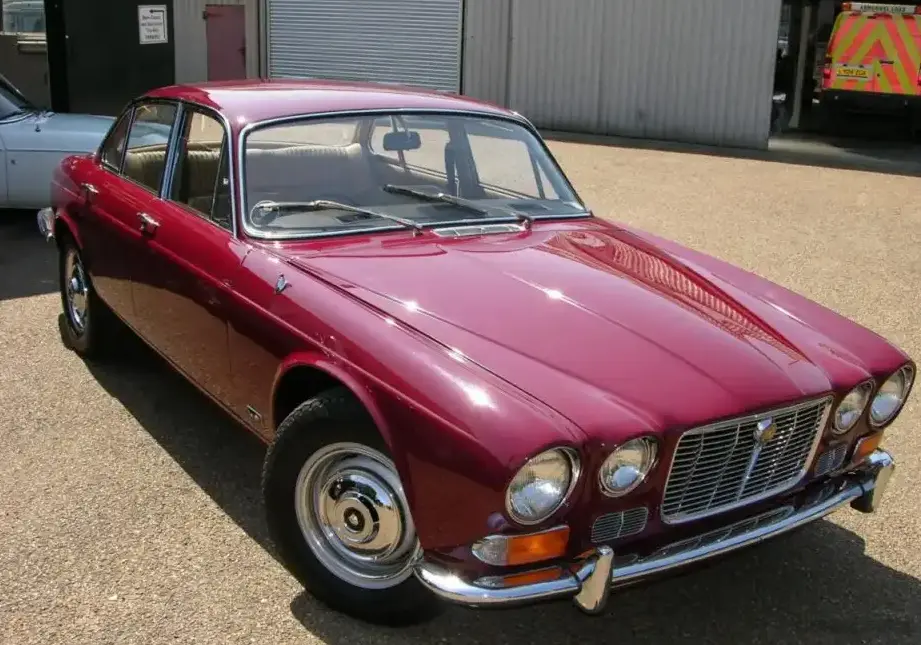
The Jaguar XJ 6 2.8, produced between 1968 and 1973, represents a pivotal point in Jaguar’s history, solidifying the XJ series as a benchmark for British luxury sedans. This variant, powered by a 2.8-liter inline-six engine producing 149 horsepower, occupied a significant position within the initial XJ range (Series 1). It offered a balance between performance and refinement, appealing to buyers seeking a sophisticated driving experience without the outright power of the larger-displacement models. The XJ 6 2.8 was a key component in establishing the XJ as a replacement for the aging Mark X and 420G, and it set the standard for Jaguar’s design and engineering for decades to come.
Technical Specifications
| Brand | Jaguar |
| Model | XJ |
| Generation | XJ (Series 1) |
| Type (Engine) | 6 2.8 (149 Hp) |
| Start of production | 1968 |
| End of production | 1973 |
| Powertrain Architecture | Internal Combustion Engine |
| Body type | Sedan |
| Seats | 5 |
| Doors | 4 |
| Fuel Type | Petrol (Gasoline) |
| Power | 149 Hp |
| Engine aspiration | Naturally Aspirated |
Powertrain & Engine Architecture
The heart of the XJ 6 2.8 is Jaguar’s renowned XK engine family, specifically the 2.8-liter (2792cc) version. This engine is an inline-six, known for its smoothness and inherent balance. It features a cast iron block and an aluminum cylinder head, a design choice that contributed to its relatively lightweight construction. The engine utilizes a single overhead camshaft (SOHC) design, operating two valves per cylinder. Fuel delivery is managed by three SU carburetors – a configuration typical of the era – providing responsive throttle control, though requiring periodic tuning for optimal performance. The 2.8-liter engine produced 149 horsepower at 5,500 rpm and 162 lb-ft of torque at 4,000 rpm. While not the most powerful engine in the XJ lineup (the 4.2-liter inline-six offered significantly more power), the 2.8-liter provided ample performance for comfortable cruising and spirited driving. The transmission offered was typically a four-speed manual, but a three-speed automatic transmission (Borg-Warner Type 35) was a popular option, catering to buyers prioritizing convenience and ease of use. The automatic transmission, while smooth, did impact acceleration times compared to the manual version.
Driving Characteristics
The XJ 6 2.8, particularly when equipped with the automatic transmission, offered a refined and comfortable driving experience. Acceleration was adequate, with a 0-60 mph time of around 11-12 seconds, placing it firmly in the luxury sedan category of the time. The automatic transmission’s gear ratios were geared towards smooth cruising rather than outright performance. The engine’s torque curve provided sufficient power for overtaking maneuvers, but required a downshift for more urgent acceleration. The XJ’s independent rear suspension, a hallmark of Jaguar engineering, contributed to a smooth and controlled ride, even on imperfect road surfaces. Compared to the 4.2-liter XJ, the 2.8-liter felt less urgent in its acceleration, but offered improved fuel economy. The manual transmission version, while less common, provided a more engaging driving experience with quicker acceleration and greater driver control. The steering was unassisted, providing a direct and communicative feel, though requiring more effort at low speeds.
Equipment & Trim Levels
The XJ 6 2.8 was offered with a generous level of standard equipment for its time. Standard features included reclining leather seats, walnut veneer trim, electric windows, and a comprehensive instrument panel. The interior was designed with a focus on luxury and comfort, utilizing high-quality materials and meticulous craftsmanship. Optional extras included air conditioning, a stereo system, power-assisted steering, and a sunroof. Trim levels were relatively simple, with variations primarily revolving around interior upholstery colors and the addition of optional equipment. The XJ 6 2.8 was positioned as a mid-range offering within the XJ lineup, offering a balance between luxury and affordability. It was a step up from the base XJ 6 models, but less expensive than the higher-specification 4.2-liter versions.
Chassis & Braking
The XJ 6 2.8 utilized a robust chassis construction, featuring a monocoque body shell for increased rigidity and reduced weight. The suspension system consisted of independent double wishbones at the front and a fully independent rear suspension with trailing arms and coil springs. This setup provided a comfortable ride and excellent handling characteristics. Braking was initially accomplished with Dunlop disc brakes all around, offering strong stopping power. However, some early models were equipped with rear drum brakes to reduce production costs. Power steering was optional, but became increasingly common as the model progressed. The XJ’s chassis and suspension were designed to provide a stable and controlled driving experience, even at higher speeds. Stabilizer bars were fitted front and rear to minimize body roll during cornering.
Market Reception & Comparison
The Jaguar XJ 6 2.8 was well-received by critics and buyers alike. It was praised for its elegant styling, luxurious interior, and smooth driving experience. The 2.8-liter engine was considered a good compromise between performance and fuel economy, making it an attractive option for buyers who did not require the outright power of the larger-displacement models. Compared to its rivals, such as the Mercedes-Benz W116 and the BMW E3, the XJ 6 2.8 offered a unique blend of British charm and engineering excellence. Fuel economy was reasonable for the era, averaging around 17-20 mpg. Reliability was generally good, although the SU carburetors required periodic maintenance and tuning. The XJ 6 2.8 offered a more affordable entry point into the XJ range compared to the 4.2-liter models, making it accessible to a wider range of buyers.
Legacy
The Jaguar XJ 6 2.8 holds a significant place in automotive history as a defining example of British luxury sedans. The 2.8-liter engine, while not the most powerful in the lineup, proved to be a reliable and durable powerplant. Today, well-maintained examples of the XJ 6 2.8 are highly sought after by collectors and enthusiasts. The car’s classic styling, comfortable interior, and smooth driving experience continue to appeal to those who appreciate the elegance and refinement of a bygone era. Parts availability can be a challenge, but a dedicated network of Jaguar specialists and suppliers ensures that these cars can be kept on the road for years to come. The XJ 6 2.8 remains a testament to Jaguar’s commitment to quality, craftsmanship, and driving pleasure.
