
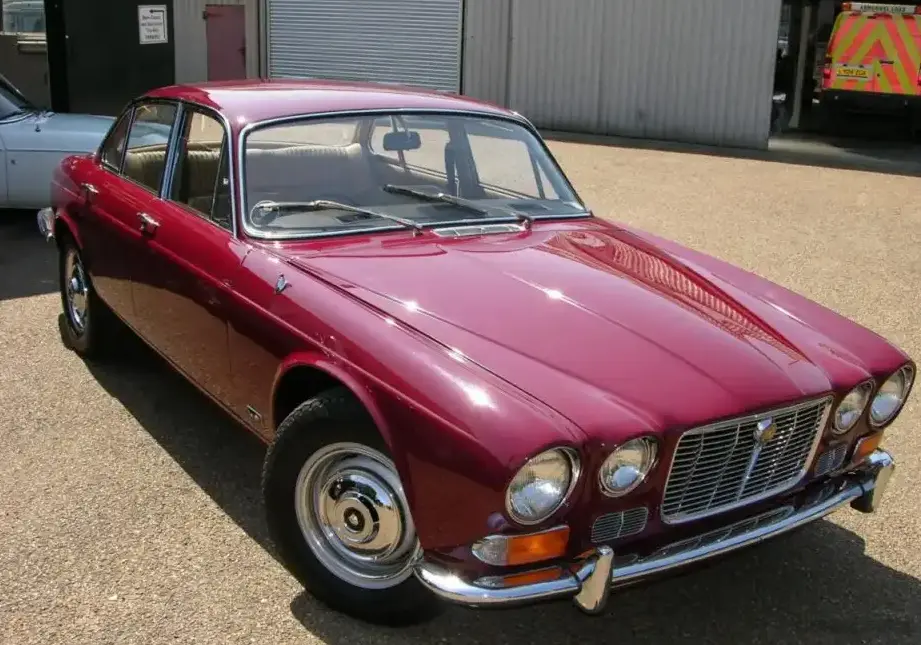
The Jaguar XJ 6 4.2, produced between 1975 and 1979, represents a significant iteration of the XJ series, Jaguar’s flagship sedan. Falling within the second generation (Series II) of the XJ, this variant offered a blend of luxury, performance, and British engineering. It occupied a position as a high-performance, yet refined, option within the XJ lineup, sitting above the 2.8-liter and 3.4-liter models but below the even more potent V12 versions. The XJ 6 4.2 was aimed at buyers seeking a substantial engine and a comfortable, luxurious driving experience, primarily targeting the North American and European markets where larger displacement engines were favored.
Technical Specifications
| Brand | Jaguar |
| Model | XJ |
| Generation | XJ (Series II) |
| Type (Engine) | 6 4.2 (173 Hp) |
| Start of Production | 1975 |
| End of Production | 1979 |
| Powertrain Architecture | Internal Combustion Engine |
| Body Type | Sedan |
| Seats | 5 |
| Doors | 4 |
| Fuel Type | Petrol (Gasoline) |
| Power | 173 Hp |
| Engine Aspiration | Naturally Aspirated |
Powertrain & Engine Architecture
The heart of the XJ 6 4.2 is its 4.2-liter inline-six cylinder engine, internally designated as the XK engine family. This engine, a descendant of Jaguar’s long-running XK series, is a naturally aspirated, dual overhead camshaft (DOHC) design. It features a cast iron block and an aluminum cylinder head, contributing to its robust construction and relatively lightweight nature. The engine utilizes a Lucas fuel injection system, a significant upgrade over the carburetors found in earlier XJ models, improving fuel efficiency and responsiveness. The XK engine is known for its smooth power delivery and distinctive exhaust note. The 4.2-liter version produced 173 horsepower at approximately 5,500 rpm and 230 lb-ft of torque at 3,500 rpm. The transmission paired with the 4.2-liter engine was typically a three-speed automatic, a Borg-Warner unit known for its smoothness, though a four-speed manual transmission was available as a less common option. The automatic transmission was geared towards providing a comfortable and effortless driving experience, prioritizing smooth shifts over outright performance.
Driving Characteristics
The XJ 6 4.2 offered a distinctly grand touring experience. While not a sports car, the 4.2-liter engine provided ample power for confident overtaking and cruising at highway speeds. The automatic transmission, while smooth, did result in some power loss compared to the manual version. Acceleration from 0 to 60 mph was typically around 9.5 seconds, respectable for the era. The car’s weight, approximately 3,800 pounds, contributed to a feeling of substantiality and stability on the road. The suspension, a fully independent setup with coil springs and dampers, provided a comfortable ride, absorbing bumps and imperfections with ease. However, the XJ 6 4.2 wasn’t without its handling limitations; body roll was noticeable in corners, and the steering, while precise, lacked the directness of more modern systems. Compared to the smaller 2.8 and 3.4-liter XJ models, the 4.2 offered significantly more torque, making it more relaxed at lower speeds and more capable of carrying a full load of passengers and luggage. Compared to the V12 models, the 4.2 offered a more manageable power delivery and was generally considered more reliable, though it lacked the ultimate performance of the twelve-cylinder engine.
Equipment & Trim Levels
The XJ 6 4.2 was well-equipped for its time, reflecting Jaguar’s commitment to luxury. Standard features included power steering, power-assisted brakes, leather upholstery, walnut veneer trim, and electric windows. Air conditioning was a common option, as were a sunroof and a premium sound system. The interior was characterized by its spaciousness, comfortable seating, and elegant design. Trim levels varied depending on the market, but generally, the XJ 6 4.2 was positioned as a mid-to-high-range model. Optional extras could significantly increase the price, with features like self-leveling suspension and upgraded audio systems available. The dashboard layout was classic Jaguar, featuring a wood-trimmed console and a comprehensive array of gauges.
Chassis & Braking
The XJ 6 4.2 utilized a robust chassis construction, featuring a separate body-on-frame design. The suspension system consisted of independent double wishbones at the front and a live axle with trailing arms at the rear. Braking was initially provided by disc brakes on all four wheels, although some earlier models may have featured rear drum brakes. Power assistance was standard, providing ample stopping power. Stabilizer bars were fitted to both the front and rear axles to reduce body roll during cornering. The steering system was a recirculating ball type, offering precise control but lacking the feel of more modern rack-and-pinion systems. The chassis was designed to provide a comfortable ride while maintaining a reasonable level of handling stability.
Market Reception & Comparison
The XJ 6 4.2 was generally well-received by automotive critics. It was praised for its luxurious interior, smooth ride, and powerful engine. However, some critics noted its relatively high price and occasional reliability issues, common with British cars of the era. Compared to its competitors, such as the Mercedes-Benz S-Class and the BMW 7 Series, the XJ 6 4.2 offered a unique blend of British style and performance. Fuel economy was not a strong point, averaging around 15-18 mpg in real-world driving. Reliability was a mixed bag; the engine itself was generally robust, but electrical systems and cooling systems could be prone to problems. The 4.2-liter engine offered a better balance of performance and reliability compared to the V12, making it a popular choice for those seeking a luxurious Jaguar without the potential maintenance headaches of the twelve-cylinder.
Legacy
The XJ 6 4.2 remains a desirable classic car today, appreciated for its elegant styling, luxurious interior, and smooth driving experience. While maintenance can be challenging due to the car’s age and complexity, parts availability is generally good, and a dedicated community of Jaguar enthusiasts provides support and expertise. The 4.2-liter engine is considered a particularly robust and reliable unit, making it a favored choice among collectors. The XJ 6 4.2 represents a high point in Jaguar’s engineering and design, embodying the brand’s commitment to luxury and performance. In the used car market, well-maintained examples command premium prices, reflecting their rarity and desirability. The car’s enduring appeal lies in its ability to transport occupants in comfort and style, offering a glimpse into a bygone era of automotive elegance.
