
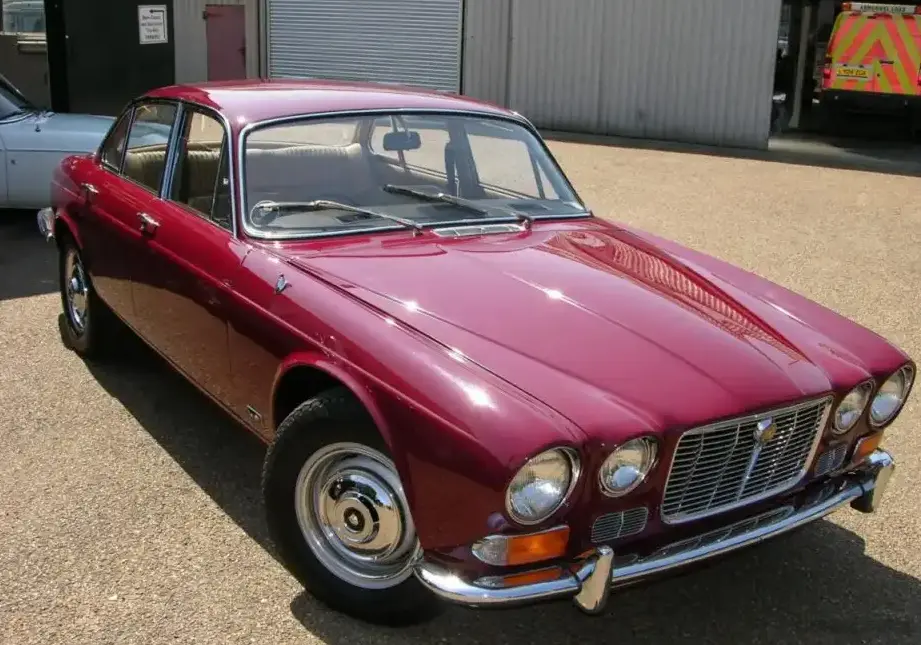
The Jaguar XJ 6 4.2, produced between 1969 and 1975, represents a pivotal iteration of Jaguar’s flagship saloon. Falling within the first generation (Series I) of the XJ line, it built upon the revolutionary independent rear suspension and monocoque construction introduced with the original XJ in 1968. This 4.2-liter variant occupied a significant position in the XJ range, offering a blend of luxury, performance, and refinement that cemented Jaguar’s reputation. It served as a step up from the 2.8-liter and 3.4-liter models, providing increased power and torque for more spirited driving, while remaining below the top-of-the-line V12 models introduced later in the Series I run. The XJ 6 4.2 was primarily aimed at the luxury car market in Europe, North America, and other key international markets, competing with vehicles like the Mercedes-Benz S-Class and Rolls-Royce Silver Shadow.
Technical Specifications
| Brand | Jaguar |
| Model | XJ |
| Generation | XJ (Series I) |
| Type (Engine) | 6 4.2 (186 Hp) |
| Start of production | 1969 |
| End of production | 1975 |
| Powertrain Architecture | Internal Combustion Engine |
| Body type | Sedan |
| Seats | 5 |
| Doors | 4 |
| Fuel Type | Petrol (Gasoline) |
| Power | 186 Hp |
| Engine aspiration | Naturally Aspirated |
Powertrain & Engine Architecture
The heart of the XJ 6 4.2 is its inline-six cylinder engine, displacing 4.2 liters (4235 cc). This engine, designated the XK engine family, was a long-running and highly regarded design, evolving from the original XK120 engine of the late 1940s. The 4.2-liter version featured a cast iron block and cylinder head, with an aluminum cylinder head. It utilized a single overhead camshaft (SOHC) operating two valves per cylinder. Fuel delivery was managed by three SU carburetors – a configuration that provided smooth power delivery and a characteristic exhaust note. The engine produced 186 horsepower at 5,500 rpm and 283 lb-ft of torque at 4,000 rpm. The transmission was typically a three-speed automatic, although a four-speed manual was also available, though less common. The automatic transmission, a Borg-Warner unit, was chosen by the majority of buyers for its ease of use and suitability for the car’s luxury orientation. The engine’s robust construction and relatively simple design contributed to its longevity and maintainability.
Driving Characteristics
The XJ 6 4.2 offered a distinctly grand touring experience. The 4.2-liter engine provided ample power for effortless cruising and confident overtaking. While not a sports car, the XJ 6 4.2 could accelerate from 0 to 60 mph in around 8.5 seconds, a respectable figure for the era. The automatic transmission, while smooth, did result in some power loss compared to the manual version. Gear ratios were optimized for comfortable highway driving, with a focus on relaxed cruising rather than aggressive acceleration. The independent rear suspension, a hallmark of the XJ, provided a remarkably smooth and controlled ride, even on imperfect road surfaces. Steering was power-assisted, making the car relatively easy to maneuver despite its size. The overall driving experience was one of refined comfort and understated performance, befitting a luxury saloon of its time.
Equipment & Trim Levels
The XJ 6 4.2 was generously equipped, even by the standards of the early 1970s. Standard features included power steering, electric windows, central locking, and a high-quality sound system. Interior upholstery was typically Connolly leather, available in a range of colors. Wood veneer trim adorned the dashboard and door panels, adding to the luxurious ambiance. The dashboard layout was elegant and functional, with clearly marked gauges and controls. Optional extras included air conditioning, a sunroof, and a more advanced sound system. Trim levels were relatively simple, with most variations revolving around interior color schemes and optional equipment. The XJ 6 4.2 was positioned as a premium model within the XJ range, offering a higher level of standard equipment and refinement than the 2.8-liter and 3.4-liter versions.
Chassis & Braking
The XJ 6 4.2 featured a monocoque construction, providing a strong and lightweight chassis. The independent rear suspension, utilizing coil springs and dampers, was a significant engineering achievement, offering a superior ride quality compared to cars with traditional leaf spring suspension. Front suspension was independent, utilizing double wishbones and torsion bars. Braking was initially accomplished with Dunlop disc brakes on all four wheels, although some early models featured rear drum brakes. Power-assisted steering was standard, reducing driver effort. Stabilizer bars were fitted to both the front and rear axles, minimizing body roll during cornering. The chassis and braking systems were designed to provide a balance of comfort, handling, and safety.
Market Reception & Comparison
The XJ 6 4.2 was well-received by critics and buyers alike. It was praised for its elegant styling, luxurious interior, and refined driving experience. The 4.2-liter engine was considered a significant improvement over the smaller engines in the XJ range, providing ample power for both city driving and long-distance cruising. Compared to the 2.8-liter and 3.4-liter models, the 4.2 offered noticeably stronger acceleration and a more relaxed driving experience. Fuel economy, however, was considerably lower than the smaller-engined versions. Reliability was generally good, although the SU carburetors required periodic maintenance and tuning. The XJ 6 4.2 competed directly with the Mercedes-Benz S-Class and Rolls-Royce Silver Shadow, offering a compelling alternative with its distinctive British character and sporting pretensions.
Legacy
The Jaguar XJ 6 4.2 remains a highly sought-after classic car today. Its elegant styling, luxurious interior, and smooth driving experience continue to appeal to enthusiasts. The 4.2-liter engine is known for its robustness and relatively simple maintenance requirements, although parts availability can be a challenge. Well-maintained examples command high prices in the used car market. The XJ 6 4.2 played a crucial role in establishing the XJ as Jaguar’s flagship saloon, and its innovative engineering and timeless design continue to influence automotive design today. It represents a high point in British automotive engineering and a testament to Jaguar’s commitment to luxury and performance. The car’s enduring appeal is a reflection of its quality, refinement, and enduring style.
