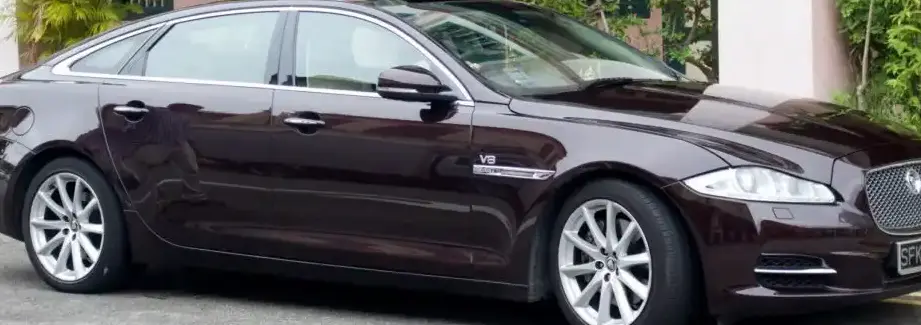
The Jaguar XJ Long (X351) 2.0, produced from 2012 to 2015, represented a significant shift for the flagship Jaguar sedan. While traditionally powered by larger displacement engines, Jaguar introduced a turbocharged 2.0-liter four-cylinder engine option to broaden the XJ’s appeal and improve fuel efficiency, particularly in markets with high vehicle taxation based on engine size. This variant, producing 240 horsepower, was primarily aimed at buyers seeking a luxurious experience with reduced running costs. The “Long” designation indicates an extended wheelbase, offering increased rear passenger legroom, positioning this model as a chauffeur-driven or luxury-focused option within the XJ range. It sat below the supercharged 3.0-liter and 5.0-liter variants in terms of performance, but offered a compelling blend of refinement and economy.
Technical Specifications
| Brand | Jaguar |
| Model | XJ |
| Generation | XJ Long (X351) |
| Type (Engine) | 2.0 (240 Hp) Automatic |
| Start of production | 2012 |
| End of production | 2015 |
| Powertrain Architecture | Internal Combustion engine |
| Body type | Sedan |
| Seats | 5 |
| Doors | 4 |
| Fuel consumption (economy) – urban | 11.7 l/100 km (20.1 US mpg, 24.1 UK mpg, 8.5 km/l) |
| Fuel consumption (economy) – extra urban | 6.7 l/100 km (35.1 US mpg, 42.2 UK mpg, 14.9 km/l) |
| Fuel consumption (economy) – combined | 8.5 l/100 km (27.7 US mpg, 33.2 UK mpg, 11.8 km/l) |
| CO2 emissions | 199 g/km |
| Fuel Type | Petrol (Gasoline) |
| Acceleration 0 – 100 km/h | 7.5 sec |
| Acceleration 0 – 62 mph | 7.5 sec |
| Acceleration 0 – 60 mph | 7.1 sec |
| Maximum speed | 241 km/h (149.75 mph) |
| Weight-to-power ratio | 7.1 kg/Hp, 140.6 Hp/tonne |
| Weight-to-torque ratio | 5 kg/Nm, 199.2 Nm/tonne |
| Power | 240 Hp @ 5500 rpm |
| Power per litre | 120.1 Hp/l |
| Torque | 340 Nm @ 2000-4000 rpm (250.77 lb.-ft. @ 2000-4000 rpm) |
| Engine layout | Front, Longitudinal |
| Engine Model/Code | EcoBoost / 204PT |
| Engine displacement | 1999 cm3 (121.99 cu. in.) |
| Number of cylinders | 4 |
| Engine configuration | Inline |
| Cylinder Bore | 87.5 mm (3.44 in.) |
| Piston Stroke | 83.1 mm (3.27 in.) |
| Fuel injection system | Direct injection |
| Engine aspiration | Turbocharger, Intercooler |
| Engine oil capacity | 5.4 l (5.71 US qt | 4.75 UK qt) |
| Coolant | 8.1 l (8.56 US qt | 7.13 UK qt) |
| Kerb Weight | 1707 kg (3763.29 lbs.) |
| Max. weight | 2320 kg (5114.72 lbs.) |
| Max load | 613 kg (1351.43 lbs.) |
| Trunk (boot) space – minimum | 520 l (18.36 cu. ft.) |
| Fuel tank capacity | 82 l (21.66 US gal | 18.04 UK gal) |
| Length | 5252 mm (206.77 in.) |
| Width | 1899 mm (74.76 in.) |
| Width including mirrors | 2105 mm (82.87 in.) |
| Height | 1457 mm (57.36 in.) |
| Wheelbase | 3157 mm (124.29 in.) |
| Front track | 1626 mm (64.02 in.) |
| Rear (Back) track | 1604 mm (63.15 in.) |
| Minimum turning circle | 12.3 m (40.35 ft.) |
| Drivetrain Architecture | Rear wheel drive |
| Drive wheel | Rear wheel drive |
| Number of gears and type of gearbox | 8 gears, automatic transmission |
| Front brakes | Ventilated discs |
| Rear brakes | Ventilated discs |
| Assisting systems | ABS (Anti-lock braking system) |
| Steering type | Steering rack and pinion |
| Wheel rims size | 8.0J x 18; 9.0J x 19; 9.0J x 20 |
Powertrain & Engine Architecture
The XJ 2.0 utilized Ford’s EcoBoost 2.0-liter inline-four cylinder engine, a powerplant also found in various Ford and Lincoln models. This engine, designated as 204PT by Jaguar, featured direct fuel injection and a single twin-scroll turbocharger with an intercooler. The engine’s aluminum block and cylinder head contributed to its relatively lightweight construction. The engine produced its peak power of 240 hp at 5500 rpm and a healthy 340 Nm (250.77 lb-ft) of torque between 2000 and 4000 rpm. This broad torque band was a key characteristic, providing good responsiveness in everyday driving. The engine was paired exclusively with ZF’s 8-speed automatic transmission, known for its smooth shifts and efficiency. This transmission offered a wide range of gear ratios, optimizing both acceleration and fuel economy.
Driving Characteristics
The 2.0-liter XJ Long offered a distinctly different driving experience compared to its higher-powered siblings. While it lacked the outright acceleration of the supercharged models, it provided a comfortable and refined cruising experience. The 8-speed automatic transmission was well-matched to the engine, providing smooth and timely gear changes. The gear ratios were tuned for efficiency, resulting in relaxed highway driving. Acceleration from 0-60 mph took approximately 7.1 seconds, which was respectable for a large luxury sedan, but noticeably slower than the supercharged variants. The engine was generally quiet and refined, but could become slightly coarse under hard acceleration. The rear-wheel-drive configuration contributed to balanced handling, although the XJ’s weight meant it wasn’t a particularly sporty vehicle.
Equipment & Trim Levels
The 2.0-liter XJ Long typically came well-equipped, reflecting Jaguar’s commitment to luxury. Standard features included leather upholstery, wood veneer trim, a premium audio system, navigation, and a comprehensive suite of safety features. The XJ Long also benefited from the extended wheelbase, providing significantly more rear legroom than the standard-wheelbase XJ. Optional extras included upgraded leather, a panoramic sunroof, rear-seat entertainment, and advanced driver-assistance systems. Trim levels varied by market, but generally offered increasing levels of luxury and technology. The 2.0-liter model was often positioned as the entry-level XJ Long, offering a taste of Jaguar luxury at a more accessible price point.
Chassis & Braking
The XJ Long’s chassis was constructed primarily of aluminum, contributing to its relatively lightweight construction despite its size. The suspension system featured double wishbones at the front and a multi-link setup at the rear, providing a comfortable and controlled ride. The 2.0-liter model typically featured ventilated disc brakes on all four wheels, along with ABS and electronic stability control. The braking system was generally effective, providing ample stopping power. Stabilizer bars were fitted front and rear to reduce body roll during cornering. The suspension tuning was geared towards comfort rather than outright sportiness, prioritizing a smooth and refined ride quality.
Market Reception & Comparison
The introduction of the 2.0-liter XJ Long was met with mixed reactions. Some critics praised Jaguar for offering a more fuel-efficient and affordable entry point into the XJ range. Others questioned whether a four-cylinder engine was appropriate for a flagship luxury sedan. However, the 2.0-liter XJ Long proved to be a popular choice in markets where vehicle taxation was based on engine size. Compared to the supercharged 3.0-liter and 5.0-liter variants, the 2.0-liter model offered significantly better fuel economy, but at the expense of performance. It also typically had a lower purchase price and potentially lower maintenance costs. The 2.0-liter XJ Long competed with other luxury sedans such as the BMW 5 Series, Mercedes-Benz E-Class, and Audi A6.
Legacy
The 2.0-liter XJ Long (X351) represented a pragmatic step for Jaguar, acknowledging the changing demands of the luxury car market. While not as iconic as its larger-engined siblings, it broadened the XJ’s appeal and introduced a new audience to the Jaguar brand. The EcoBoost engine proved to be relatively reliable, although regular maintenance is crucial. On the used car market, the 2.0-liter XJ Long offers a compelling value proposition, providing a luxurious and refined driving experience at a more affordable price point. Its fuel efficiency and lower running costs make it an attractive option for buyers seeking a comfortable and practical luxury sedan.