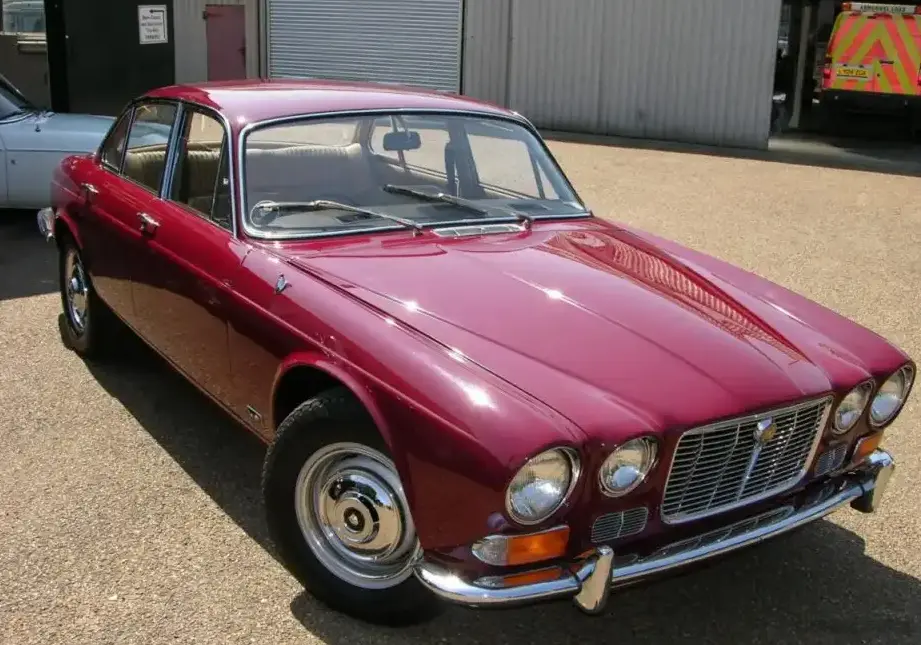
The Jaguar XJ (X300) 3.2 24V Sport, produced between 1994 and 1997, represented a significant evolution of Jaguar’s flagship saloon. Falling within the XJ40 lineage, the X300 was a comprehensive redesign intended to address criticisms of the preceding XJ6 and XJ12 models, particularly regarding build quality and contemporary styling. The 3.2-liter Sport variant occupied a performance-oriented niche within the X300 range, positioned above the base 3.2-liter model and below the range-topping 4.0-liter versions. It aimed to deliver a blend of luxury, refinement, and sporting capability, appealing to buyers who desired a more engaging driving experience without sacrificing the traditional Jaguar qualities.
Technical Specifications
| Brand | Jaguar |
| Model | XJ |
| Generation | XJ (X300) |
| Type (Engine) | 3.2 24V Sport (211 Hp) |
| Start of production | 1994 |
| End of production | 1997 |
| Powertrain Architecture | Internal Combustion engine |
| Body type | Sedan |
| Seats | 5 |
| Doors | 4 |
| Fuel consumption (combined) | 11.2 l/100 km |
| Fuel consumption (US mpg) | 21 US mpg |
| Fuel consumption (UK mpg) | 25.2 UK mpg |
| Fuel consumption (km/l) | 8.9 km/l |
| Fuel Type | Petrol (Gasoline) |
| Acceleration 0 – 100 km/h | 8.4 sec |
| Acceleration 0 – 62 mph | 8.4 sec |
| Acceleration 0 – 60 mph | 8 sec |
| Maximum speed | 223 km/h (138.57 mph) |
| Weight-to-power ratio | 8.5 kg/Hp, 117.2 Hp/tonne |
| Weight-to-torque ratio | 6 kg/Nm, 167.2 Nm/tonne |
| Power | 211 Hp @ 5100 rpm |
| Power per litre | 65.1 Hp/l |
| Torque | 301 Nm @ 4500 rpm (222.01 lb.-ft. @ 4500 rpm) |
| Engine layout | Front, Longitudinal |
| Engine displacement | 3239 cm3 (197.66 cu. in.) |
| Number of cylinders | 6 |
| Engine configuration | Inline |
| Cylinder Bore | 91 mm (3.58 in.) |
| Piston Stroke | 83 mm (3.27 in.) |
| Compression ratio | 10:1 |
| Number of valves per cylinder | 4 |
| Fuel injection system | Multi-port manifold injection |
| Engine aspiration | Naturally aspirated engine |
| Valvetrain | DOHC |
| Kerb Weight | 1800 kg (3968.32 lbs.) |
| Max. weight | 2220 kg (4894.26 lbs.) |
| Max load | 420 kg (925.94 lbs.) |
| Trunk (boot) space – minimum | 430 l (15.19 cu. ft.) |
| Fuel tank capacity | 86 l (22.72 US gal | 18.92 UK gal) |
| Length | 5023 mm (197.76 in.) |
| Width | 1798 mm (70.79 in.) |
| Height | 1307 mm (51.46 in.) |
| Wheelbase | 2870 mm (112.99 in.) |
| Front track | 1500 mm (59.06 in.) |
| Rear (Back) track | 1498 mm (58.98 in.) |
| Drivetrain Architecture | The Internal combustion engine (ICE) drives the rear wheels of the vehicle. |
| Drive wheel | Rear wheel drive |
| Number of gears and type of gearbox | 5 gears, manual transmission |
| Front suspension | Double wishbone |
| Rear suspension | Coil spring |
| Front brakes | Ventilated discs |
| Rear brakes | Ventilated discs |
| Assisting systems | ABS (Anti-lock braking system), Hydraulic Steering |
| Tires size | 225/55 R16 |
Powertrain & Engine Architecture
The heart of the XJ 3.2 Sport was Jaguar’s AJ16 inline-six engine. Displacing 3.2 liters, this engine featured a four-valve-per-cylinder, dual overhead camshaft (DOHC) design. The engine utilized multi-port fuel injection and a compression ratio of 10:1, producing 211 horsepower at 5100 rpm and 301 Nm (222 lb-ft) of torque at 4500 rpm. The engine block was constructed from cast iron, while the cylinder head was made of aluminum alloy. The 5-speed manual transmission was a key differentiator for the Sport model, providing a more direct connection to the engine and enhancing the driving experience. This contrasted with the automatic transmissions offered in other X300 variants.
Driving Characteristics
The combination of the 3.2-liter engine and the 5-speed manual gearbox resulted in a noticeably more engaging driving experience compared to the automatic-equipped XJ 3.2. Acceleration to 60 mph was achieved in around 8 seconds, and the car felt responsive and eager to rev. The manual transmission allowed drivers to fully exploit the engine’s powerband, while the relatively lightweight construction of the X300 (around 3968 lbs) contributed to its agility. While not a true sports saloon in the modern sense, the XJ 3.2 Sport offered a pleasing balance between comfort and performance, making it a capable grand tourer.
Equipment & Trim Levels
The “Sport” designation for this variant extended beyond the transmission choice. Standard equipment included sports suspension, which lowered the ride height and stiffened the dampers for improved handling. Interior appointments typically featured leather upholstery, wood trim, and a leather-wrapped steering wheel. Power windows, power seats, and air conditioning were also standard. Optional extras included a premium sound system, sunroof, and upgraded leather options. The XJ 3.2 Sport aimed to provide a more driver-focused experience without sacrificing the luxury expected of a Jaguar.
Chassis & Braking
The X300 chassis represented a significant improvement over the XJ40, with increased torsional rigidity thanks to a redesigned underbody structure. Suspension consisted of double wishbones at the front and a coil spring setup at the rear. The XJ 3.2 Sport benefitted from a slightly stiffer suspension tuning compared to the standard XJ 3.2. Braking was handled by ventilated discs on all four wheels, assisted by an anti-lock braking system (ABS). The steering was hydraulic power-assisted, providing a balanced feel and reasonable feedback.
Market Reception & Comparison
The XJ 3.2 Sport was generally well-received by automotive critics, who praised its improved build quality, refined engine, and engaging driving dynamics. The manual transmission was a particular highlight for enthusiasts. Compared to the automatic XJ 3.2, the Sport model offered a more connected and rewarding driving experience. Against competitors like the BMW 5 Series and Mercedes-Benz E-Class, the XJ 3.2 Sport offered a unique blend of British luxury and sporting character. Fuel economy, however, was not a strong point, averaging around 21 mpg in combined driving.
Legacy
The Jaguar XJ (X300) 3.2 Sport has become a sought-after classic among Jaguar enthusiasts. The AJ16 engine, while not without its quirks, is generally considered reliable when properly maintained. The manual transmission is particularly valued, as it represents a rare and desirable configuration. Today, well-maintained examples command a premium in the used car market. The X300, and particularly the 3.2 Sport, is remembered as a pivotal model in Jaguar’s history, marking a return to form for the brand and showcasing its commitment to both luxury and performance.