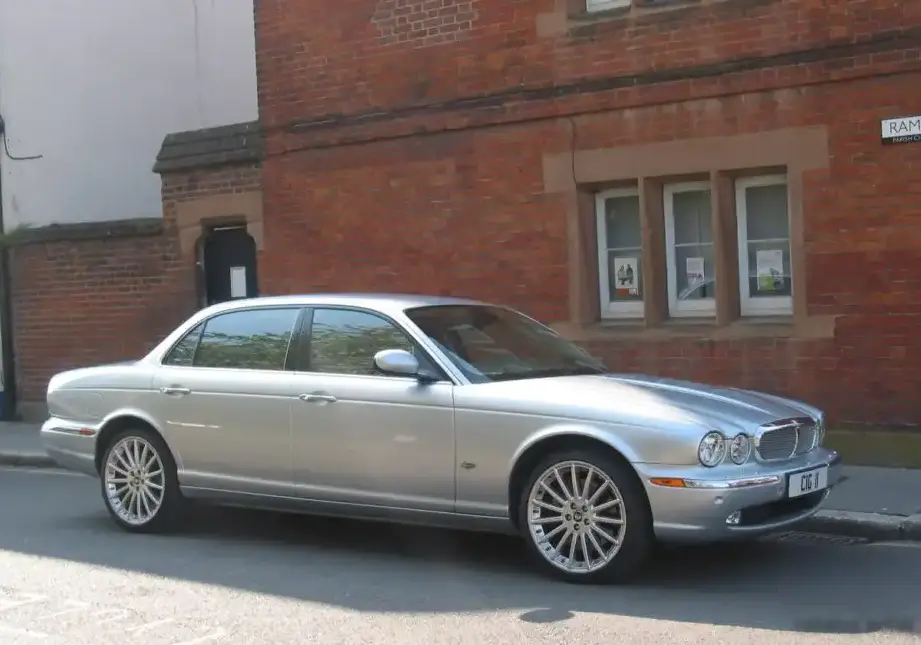
The Jaguar XJ (X350), produced between 2003 and 2009, represented a significant departure for the flagship Jaguar sedan. Replacing the XJ (X308), the X350 was the first XJ to feature an all-aluminum body structure, a move aimed at reducing weight and improving rigidity. This particular variant, the 3.5 V8 32V (258 Hp) Automatic, was a core model in the X350 lineup, offering a balance of performance, luxury, and refinement. Production of this specific engine and transmission combination ran from 2003 to 2006, serving as a key entry point into the X350 range for many buyers.
Technical Specifications
| Brand | Jaguar |
| Model | XJ |
| Generation | XJ (X350) |
| Type (Engine) | 3.5 V8 32V (258 Hp) Automatic |
| Start of production | 2003 |
| End of production | 2006 |
| Powertrain Architecture | Internal Combustion engine |
| Body type | Sedan |
| Seats | 5 |
| Doors | 4 |
| Fuel consumption (economy) – urban | 15.9 l/100 km (14.8 US mpg, 17.8 UK mpg, 6.3 km/l) |
| Fuel consumption (economy) – extra urban | 7.7 l/100 km (30.5 US mpg, 36.7 UK mpg, 13 km/l) |
| Fuel consumption (economy) – combined | 10.7 l/100 km (22 US mpg, 26.4 UK mpg, 9.3 km/l) |
| Fuel Type | Petrol (Gasoline) |
| Acceleration 0 – 100 km/h | 7.6 sec |
| Acceleration 0 – 62 mph | 7.6 sec |
| Acceleration 0 – 60 mph | 7.2 sec |
| Maximum speed | 242 km/h (150.37 mph) |
| Weight-to-power ratio | 6.3 kg/Hp, 159.8 Hp/tonne |
| Weight-to-torque ratio | 4.8 kg/Nm, 207.4 Nm/tonne |
| Power | 258 Hp @ 6250 rpm |
| Power per litre | 72.6 Hp/l |
| Torque | 335 Nm @ 4200 rpm (247.08 lb.-ft. @ 4200 rpm) |
| Engine layout | Front, Longitudinal |
| Engine Model/Code | AJ |
| Engine displacement | 3555 cm3 (216.94 cu. in.) |
| Number of cylinders | 8 |
| Engine configuration | V-engine |
| Cylinder Bore | 86 mm (3.39 in.) |
| Piston Stroke | 76.5 mm (3.01 in.) |
| Compression ratio | 11:1 |
| Number of valves per cylinder | 4 |
| Fuel injection system | Multi-port manifold injection |
| Engine aspiration | Naturally aspirated engine |
| Engine oil capacity | 6 l (6.34 US qt | 5.28 UK qt) |
| Coolant | 9.45 l (9.99 US qt | 8.31 UK qt) |
| Kerb Weight | 1615 kg (3560.47 lbs.) |
| Max. weight | 2200 kg (4850.17 lbs.) |
| Max load | 585 kg (1289.7 lbs.) |
| Trunk (boot) space – minimum | 470 l (16.6 cu. ft.) |
| Fuel tank capacity | 85 l (22.45 US gal | 18.7 UK gal) |
| Length | 5090 mm (200.39 in.) |
| Width | 1860 mm (73.23 in.) |
| Height | 1448 mm (57.01 in.) |
| Wheelbase | 3034 mm (119.45 in.) |
| Front track | 1556 mm (61.26 in.) |
| Rear (Back) track | 1546 mm (60.87 in.) |
| Drivetrain Architecture | The Internal combustion engine (ICE) drives the rear wheels of the vehicle. |
| Drive wheel | Rear wheel drive |
| Number of gears and type of gearbox | 6 gears, automatic transmission |
| Front suspension | Hydro-pneumatic element |
| Rear suspension | Hydro-pneumatic element |
| Front brakes | Ventilated discs |
| Rear brakes | Ventilated discs |
| Assisting systems | ABS (Anti-lock braking system) |
| Steering type | Steering rack and pinion |
| Tires size | 235/55 R17 |
Powertrain & Engine Architecture
The heart of this XJ variant is the 3.5-liter AJ-V8 engine. This engine, part of Jaguar’s AJ series, is a naturally aspirated, 32-valve V8. It utilizes multi-port fuel injection and a relatively conservative 11:1 compression ratio. The engine code, AJ, signifies its place within Jaguar’s modular V8 family. The 3.5L version was designed to provide a smooth and refined power delivery, prioritizing comfort over outright performance. It’s important to note that this engine shares a fundamental architecture with the 4.2-liter V8 found in higher-spec XJ models, but with a smaller bore and stroke. The engine is longitudinally mounted in the front of the vehicle, driving the rear wheels.
Paired with the 3.5L V8 is a six-speed automatic transmission. This transmission, sourced from ZF, was known for its smooth shifting and responsiveness. It featured adaptive shift programming, adjusting shift points based on driving style and conditions. The transmission’s gear ratios were tuned to provide a balance between acceleration and fuel efficiency, leaning towards the former given the engine’s torque output. While not as sporty as the manual transmissions offered in some markets, the ZF automatic contributed significantly to the XJ’s luxurious driving experience.
Driving Characteristics
The 3.5 V8 Automatic XJ offered a distinctly grand touring experience. Acceleration from 0-60 mph took around 7.2 seconds, respectable for a large luxury sedan of its era, but noticeably slower than the supercharged or 4.2L V8 models. The engine delivered its peak torque at 4200 rpm, providing ample power for everyday driving and overtaking maneuvers. The automatic transmission generally shifted smoothly, although it could occasionally feel hesitant during quick downshifts. The emphasis was on refinement and comfort, with the suspension effectively isolating passengers from road imperfections. The steering was light and precise, making the XJ easy to maneuver in urban environments.
Equipment & Trim Levels
The 3.5 V8 Automatic XJ typically came standard with a generous array of features, befitting its luxury status. These included leather upholstery, wood veneer trim, automatic climate control, a premium sound system, and power-adjustable front seats. Optional extras included heated and cooled seats, a rear seat entertainment system, and upgraded leather options. The trim level often dictated the availability of certain features, with higher trims offering more customization options. The XJ’s interior was designed to be a sanctuary of comfort and sophistication, with a focus on high-quality materials and meticulous craftsmanship.
Chassis & Braking
The X350’s all-aluminum body structure was a key engineering achievement, contributing to its lightweight construction and improved rigidity. The suspension system utilized a sophisticated hydro-pneumatic setup, providing a smooth and controlled ride. Front and rear ventilated disc brakes provided ample stopping power, aided by an anti-lock braking system (ABS). The XJ’s chassis was tuned to prioritize comfort and stability, rather than outright sportiness. The rear suspension geometry was designed to minimize body roll and maintain composure during cornering.
Market Reception & Comparison
The 3.5 V8 Automatic XJ was generally well-received by critics, who praised its comfortable ride, refined engine, and luxurious interior. However, some reviewers noted that its performance was not as exhilarating as that of its more powerful siblings. Compared to the supercharged XJ, the 3.5L model offered a more affordable entry point into the XJ range, but at the expense of outright speed. Fuel economy was reasonable for a V8-powered luxury sedan, averaging around 22 mpg in combined driving. Reliability was generally good, although the complex hydro-pneumatic suspension system could require occasional maintenance.
Legacy
The Jaguar XJ (X350) 3.5 V8 Automatic remains a desirable used car today, particularly for those seeking a comfortable and refined luxury sedan. The AJ-V8 engine is known for its durability and relatively straightforward maintenance. While the hydro-pneumatic suspension can be a potential source of expense, it also provides a unique and exceptionally comfortable ride. The X350 represents a pivotal moment in Jaguar’s history, marking the transition to an all-aluminum body structure and a more modern design language. This variant, with its balanced blend of performance, luxury, and affordability, continues to appeal to enthusiasts and collectors alike.