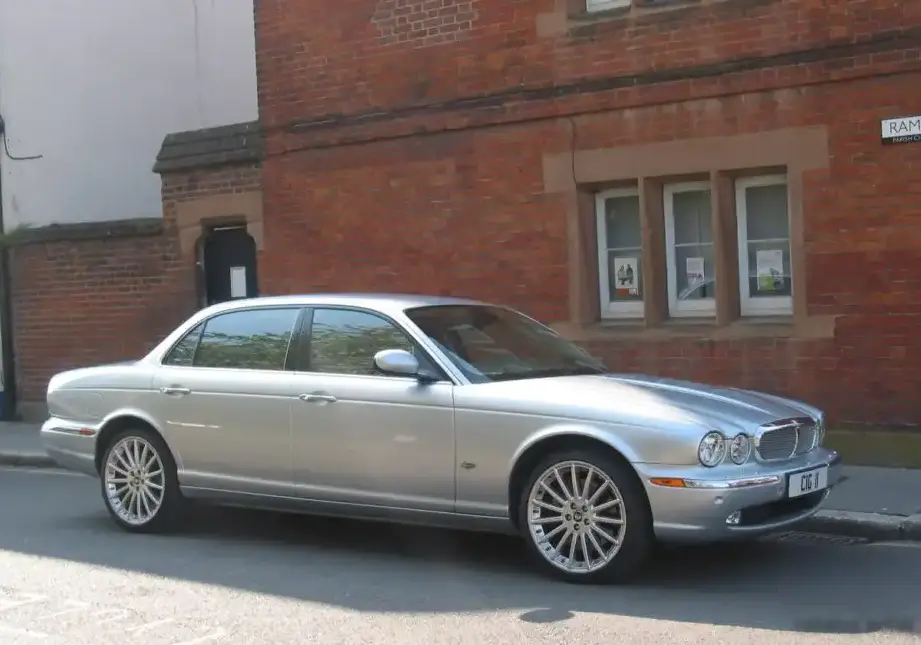
The Jaguar XJ (X350) 4.2 V8 32V Automatic, produced between 2003 and 2006, represented a significant evolution for Jaguar’s flagship sedan. Falling within the third generation of the XJ series (X350 chassis code), this variant occupied a premium position in the lineup, offering a blend of luxury, performance, and advanced technology. It was positioned above the entry-level 3.0L models and served as a stepping stone to the even more powerful supercharged variants. The X350 generation marked a departure from the previous XJ models, incorporating a significant amount of aluminum in its construction – a first for a mass-produced sedan – resulting in a lighter and more rigid chassis.
Technical Specifications
| Brand | Jaguar |
| Model | XJ |
| Generation | XJ (X350) |
| Type (Engine) | 4.2 V8 32V (300 Hp) Automatic |
| Start of production | 2003 |
| End of production | 2006 |
| Powertrain Architecture | Internal Combustion engine |
| Body type | Sedan |
| Seats | 5 |
| Doors | 4 |
| Fuel consumption (economy) – urban | 16 l/100 km (14.7 US mpg, 17.7 UK mpg, 6.3 km/l) |
| Fuel consumption (economy) – extra urban | 8.1 l/100 km (29 US mpg, 34.9 UK mpg, 12.3 km/l) |
| Fuel consumption (economy) – combined | 10.9 l/100 km (21.6 US mpg, 25.9 UK mpg, 9.2 km/l) |
| Fuel Type | Petrol (Gasoline) |
| Acceleration 0 – 100 km/h | 6.6 sec |
| Acceleration 0 – 62 mph | 6.6 sec |
| Acceleration 0 – 60 mph | 6.3 sec |
| Maximum speed | 250 km/h (155.34 mph) |
| Weight-to-power ratio | 5.4 kg/Hp, 185.8 Hp/tonne |
| Weight-to-torque ratio | 3.9 kg/Nm, 254.5 Nm/tonne |
| Power | 300 Hp @ 6000 rpm |
| Power per litre | 71.5 Hp/l |
| Torque | 411 Nm @ 4100 rpm (303.14 lb.-ft. @ 4100 rpm) |
| Engine layout | Front, Longitudinal |
| Engine Model/Code | AJ33, AJ34 |
| Engine displacement | 4196 cm3 (256.06 cu. in.) |
| Number of cylinders | 8 |
| Engine configuration | V-engine |
| Cylinder Bore | 86 mm (3.39 in.) |
| Piston Stroke | 90.3 mm (3.56 in.) |
| Compression ratio | 11:1 |
| Number of valves per cylinder | 4 |
| Fuel injection system | Multi-port manifold injection |
| Engine aspiration | Naturally aspirated engine |
| Engine oil capacity | 6 l (6.34 US qt | 5.28 UK qt) |
| Coolant | 9.45 l (9.99 US qt | 8.31 UK qt) |
| Kerb Weight | 1615 kg (3560.47 lbs.) |
| Max. weight | 2200 kg (4850.17 lbs.) |
| Max load | 585 kg (1289.7 lbs.) |
| Trunk (boot) space – minimum | 470 l (16.6 cu. ft.) |
| Fuel tank capacity | 85 l (22.45 US gal | 18.7 UK gal) |
| Length | 5090 mm (200.39 in.) |
| Width | 1860 mm (73.23 in.) |
| Height | 1448 mm (57.01 in.) |
| Wheelbase | 3034 mm (119.45 in.) |
| Front track | 1556 mm (61.26 in.) |
| Rear (Back) track | 1546 mm (60.87 in.) |
| Drivetrain Architecture | The Internal combustion engine (ICE) drives the rear wheels of the vehicle. |
| Drive wheel | Rear wheel drive |
| Number of gears and type of gearbox | 6 gears, automatic transmission |
| Front suspension | Hydro-pneumatic element |
| Rear suspension | Hydro-pneumatic element |
| Front brakes | Ventilated discs |
| Rear brakes | Ventilated discs |
| Assisting systems | ABS (Anti-lock braking system) |
| Steering type | Steering rack and pinion |
| Tires size | 235/50 R18 |
Powertrain & Engine Architecture
At the heart of the XJ 4.2 V8 was the AJ33/AJ34 engine, a naturally aspirated 4.2-liter V8. This engine, a descendant of Jaguar’s long line of V8s, featured a 60-degree V-angle and utilized a multi-port fuel injection system. The engine produced 300 horsepower at 6000 rpm and 411 Nm (303 lb-ft) of torque at 4100 rpm. The engine’s aluminum construction contributed to its relatively lightweight design. The X350 4.2 V8 was paired with a six-speed automatic transmission, offering smooth and refined gear changes. This transmission was designed to complement the engine’s power delivery, providing a balance between performance and comfort. The transmission featured a ‘J-gate’ selector, a Jaguar signature, allowing for both automatic and manual gear selection.
Driving Characteristics
The 4.2 V8 Automatic XJ offered a distinctly grand touring experience. Acceleration from 0 to 60 mph took approximately 6.3 seconds, and it could reach a top speed of 155 mph. While not as overtly sporty as some of its competitors, the XJ 4.2 provided ample power for effortless cruising and confident overtaking. The automatic transmission, while smooth, wasn’t particularly quick to downshift, making it feel slightly less responsive than the manual transmission options available in other XJ variants. The gear ratios were tuned for comfort and fuel efficiency, prioritizing a relaxed driving experience over outright performance. Compared to the later 4.2 Supercharged models, the naturally aspirated version offered a more linear power delivery, lacking the immediate surge of the supercharger but providing a more predictable and manageable driving experience.
Equipment & Trim Levels
The XJ 4.2 V8 Automatic came standard with a comprehensive list of luxury features. Interior appointments included leather upholstery, wood veneer trim, and a premium sound system. Standard equipment also included automatic climate control, power-adjustable seats with memory function, and a sunroof. Optional extras included a rear seat entertainment system, upgraded leather options, and a navigation system. The XJ 4.2 typically featured a more refined interior trim than the base 3.0L models, with higher-quality materials and more extensive wood trim.
Chassis & Braking
The X350 XJ benefited from its advanced aluminum chassis, which provided a significant improvement in rigidity compared to previous generations. The suspension system utilized a sophisticated hydro-pneumatic setup, offering a smooth and comfortable ride. The front and rear suspension were independent, contributing to excellent handling characteristics. Braking duties were handled by ventilated disc brakes on all four wheels, coupled with an Anti-lock Braking System (ABS) for enhanced safety. The XJ 4.2’s weight distribution was well-balanced, contributing to its stable and predictable handling.
Market Reception & Comparison
The XJ 4.2 V8 Automatic was generally well-received by automotive critics. It was praised for its luxurious interior, comfortable ride, and refined powertrain. However, some critics noted that the automatic transmission could feel slightly sluggish, and the fuel economy was not particularly impressive. Compared to rivals like the BMW 7 Series and Mercedes-Benz S-Class, the XJ 4.2 offered a unique blend of British luxury and understated elegance. The 3.0L models offered better fuel economy, while the supercharged variants provided significantly more performance, catering to different buyer preferences.
Legacy
The Jaguar XJ (X350) 4.2 V8 Automatic remains a desirable used car today, particularly for those seeking a luxurious and comfortable grand tourer. The AJ33/AJ34 engine is generally considered reliable, although regular maintenance is crucial. Common issues include oil leaks and occasional problems with the cooling system. The aluminum chassis, while innovative, can be susceptible to corrosion in areas exposed to salt. Despite these potential issues, the XJ 4.2 V8 Automatic offers a compelling combination of style, performance, and luxury, making it a classic example of British automotive engineering.