Technical Specifications
| Brand | Jaguar |
| Model | XJ |
| Generation | XJ (X350) |
| Type (Engine) | 4.2 V8 32V L (298 Hp) Automatic |
| Start of production | 2004 |
| End of production | 2006 |
| Powertrain Architecture | Internal Combustion engine |
| Body type | Sedan |
| Seats | 5 |
| Doors | 4 |
| Fuel consumption (urban) | 16 l/100 km (14.7 US mpg, 17.7 UK mpg, 6.3 km/l) |
| Fuel consumption (extra urban) | 8.1 l/100 km (29 US mpg, 34.9 UK mpg, 12.3 km/l) |
| Fuel consumption (combined) | 10.9 l/100 km (21.6 US mpg, 25.9 UK mpg, 9.2 km/l) |
| Fuel Type | Petrol (Gasoline) |
| Acceleration 0 – 100 km/h | 6.6 sec |
| Acceleration 0 – 62 mph | 6.6 sec |
| Acceleration 0 – 60 mph | 6.3 sec |
| Maximum speed | 250 km/h (155.34 mph) |
| Weight-to-power ratio | 5.5 kg/Hp, 181.7 Hp/tonne |
| Weight-to-torque ratio | 4 kg/Nm, 250.6 Nm/tonne |
| Power | 298 Hp @ 6000 rpm |
| Power per litre | 71 Hp/l |
| Torque | 411 Nm @ 4100 rpm (303.14 lb.-ft. @ 4100 rpm) |
| Engine layout | Front, Longitudinal |
| Engine Model/Code | AJ33, AJ34 |
| Engine displacement | 4196 cm3 (256.06 cu. in.) |
| Number of cylinders | 8 |
| Engine configuration | V-engine |
| Cylinder Bore | 86 mm (3.39 in.) |
| Piston Stroke | 90.3 mm (3.56 in.) |
| Compression ratio | 11:1 |
| Number of valves per cylinder | 4 |
| Fuel injection system | Multi-port manifold injection |
| Engine aspiration | Naturally aspirated engine |
| Engine oil capacity | 6 l (6.34 US qt | 5.28 UK qt) |
| Coolant capacity | 9.45 l (9.99 US qt | 8.31 UK qt) |
| Kerb Weight | 1640 kg (3615.58 lbs.) |
| Max. weight | 2225 kg (4905.29 lbs.) |
| Max load | 585 kg (1289.7 lbs.) |
| Trunk (boot) space – minimum | 470 l (16.6 cu. ft.) |
| Fuel tank capacity | 85 l (22.45 US gal | 18.7 UK gal) |
| Length | 5215 mm (205.31 in.) |
| Width | 1860 mm (73.23 in.) |
| Height | 1448 mm (57.01 in.) |
| Wheelbase | 3159 mm (124.37 in.) |
| Front track | 1556 mm (61.26 in.) |
| Rear (Back) track | 1546 mm (60.87 in.) |
| Drivetrain Architecture | Rear wheel drive |
| Number of gears and type of gearbox | 6 gears, automatic transmission |
| Front suspension | Hydro-pneumatic element |
| Rear suspension | Hydro-pneumatic element |
| Front brakes | Ventilated discs |
| Rear brakes | Ventilated discs |
| Assisting systems | ABS (Anti-lock braking system) |
| Steering type | Steering rack and pinion |
| Tires size | 235/50 R18 |
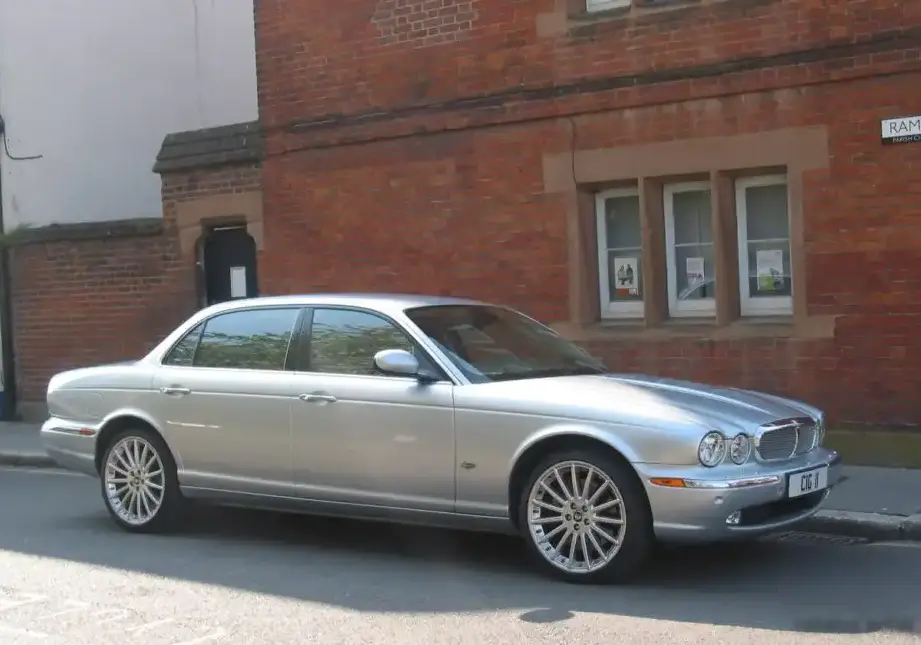
The Jaguar XJ (X350) 4.2 V8, produced from 2004 to 2006, represented a significant evolution for the iconic XJ model line. This generation, internally designated X350, was the first production Jaguar to utilize an all-aluminum monocoque chassis, resulting in a considerable weight reduction compared to its predecessor. The 4.2 V8 variant, paired with a six-speed automatic transmission, was a key offering in the XJ range, providing a balance of luxury, performance, and advanced technology. It was positioned as the primary choice for buyers desiring a powerful and refined full-size luxury sedan, sitting between the more accessible base models and the later, supercharged performance versions.
Powertrain & Engine Architecture
The core of the XJ 4.2 V8 is the AJ33/AJ34 engine, a naturally aspirated 4.2-liter V8. This engine builds upon Jaguar’s established V8 heritage, featuring a 60-degree V-angle and employing a multi-port fuel injection system. The cylinder heads are equipped with four valves per cylinder, contributing to its robust power output. The engine’s design emphasized smoothness and refinement, qualities synonymous with the Jaguar brand. The six-speed automatic transmission, sourced from ZF, was an integral component, delivering seamless gear changes and enhancing the car’s overall driving experience. This transmission was known for its adaptability, offering both fully automatic operation and a manual shift mode for increased driver control.
Driving Characteristics
The 4.2 V8 automatic XJ provided a refined and comfortable driving experience. While not as overtly sporty as some competitors, it offered ample power for effortless cruising and confident passing maneuvers. The automatic transmission, while smooth, wasn’t particularly quick to downshift, resulting in a slightly less responsive feel compared to the manual transmission options available in other XJ models. The gear ratios were optimized for grand touring, prioritizing relaxed highway driving over aggressive acceleration. In comparison to the later 4.0-liter supercharged models, the 4.2 V8 delivered a more linear power delivery and a less demanding driving experience. It was a vehicle designed for long journeys and luxurious transportation, rather than spirited driving on winding roads.
Equipment & Trim Levels
The XJ 4.2 V8 came standard with a comprehensive suite of luxury features. Leather upholstery, wood veneer trim, and automatic climate control were standard amenities. Power-adjustable front seats with memory function, a premium sound system, and parking sensors were also included. Optional extras encompassed a rear seat entertainment system, upgraded leather options, and a panoramic sunroof. The XJ range offered a variety of trim levels, with the 4.2 V8 typically positioned in the mid-range, striking a balance between features and performance.
Chassis & Braking
The XJ X350’s all-aluminum chassis was a groundbreaking feature, significantly reducing weight and enhancing rigidity. The suspension utilized a sophisticated hydro-pneumatic system, providing an exceptionally smooth and controlled ride. Ventilated disc brakes were fitted to all four wheels, delivering ample stopping power. ABS (Anti-lock Braking System) was standard, improving safety and stability. The suspension setup was tuned to prioritize comfort, while still offering good body control and handling characteristics for a car of its size and weight.
Market Reception & Comparison
The XJ X350 4.2 V8 was generally well-received by automotive critics. It was lauded for its luxurious interior, comfortable ride, and refined powertrain. However, some reviewers noted that the automatic transmission could feel somewhat sluggish and that the car lacked the outright performance of certain rivals. Fuel economy, while reasonable for a V8-powered luxury sedan, wasn’t a standout strength. Compared to the 3.0-liter inline-six models, the 4.2 V8 offered considerably more power and a more prestigious driving experience, but at the expense of increased fuel consumption and a higher price point.
Legacy
The Jaguar XJ X350 4.2 V8 remains a sought-after used car today, particularly for those seeking a blend of luxury, performance, and British heritage. The AJ33/AJ34 engine is generally considered reliable, provided regular maintenance is performed. The all-aluminum chassis has proven durable, and the hydro-pneumatic suspension, while requiring occasional attention, delivers a unique and comfortable ride. Values for well-maintained examples have remained relatively stable, reflecting the car’s enduring appeal and its status as a modern classic. The X350 generation, and specifically the 4.2 V8, represents a pivotal moment in Jaguar’s history, showcasing the brand’s commitment to innovation and luxury.