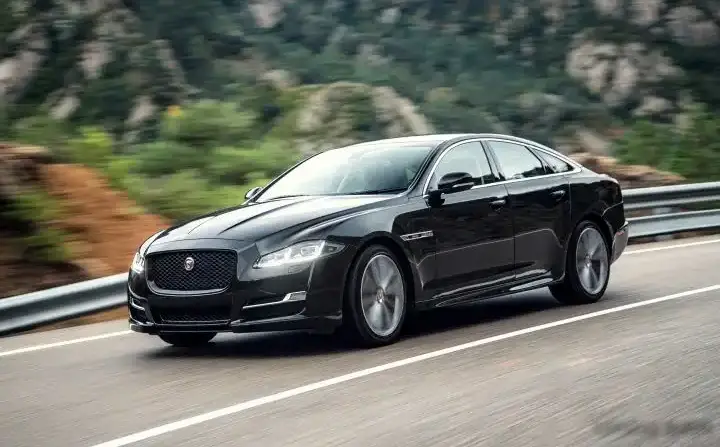
The Jaguar XJ (X351 facelift) 3.0 V6 Supercharged AWD Automatic, produced from 2015 to 2018, represented a significant evolution of Jaguar’s flagship sedan. This variant occupied a sweet spot in the XJ lineup, offering a compelling blend of performance, luxury, and all-weather capability. It was positioned as a mid-to-upper tier offering, bridging the gap between the entry-level rear-wheel-drive models and the high-performance XJR. The X351 facelift brought updated styling, enhanced technology, and refinements to the powertrain, solidifying the XJ’s reputation as a sophisticated and capable grand tourer.
Technical Specifications
| Brand | Jaguar |
| Model | XJ |
| Generation | XJ (X351 facelift 2015) |
| Type (Engine) | 3.0 V6 (340 Hp) AWD Automatic |
| Start of production | 2015 |
| End of production | 2018 |
| Powertrain Architecture | Internal Combustion engine |
| Body type | Sedan |
| Seats | 5 |
| Doors | 4 |
| Fuel consumption (urban) | 13.6 l/100 km (17.3 US mpg, 20.8 UK mpg, 7.4 km/l) |
| Fuel consumption (extra urban) | 7.6 l/100 km (30.9 US mpg, 37.2 UK mpg, 13.2 km/l) |
| Fuel consumption (combined) | 9.8 l/100 km (24 US mpg, 28.8 UK mpg, 10.2 km/l) |
| CO2 emissions | 234 g/km |
| Fuel Type | Petrol (Gasoline) |
| Acceleration 0 – 100 km/h | 6.4 sec |
| Acceleration 0 – 62 mph | 6.4 sec |
| Acceleration 0 – 60 mph | 6.1 sec |
| Maximum speed | 250 km/h (155.34 mph) |
| Emission standard | Euro 6 |
| Weight-to-power ratio | 5.5 kg/Hp, 182.3 Hp/tonne |
| Weight-to-torque ratio | 4.1 kg/Nm, 241.3 Nm/tonne |
| Power | 340 Hp @ 6500 rpm |
| Power per litre | 113.5 Hp/l |
| Torque | 450 Nm @ 3500-5000 rpm (331.9 lb.-ft. @ 3500-5000 rpm) |
| Engine layout | Front, Longitudinal |
| Engine Model/Code | 306PS |
| Engine displacement | 2995 cm3 (182.77 cu. in.) |
| Number of cylinders | 6 |
| Engine configuration | V-engine |
| Cylinder Bore | 84.5 mm (3.33 in.) |
| Piston Stroke | 89 mm (3.5 in.) |
| Compression ratio | 10.5:1 |
| Number of valves per cylinder | 4 |
| Fuel injection system | Direct injection |
| Engine aspiration | Supercharger, Intercooler |
| Engine oil capacity | 6.5 l (6.87 US qt | 5.72 UK qt) |
| Coolant | 8.6 l (9.09 US qt | 7.57 UK qt) |
| Kerb Weight | 1865 kg (4111.62 lbs.) |
| Max. weight | 2430 kg (5357.23 lbs.) |
| Max load | 565 kg (1245.61 lbs.) |
| Fuel tank capacity | 80 l (21.13 US gal | 17.6 UK gal) |
| Length | 5130 mm (201.97 in.) |
| Width | 1899 mm (74.76 in.) |
| Width including mirrors | 2105 mm (82.87 in.) |
| Height | 1460 mm (57.48 in.) |
| Wheelbase | 3032 mm (119.37 in.) |
| Front track | 1626 mm (64.02 in.) |
| Rear track | 1604 mm (63.15 in.) |
| Minimum turning circle | 12.4 m (40.68 ft.) |
| Drive wheel | All wheel drive (4×4) |
| Number of gears | 8 |
| Gearbox type | Automatic transmission |
| Front brakes | Ventilated discs |
| Rear brakes | Ventilated discs |
| Assisting systems | ABS (Anti-lock braking system) |
| Steering type | Steering rack and pinion |
| Power steering | Electric Steering |
Powertrain & Engine Architecture
At the heart of the XJ 3.0 V6 AWD was Jaguar’s AJ306 engine, a 3.0-liter supercharged V6. This engine, part of the AJ-V6 family, utilized a sixth-generation Eaton supercharger, providing near-instantaneous boost and a characteristic Jaguar power delivery. Direct fuel injection, combined with variable valve timing (VVT) on both intake and exhaust valves, optimized efficiency and responsiveness. The engine produced 340 horsepower at 6,500 rpm and 450 Nm (331.9 lb-ft) of torque between 3,500 and 5,000 rpm. The engine’s longitudinal mounting and all-wheel-drive system contributed to balanced handling and traction. The transmission was an eight-speed automatic, known for its smooth shifts and intelligent programming. This transmission was crucial in managing the engine’s power and providing a comfortable driving experience.
Driving Characteristics
The 3.0 V6 AWD XJ offered a refined and capable driving experience. Acceleration to 60 mph took approximately 6.1 seconds, making it brisk without being overtly sporty. The supercharger provided ample low-end torque, resulting in strong acceleration in everyday driving situations. The all-wheel-drive system enhanced grip, particularly in inclement weather, providing a sense of security and stability. Compared to the rear-wheel-drive versions, the AWD model offered superior traction, but at a slight penalty in fuel economy. The eight-speed automatic transmission was well-matched to the engine, providing smooth and timely gear changes. While not as engaging as a manual transmission, the automatic offered a relaxed and effortless driving experience, perfectly suited to the XJ’s grand touring character.
Equipment & Trim Levels
The XJ 3.0 V6 AWD typically came well-equipped, reflecting its position in the lineup. Standard features included leather upholstery, heated front seats, a premium audio system, navigation, and a comprehensive suite of safety features. The XJ’s interior was renowned for its luxurious materials and craftsmanship. Optional extras included upgraded leather, rear-seat entertainment, a panoramic sunroof, and advanced driver-assistance systems. Trim levels varied slightly depending on the market, but generally offered increasing levels of luxury and technology. The XJ’s cabin was designed to provide a serene and comfortable environment for both driver and passengers.
Chassis & Braking
The XJ’s chassis was constructed primarily of aluminum, contributing to its relatively low weight. The suspension featured double wishbones at the front and a multi-link setup at the rear, providing a comfortable ride and controlled handling. The AWD system added some weight, but the suspension was tuned to compensate. Braking duties were handled by ventilated discs on all four wheels, providing ample stopping power. Anti-lock brakes (ABS) and electronic stability control (ESC) were standard features, enhancing safety and control. The steering was electrically assisted, offering a precise and responsive feel.
Market Reception & Comparison
The Jaguar XJ 3.0 V6 AWD was generally well-received by automotive critics. It was praised for its blend of performance, luxury, and all-weather capability. Fuel economy was considered reasonable for a vehicle of its size and performance, averaging around 24 mpg combined. Reliability was generally good, although some owners reported minor electrical issues. Compared to its rivals, such as the BMW 7 Series and Mercedes-Benz S-Class, the XJ offered a more distinctive design and a more engaging driving experience. However, it often lagged behind in terms of brand prestige and technology.
Legacy
The Jaguar XJ (X351) 3.0 V6 AWD Automatic remains a desirable used car today. The 3.0-liter supercharged V6 is known for its reliability and relatively straightforward maintenance. While not immune to age-related issues, the engine and transmission are generally robust. The XJ’s luxurious interior and comfortable ride continue to appeal to buyers seeking a sophisticated and capable grand tourer. The X351 facelift represents a high point in the XJ’s development, offering a compelling combination of British luxury and modern technology.