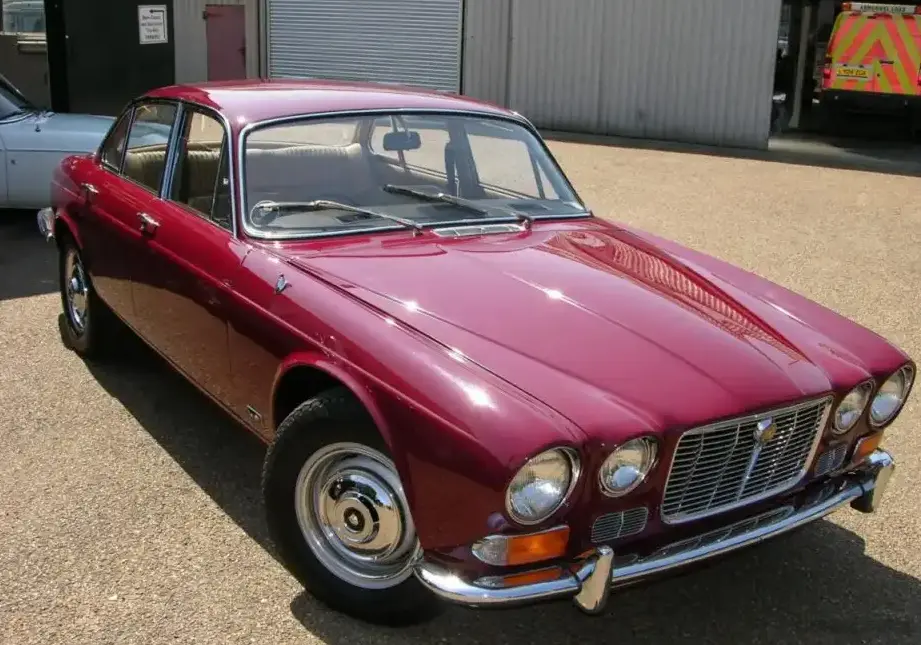
The Jaguar XJ X358 2.7 D V6 Automatic, produced between 2007 and 2009, represented a significant step in the evolution of Jaguar’s flagship sedan. Falling within the third generation (X358) of the XJ line, this variant offered a diesel-powered option aimed at broadening the XJ’s appeal, particularly in European markets where diesel engines were favored for their fuel efficiency and torque. Positioned as a mid-range offering, it slotted between the entry-level naturally aspirated petrol engines and the higher-performance supercharged variants. The X358 generation itself was a substantial refresh of the X350, addressing criticisms regarding its styling and interior, and incorporating more traditional Jaguar design cues.
Technical Specifications
| Brand | Jaguar |
| Model | XJ |
| Generation | XJ (X358) |
| Type (Engine) | 2.7 D V6 (207 Hp) Automatic |
| Start of production | 2007 |
| End of production | 2009 |
| Powertrain Architecture | Internal Combustion engine |
| Body type | Sedan |
| Seats | 5 |
| Doors | 4 |
| Fuel consumption (economy) – urban (NEDC) | 10.8 l/100 km (21.8 US mpg, 26.2 UK mpg, 9.3 km/l) |
| Fuel consumption (economy) – extra urban (NEDC) | 6.5 l/100 km (36.2 US mpg, 43.5 UK mpg, 15.4 km/l) |
| Fuel consumption (economy) – combined (NEDC) | 8.1 l/100 km (29 US mpg, 34.9 UK mpg, 12.3 km/l) |
| CO2 emissions (NEDC) | 214 g/km |
| Fuel Type | Diesel |
| Acceleration 0 – 100 km/h | 8.2 sec |
| Acceleration 0 – 62 mph | 8.2 sec |
| Acceleration 0 – 60 mph | 7.8 sec |
| Maximum speed | 222 km/h (137.94 mph) |
| Emission standard | Euro 4 |
| Weight-to-power ratio | 8 kg/Hp, 125.3 Hp/tonne |
| Weight-to-torque ratio | 3.8 kg/Nm, 263.3 Nm/tonne |
| Power | 207 Hp @ 4000 rpm |
| Power per litre | 76.1 Hp/l |
| Torque | 435 Nm @ 1900 rpm (320.84 lb.-ft. @ 1900 rpm) |
| Engine layout | Front, Longitudinal |
| Engine Model/Code | AJD |
| Engine displacement | 2720 cm3 (165.98 cu. in.) |
| Number of cylinders | 6 |
| Engine configuration | V-engine |
| Cylinder Bore | 81 mm (3.19 in.) |
| Piston Stroke | 88 mm (3.46 in.) |
| Compression ratio | 17.3:1 |
| Number of valves per cylinder | 4 |
| Fuel injection system | Diesel Commonrail |
| Engine aspiration | Turbocharger, Intercooler |
| Valvetrain | DOHC |
| Engine oil capacity | 6.6 l (6.97 US qt, 5.81 UK qt) |
| Coolant | 13.5 l (14.27 US qt, 11.88 UK qt) |
| Kerb Weight | 1652 kg (3642.04 lbs.) |
| Max. weight | 2283 kg (5033.15 lbs.) |
| Max load | 631 kg (1391.12 lbs.) |
| Trunk (boot) space – minimum | 470 l (16.6 cu. ft.) |
| Fuel tank capacity | 85 l (22.45 US gal, 18.7 UK gal) |
| Max. roof load | 75 kg (165.35 lbs.) |
| Permitted trailer load with brakes (12%) | 1900 kg (4188.78 lbs.) |
| Permitted trailer load without brakes | 750 kg (1653.47 lbs.) |
| Permitted towbar download | 75 kg (165.35 lbs.) |
| Length | 5091 mm (200.43 in.) |
| Width | 1860 mm (73.23 in.) |
| Width with mirrors folded | 1898 mm (74.72 in.) |
| Width including mirrors | 2104 mm (82.83 in.) |
| Height | 1462 mm (57.56 in.) |
| Wheelbase | 3034 mm (119.45 in.) |
| Front track | 1556 mm (61.26 in.) |
| Rear (Back) track | 1546 mm (60.87 in.) |
| Drag coefficient (Cd) | 0.32 |
| Minimum turning circle (turning diameter) | 11.7 m (38.39 ft.) |
| Drivetrain Architecture | The Internal combustion engine (ICE) drives the rear wheels of the vehicle. |
| Drive wheel | Rear wheel drive |
| Number of gears and type of gearbox | 6 gears, automatic transmission |
| Front suspension | Double wishbone, Transverse stabilizer |
| Rear suspension | Double wishbone, Transverse stabilizer |
| Front brakes | Ventilated discs |
| Rear brakes | Ventilated discs |
| Assisting systems | ABS (Anti-lock braking system) |
| Steering type | Steering rack and pinion |
| Power steering | Hydraulic Steering |
| Tires size | 255/40 HR19 |
| Wheel rims size | 8.5J x 19 |
Powertrain & Engine Architecture
The heart of the XJ 2.7 D is the AJD engine, a 2.7-liter V6 diesel. This engine was developed by Jaguar in collaboration with PSA Peugeot Citroën and is based on the DW12 engine family. It features a common rail direct injection system, delivering fuel at extremely high pressure for optimized combustion. The engine utilizes a single turbocharger with an intercooler to boost power and efficiency. The valvetrain is a Double Overhead Camshaft (DOHC) design with four valves per cylinder, contributing to its relatively high specific output. The engine’s 17.3:1 compression ratio is typical for a diesel engine, maximizing thermal efficiency. Paired with the engine is a six-speed automatic transmission, providing smooth shifts and contributing to the car’s refined driving experience. This transmission was designed to handle the engine’s substantial 435 Nm (320.84 lb-ft) of torque.
Driving Characteristics
The 2.7 D Automatic XJ offered a distinctly different driving experience compared to its petrol-powered siblings. While lacking the outright acceleration of the supercharged models, it provided ample torque from low engine speeds, making it effortless to drive in everyday situations. The automatic transmission, while smooth, was tuned for comfort rather than sporty responsiveness. Acceleration from 0-60 mph took around 7.8 seconds, respectable for a large luxury sedan. The gear ratios were optimized for fuel efficiency and relaxed cruising, rather than aggressive downshifts. Compared to the manual transmission versions (available in some markets), the automatic offered greater convenience but slightly reduced fuel economy and a less engaging driving experience. The weight distribution, typical of a front-engine, rear-wheel-drive layout, contributed to balanced handling, although the XJ’s size and weight were always apparent.
Equipment & Trim Levels
The 2.7 D Automatic trim typically included a generous level of standard equipment. Leather upholstery was standard, along with wood veneer trim on the dashboard and door panels. Features like automatic climate control, power-adjustable front seats, a premium sound system, and parking sensors were also common. Optional extras included a panoramic sunroof, upgraded leather options, rear seat entertainment, and advanced navigation systems. The XJ 2.7 D aimed to provide a luxurious experience without the higher price tag of the supercharged models, making it an attractive option for buyers prioritizing comfort and fuel efficiency.
Chassis & Braking
The XJ X358 utilized a double wishbone suspension system at both the front and rear, incorporating a transverse stabilizer bar to reduce body roll. This setup provided a comfortable ride while maintaining reasonable handling characteristics. Braking duties were handled by ventilated discs on all four wheels, coupled with an Anti-lock Braking System (ABS) for enhanced safety. The suspension was tuned to prioritize ride comfort, resulting in a slightly softer setup compared to the sportier trims. The car’s substantial weight necessitated a robust braking system to ensure adequate stopping power.
Market Reception & Comparison
The XJ 2.7 D was generally well-received by critics, particularly in Europe, where its fuel efficiency was a major selling point. It offered a compelling alternative to the petrol-powered XJs, providing similar levels of luxury and refinement with lower running costs. Compared to the higher-output petrol engines, the 2.7 D offered significantly better fuel economy, although it lacked the same level of performance. Reliability was generally good, although, like all complex vehicles, the XJ 2.7 D was not without its potential issues, including problems with the diesel particulate filter (DPF) and the electronic parking brake.
Legacy
Today, the Jaguar XJ X358 2.7 D represents a relatively affordable entry point into Jaguar ownership. The AJD engine, while generally reliable, requires regular maintenance, particularly concerning the DPF system. Well-maintained examples are still sought after by enthusiasts who appreciate the XJ’s blend of luxury, performance, and fuel efficiency. The 2.7 D’s longevity and relatively straightforward mechanicals (compared to the more complex supercharged variants) make it a viable option for those seeking a classic Jaguar experience without the potentially high maintenance costs. The X358 generation, and the 2.7 D variant specifically, remains a testament to Jaguar’s commitment to building luxurious and refined automobiles.