
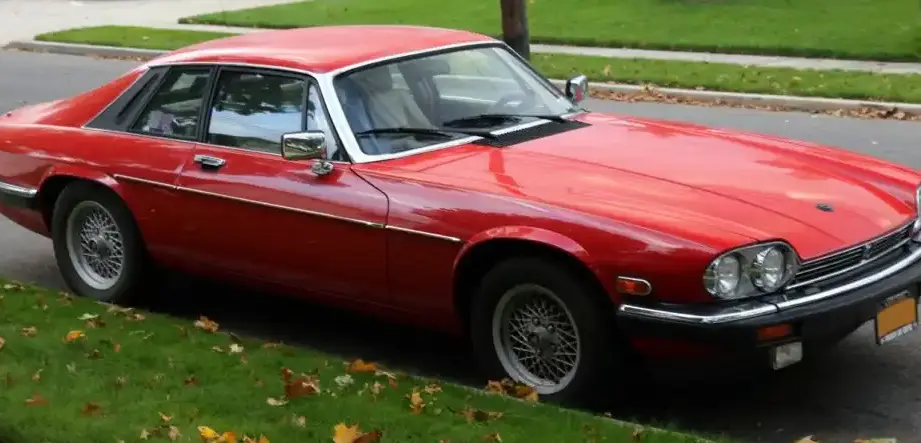
The Jaguar XJS Coupe 4.0, produced between 1990 and 1994, represented a significant evolution in the XJS lineage. Falling within the final years of the XJS’s remarkably long production run (1975-1996), the 4.0-liter variant aimed to provide a more potent and refined experience than the earlier 3.6-liter models, while remaining a more accessible entry point into the Jaguar grand touring world compared to the flagship 6.0-liter versions. It occupied a mid-range position in the XJS lineup, appealing to buyers seeking a blend of performance, luxury, and relative reliability. This model was a key part of Jaguar’s attempt to modernize its image and compete with contemporary grand tourers from BMW and Mercedes-Benz.
Technical Specifications
| Brand | Jaguar |
| Model | XJS |
| Generation | XJS Coupe |
| Type (Engine) | 4.0 (226 Hp) |
| Start of production | 1990 |
| End of production | 1994 |
| Powertrain Architecture | Internal Combustion engine |
| Body type | Coupe |
| Seats | 4 |
| Doors | 2 |
| Fuel consumption (urban) | 16.7 l/100 km (14.1 US mpg, 16.9 UK mpg, 6 km/l) |
| Fuel consumption (extra urban) | 8.1 l/100 km (29 US mpg, 34.9 UK mpg, 12.3 km/l) |
| Fuel consumption (combined) | 9.9 l/100 km (23.8 US mpg, 28.5 UK mpg, 10.1 km/l) |
| Fuel Type | Petrol (Gasoline) |
| Acceleration 0 – 100 km/h | 7.5 sec |
| Acceleration 0 – 62 mph | 7.5 sec |
| Acceleration 0 – 60 mph | 7.1 sec |
| Maximum speed | 227 km/h (141.05 mph) |
| Weight-to-power ratio | 7.5 kg/Hp, 132.9 Hp/tonne |
| Weight-to-torque ratio | 4.5 kg/Nm, 221.8 Nm/tonne |
| Power | 226 Hp @ 4750 rpm |
| Power per litre | 56.8 Hp/l |
| Torque | 377 Nm @ 3650 rpm (278.06 lb.-ft. @ 3650 rpm) |
| Engine layout | Front, Longitudinal |
| Engine displacement | 3980 cm3 (242.87 cu. in.) |
| Number of cylinders | 6 |
| Engine configuration | Inline |
| Cylinder Bore | 91 mm (3.58 in.) |
| Piston Stroke | 102 mm (4.02 in.) |
| Compression ratio | 9.5:1 |
| Number of valves per cylinder | 4 |
| Fuel injection system | Multi-port manifold injection |
| Engine aspiration | Naturally aspirated engine |
| Kerb Weight | 1700 kg (3747.86 lbs.) |
| Max. weight | 2080 kg (4585.62 lbs.) |
| Max load | 380 kg (837.76 lbs.) |
| Trunk (boot) space – minimum | 407 l (14.37 cu. ft.) |
| Fuel tank capacity | 89 l (23.51 US gal | 19.58 UK gal) |
| Length | 4820 mm (189.76 in.) |
| Width | 1793 mm (70.59 in.) |
| Height | 1254 mm (49.37 in.) |
| Wheelbase | 2588 mm (101.89 in.) |
| Front track | 1489 mm (58.62 in.) |
| Rear (Back) track | 1504 mm (59.21 in.) |
| Drivetrain Architecture | The Internal combustion engine (ICE) drives the rear wheels of the vehicle. |
| Drive wheel | Rear wheel drive |
| Number of gears and type of gearbox | 5 gears, manual transmission |
| Front suspension | Double wishbone |
| Rear suspension | Double wishbone |
| Front brakes | Ventilated discs |
| Rear brakes | Disc |
| Assisting systems | ABS (Anti-lock braking system) |
| Power steering | Hydraulic Steering |
| Tires size | 235/60 VR15 |
Introduction
The Jaguar XJS 4.0 Coupe, produced from 1990 to 1994, represented a significant upgrade to the XJS model range. Building upon the foundation laid by the earlier 3.6-liter engine, the 4.0-liter variant offered increased power and torque, enhancing the grand touring experience. It was positioned as a more performance-oriented alternative to the base model, yet remained more affordable than the top-of-the-line 6.0-liter versions. The XJS, as a whole, was Jaguar’s replacement for the iconic E-Type, and the 4.0 Coupe aimed to continue the tradition of British luxury and performance.
Powertrain & Engine Architecture
At the heart of the XJS 4.0 lay the AJ6 inline-six engine, specifically the variant designated as the 4.0-liter. This engine was a significant departure from the earlier 3.6-liter unit, featuring a larger displacement achieved through an increased bore size. The engine utilized a multi-port fuel injection system, contributing to improved fuel efficiency and responsiveness. The AJ6 engine was known for its smooth power delivery and relatively robust construction. The 4.0-liter version produced 226 horsepower at 4750 rpm and 377 Nm (278 lb-ft) of torque at 3650 rpm. The engine was longitudinally mounted in the front of the vehicle, driving the rear wheels. The 5-speed manual transmission, while available, was less common than the 4-speed automatic transmission, which was favored by many XJS buyers for its comfort and ease of use. The automatic transmission was a ZF 4HP22 unit, known for its smoothness and reliability.
Driving Characteristics
The XJS 4.0 Coupe offered a refined and comfortable driving experience. The increased power output compared to the 3.6-liter model was noticeable, providing quicker acceleration and improved highway passing ability. The 0-60 mph sprint took approximately 7.1 seconds, a respectable figure for a grand tourer of its era. The automatic transmission, while smooth, did result in some power loss compared to the manual version. The gear ratios were tuned for comfortable cruising, rather than outright performance. The XJS 4.0 felt planted and stable at high speeds, thanks to its long wheelbase and well-tuned suspension. However, its considerable weight (around 3748 lbs) meant it wasn’t a particularly nimble handler. The steering was power-assisted, providing a light and easy feel, but lacked the directness of more modern systems.
Equipment & Trim Levels
The XJS 4.0 Coupe came standard with a generous array of features, befitting its luxury grand touring status. Leather upholstery was standard, along with power windows, power locks, and a premium sound system. Air conditioning was also a standard feature. Optional extras included a sunroof, heated seats, and upgraded audio systems. Interior trim options included various wood veneers and leather colors. The dashboard layout was classic Jaguar, featuring elegant wood trim and analog gauges. The XJS 4.0 generally offered a higher level of standard equipment than the base 3.6-liter model, reflecting its higher price point.
Chassis & Braking
The XJS 4.0 Coupe utilized a robust chassis construction, featuring a monocoque body. The suspension system consisted of double wishbones at both the front and rear, providing a comfortable ride and reasonable handling. The braking system featured ventilated discs at the front and solid discs at the rear. Anti-lock braking system (ABS) was standard, enhancing safety and control. The tires were typically 235/60 VR15, providing adequate grip for both dry and wet conditions. The XJS 4.0’s suspension was tuned for comfort, prioritizing a smooth ride over aggressive handling.
Market Reception & Comparison
The XJS 4.0 Coupe was generally well-received by automotive critics. It was praised for its increased performance, refined interior, and comfortable ride. However, some critics noted its considerable weight and relatively high price. Compared to the 3.6-liter XJS, the 4.0-liter model offered a significant performance boost, but at a higher cost. Compared to the 6.0-liter XJS, the 4.0-liter model was more affordable and offered slightly better fuel economy. The 4.0-liter XJS competed with other grand tourers of the era, such as the BMW 6 Series and the Mercedes-Benz SL. Fuel economy was rated at around 23.8 US mpg combined, which was reasonable for a vehicle of its size and performance.
Legacy
The Jaguar XJS 4.0 Coupe remains a desirable classic car today. The AJ6 engine, while not without its quirks, is generally considered to be a reliable and durable powerplant. However, like all classic Jaguars, the XJS 4.0 requires regular maintenance and attention to detail. Common issues include electrical problems, cooling system leaks, and suspension wear. The XJS 4.0 Coupe has a strong following among Jaguar enthusiasts, and well-maintained examples command a premium price in the used car market. It represents a high point in Jaguar’s grand touring heritage, offering a blend of luxury, performance, and style that continues to appeal to collectors and enthusiasts alike.
