
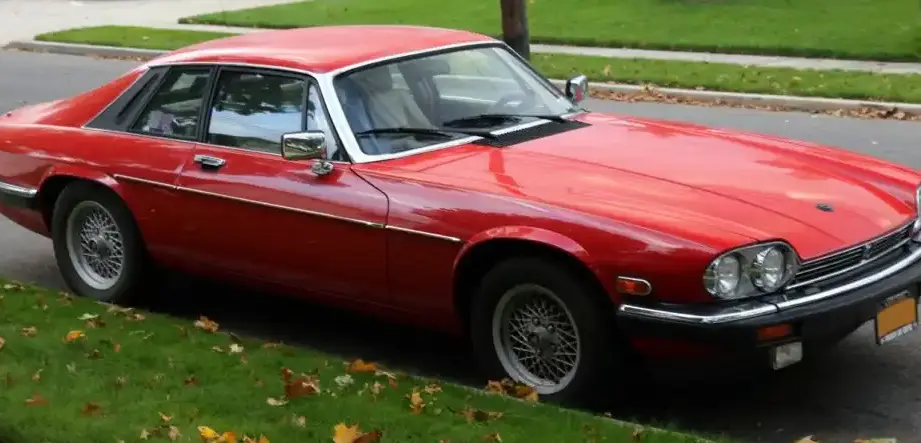
The Jaguar XJS Coupe 5.3, produced between 1991 and 1994, represented the culmination of the XJS model line, offering a potent V12 engine and luxurious appointments. Positioned as the flagship coupe within the XJS range, it superseded earlier 3.6-liter and 4.0-liter models, providing a significant performance upgrade. This final iteration of the XJS, built on the Series III platform, aimed to deliver a grand touring experience combining British elegance with robust power. It was a key model for Jaguar during a period of transition and revitalization under Ford ownership.
Technical Specifications
| Brand | Jaguar |
| Model | XJS |
| Generation | XJS Coupe |
| Type (Engine) | 5.3 (284 Hp) |
| Start of production | 1991 |
| End of production | 1994 |
| Powertrain Architecture | Internal Combustion engine |
| Body type | Coupe |
| Seats | 4 |
| Doors | 2 |
| Fuel consumption (urban) | 19.9 l/100 km (11.8 US mpg, 14.2 UK mpg, 5 km/l) |
| Fuel consumption (extra urban) | 11 l/100 km (21.4 US mpg, 25.7 UK mpg, 9.1 km/l) |
| Fuel consumption (combined) | 13.4 l/100 km (17.6 US mpg, 21.1 UK mpg, 7.5 km/l) |
| Fuel Type | Petrol (Gasoline) |
| Acceleration 0 – 100 km/h | 8.2 sec |
| Acceleration 0 – 62 mph | 8.2 sec |
| Acceleration 0 – 60 mph | 7.8 sec |
| Maximum speed | 237 km/h (147.26 mph) |
| Weight-to-power ratio | 6.4 kg/Hp, 155.6 Hp/tonne |
| Weight-to-torque ratio | 4.4 kg/Nm, 227.4 Nm/tonne |
| Power | 284 Hp @ 5500 rpm |
| Power per litre | 53.2 Hp/l |
| Torque | 415 Nm @ 2800 rpm (306.09 lb.-ft. @ 2800 rpm) |
| Engine layout | Front, Longitudinal |
| Engine displacement | 5343 cm3 (326.05 cu. in.) |
| Number of cylinders | 12 |
| Engine configuration | V-engine |
| Cylinder Bore | 90 mm (3.54 in.) |
| Piston Stroke | 70 mm (2.76 in.) |
| Compression ratio | 11.5:1 |
| Number of valves per cylinder | 2 |
| Fuel injection system | Multi-port manifold injection |
| Engine aspiration | Naturally aspirated engine |
| Kerb Weight | 1825 kg (4023.44 lbs.) |
| Max. weight | 2175 kg (4795.05 lbs.) |
| Max load | 350 kg (771.62 lbs.) |
| Trunk (boot) space – minimum | 407 l (14.37 cu. ft.) |
| Fuel tank capacity | 89 l (23.51 US gal | 19.58 UK gal) |
| Length | 4820 mm (189.76 in.) |
| Width | 1793 mm (70.59 in.) |
| Height | 1254 mm (49.37 in.) |
| Wheelbase | 2588 mm (101.89 in.) |
| Front track | 1489 mm (58.62 in.) |
| Rear (Back) track | 1504 mm (59.21 in.) |
| Drivetrain Architecture | The Internal combustion engine (ICE) drives the rear wheels of the vehicle. |
| Drive wheel | Rear wheel drive |
| Number of gears and type of gearbox | 4 gears, automatic transmission |
| Front suspension | Double wishbone |
| Rear suspension | Double wishbone |
| Front brakes | Ventilated discs |
| Rear brakes | Disc |
| Assisting systems | ABS (Anti-lock braking system), Hydraulic Steering |
| Tires size | 230/65 ZR16 |
Powertrain & Engine Architecture
The heart of the XJS 5.3 was Jaguar’s venerable 5.3-liter V12 engine, designated as the AJ6. This engine, a 60-degree V12, featured a cast iron block with aluminum cylinder heads. It utilized a multi-port fuel injection system, a significant upgrade over earlier carburetored versions, improving both performance and fuel efficiency. The engine produced 284 horsepower at 5500 rpm and 415 Nm (306 lb-ft) of torque at 2800 rpm. The automatic transmission was a four-speed unit, providing smooth but not particularly rapid shifts. This transmission was chosen to complement the grand touring nature of the vehicle, prioritizing comfort over outright performance. The engine code remained largely consistent with previous V12 XJS models, benefitting from years of refinement.
Driving Characteristics
The XJS 5.3 with the automatic transmission offered a distinctly different driving experience compared to the manual transmission or lower-powered variants. While not as overtly sporty as the manual versions, the automatic provided effortless cruising and a relaxed driving style. Acceleration to 60 mph took around 7.8 seconds, respectable for the era, but noticeably slower than the manual. The automatic’s gear ratios were geared towards comfortable highway driving, with a focus on smooth transitions rather than aggressive downshifts. The V12’s torque delivery was smooth and linear, providing ample power for overtaking maneuvers. However, the car’s considerable weight (approximately 4023 lbs) was always apparent, limiting its agility in tight corners.
Equipment & Trim Levels
The XJS 5.3 typically came well-equipped, reflecting its position as the top-of-the-line model. Standard features included leather upholstery, power windows, power steering, air conditioning, and an AM/FM stereo. Optional extras included a premium sound system, heated seats, and a sunroof. Interior trim options varied, with Connolly leather being a popular choice. The dashboard layout was classic Jaguar, featuring wood veneer accents and analog gauges. The overall ambiance was one of luxury and refinement.
Chassis & Braking
The XJS utilized a monocoque chassis construction, providing a good balance of rigidity and weight. Suspension was independent on all four wheels, employing double wishbones. This setup delivered a comfortable ride, absorbing bumps and imperfections in the road effectively. Braking was handled by ventilated discs at the front and solid discs at the rear, assisted by an anti-lock braking system (ABS). While adequate for most driving situations, the braking system could feel somewhat heavy and lacked the stopping power of more modern systems. The steering was hydraulic power-assisted, providing light and easy steering input.
Market Reception & Comparison
The XJS 5.3 received generally positive reviews, with critics praising its powerful engine, luxurious interior, and comfortable ride. However, the automatic transmission was sometimes criticized for its lack of responsiveness. Compared to the 3.6 and 4.0-liter XJS models, the 5.3 offered a significant performance boost, but at a higher price point. Fuel economy was predictably poor, averaging around 17.6 US mpg in combined driving. Reliability was also a concern, as the V12 engine was complex and prone to overheating if not properly maintained. The 5.3 was often seen as a more exclusive and desirable alternative to the lower-spec models, appealing to buyers who prioritized performance and luxury.
Legacy
The Jaguar XJS 5.3 represents a high point in Jaguar’s grand touring heritage. While the V12 engine can be expensive to maintain, the car’s classic styling and luxurious appointments continue to attract enthusiasts. In the used car market, well-maintained examples command premium prices. The powertrain, while complex, is known to be durable when properly cared for. The XJS 5.3 remains a sought-after classic, embodying the spirit of British luxury and performance. Its influence can be seen in later Jaguar models, particularly in the emphasis on comfortable cruising and elegant design.
