
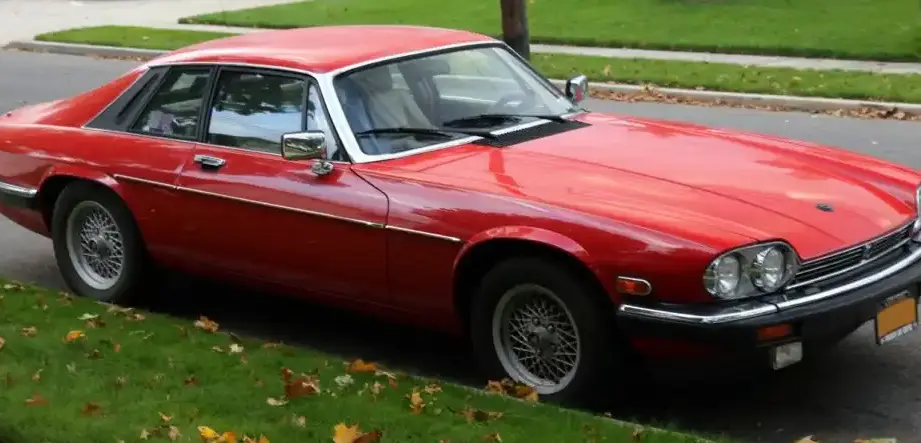
The Jaguar XJS Coupe 6.0, produced between 1993 and 1996, represented the pinnacle of the XJS line, offering a blend of luxury, performance, and grand touring capability. It was the final iteration of the XJS, a model that had been in production since 1975, and aimed to address criticisms of earlier models regarding power and refinement. This 6.0-liter variant was positioned as the flagship XJS, offering significantly more performance than the inline-six and 3.6-liter V12 options. It served as a luxurious alternative to contemporary grand tourers from brands like BMW and Mercedes-Benz, appealing to buyers seeking a distinctive British experience.
Technical Specifications
| Brand | Jaguar |
| Model | XJS |
| Generation | XJS Coupe |
| Type (Engine) | 6.0 (302 Hp) |
| Start of production | 1993 |
| End of production | 1996 |
| Powertrain Architecture | Internal Combustion engine |
| Body type | Coupe |
| Seats | 4 |
| Doors | 2 |
| Fuel consumption (combined) | 14.9 l/100 km |
| Fuel consumption (US mpg) | 15.8 US mpg |
| Fuel consumption (UK mpg) | 19 UK mpg |
| Fuel consumption (km/l) | 6.7 km/l |
| Fuel Type | Petrol (Gasoline) |
| Acceleration 0 – 100 km/h | 6.8 sec |
| Acceleration 0 – 62 mph | 6.8 sec |
| Acceleration 0 – 60 mph | 6.5 sec |
| Maximum speed | 260 km/h (161.56 mph) |
| Weight-to-power ratio | 6.2 kg/Hp, 162.4 Hp/tonne |
| Weight-to-torque ratio | 3.9 kg/Nm, 253.2 Nm/tonne |
| Power | 302 Hp @ 5350 rpm |
| Power per litre | 50.4 Hp/l |
| Torque | 471 Nm @ 2850 rpm (347.39 lb.-ft. @ 2850 rpm) |
| Engine layout | Front, Longitudinal |
| Engine displacement | 5993 cm3 (365.72 cu. in.) |
| Number of cylinders | 12 |
| Engine configuration | V-engine |
| Cylinder Bore | 90 mm (3.54 in.) |
| Piston Stroke | 78.5 mm (3.09 in.) |
| Compression ratio | 11:1 |
| Number of valves per cylinder | 2 |
| Fuel injection system | Multi-port manifold injection |
| Engine aspiration | Naturally aspirated |
| Kerb Weight | 1860 kg (4100.6 lbs.) |
| Max. weight | 2210 kg (4872.22 lbs.) |
| Max load | 350 kg (771.62 lbs.) |
| Trunk (boot) space – minimum | 407 l (14.37 cu. ft.) |
| Fuel tank capacity | 89 l (23.51 US gal | 19.58 UK gal) |
| Length | 4820 mm (189.76 in.) |
| Width | 1793 mm (70.59 in.) |
| Height | 1254 mm (49.37 in.) |
| Wheelbase | 2588 mm (101.89 in.) |
| Front track | 1489 mm (58.62 in.) |
| Rear (Back) track | 1504 mm (59.21 in.) |
| Drivetrain Architecture | Rear wheel drive |
| Number of gears | 4 |
| Gearbox type | Automatic transmission |
| Front suspension | Double wishbone |
| Rear suspension | Double wishbone |
| Front brakes | Ventilated discs |
| Rear brakes | Disc |
| Assisting systems | ABS (Anti-lock braking system), Hydraulic Power Steering |
| Tires size | 225/55 ZR16 |
Powertrain & Engine Architecture
The heart of the XJS 6.0 was the 5.993-liter (365.72 cu. in.) V12 engine, designated as the AJ6. It represented a significant upgrade over the earlier V12s used in the XJS, featuring a more modern design with improved cooling and lubrication systems. The engine utilized a 60-degree V-angle, contributing to its relatively compact size. It employed multi-port fuel injection and a compression ratio of 11:1, producing 302 horsepower at 5350 rpm and 471 Nm (347.39 lb-ft) of torque at 2850 rpm. The engine’s architecture was longitudinal, and it drove the rear wheels. The four-speed automatic transmission, a ZF 4HP22 unit, was specifically chosen for its smoothness and durability, complementing the V12’s refined character. While not the most technologically advanced transmission by the 1990s, it was well-suited to the grand touring nature of the XJS.
Driving Characteristics
The XJS 6.0 offered a markedly different driving experience compared to the earlier, less powerful XJS variants. The increased power and torque resulted in significantly improved acceleration – 0-60 mph in around 6.5 seconds – and a more relaxed cruising ability. The automatic transmission, while smooth, did result in some power loss compared to a manual transmission (which wasn’t offered with this engine). The gear ratios were tuned for comfortable highway driving, with a focus on effortless cruising rather than aggressive acceleration. The XJS 6.0 felt substantial and planted on the road, thanks to its weight and well-tuned suspension. However, it wasn’t a particularly nimble car, and its size required careful consideration when navigating tight corners.
Equipment & Trim Levels
The XJS 6.0 was generously equipped, reflecting its position as the top-of-the-line model. Standard features included leather upholstery, power-adjustable front seats, air conditioning, a premium sound system, and alloy wheels. Wood veneer trim adorned the interior, enhancing the luxurious ambiance. Optional extras included a sunroof, upgraded sound systems, and special paint colors. The interior design was classic Jaguar, emphasizing comfort and elegance. The dashboard layout was relatively straightforward, with clearly marked gauges and controls.
Chassis & Braking
The XJS 6.0 utilized a robust chassis with double wishbone suspension at both the front and rear. This suspension setup provided a comfortable ride while maintaining reasonable handling characteristics. The car featured ventilated disc brakes at the front and solid discs at the rear, providing adequate stopping power for its weight and performance. An anti-lock braking system (ABS) was standard, enhancing safety. The steering was hydraulic power-assisted, making the car relatively easy to maneuver, despite its size. Stabilizer bars were fitted front and rear to reduce body roll during cornering.
Market Reception & Comparison
The XJS 6.0 was generally well-received by automotive critics, who praised its powerful engine, luxurious interior, and comfortable ride. However, some criticized its relatively high price and its somewhat dated design compared to more modern grand tourers. Compared to the inline-six and 3.6-liter V12 XJS models, the 6.0 offered a substantial performance upgrade, but at a higher cost. Fuel economy was predictably poor, averaging around 15.8 US mpg. Reliability was generally good, although the V12 engine required regular maintenance to prevent issues. The 6.0 was often seen as a more compelling alternative to the 3.6-liter V12, offering a significant power boost without the complexity of some of the earlier V12 engine designs.
Legacy
The Jaguar XJS 6.0 represents the culmination of the XJS lineage. While it didn’t achieve the sales success of some of its rivals, it remains a highly desirable classic car today. The 6.0-liter V12 engine is considered a robust and reliable powerplant when properly maintained. The XJS 6.0 has a dedicated following among Jaguar enthusiasts, who appreciate its blend of luxury, performance, and British character. In the used car market, well-maintained examples command premium prices, reflecting their rarity and desirability. The XJS 6.0 serves as a reminder of a bygone era of grand touring, when cars were built for effortless long-distance travel in style and comfort.
