
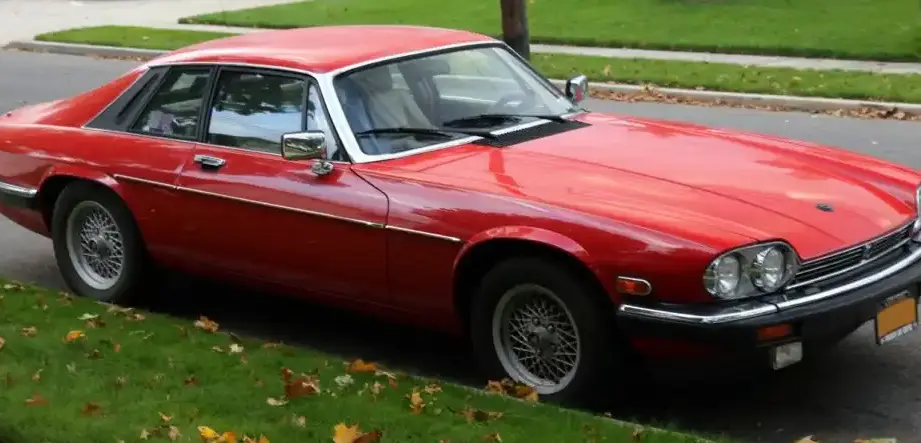
The Jaguar XJS Coupe 6.0, produced between 1991 and 1994, represented the pinnacle of the XJS line. It was the final iteration of the iconic XJS, offering a substantial increase in performance over earlier models. Positioned as the flagship coupe, it aimed to deliver a blend of British luxury, grand touring capability, and a powerful V12 engine. The XJS (Extreme Sports) itself was designed as a replacement for the E-Type, and spanned a lengthy production run from 1975 to 1996, undergoing several revisions throughout its lifespan. The 6.0-liter variant was a late-production model, benefiting from refinements made over the years and offering a more modern driving experience compared to its predecessors.
Technical Specifications
| Brand | Jaguar |
| Model | XJS |
| Generation | XJS Coupe |
| Type (Engine) | 6.0 (318 Hp) |
| Start of production | 1991 |
| End of production | 1994 |
| Powertrain Architecture | Internal Combustion engine |
| Body type | Coupe |
| Seats | 4 |
| Doors | 2 |
| Fuel consumption (economy) – urban | 21.9 l/100 km (10.7 US mpg, 12.9 UK mpg, 4.6 km/l) |
| Fuel consumption (economy) – extra urban | 10.6 l/100 km (22.2 US mpg, 26.6 UK mpg, 9.4 km/l) |
| Fuel consumption (economy) – combined | 13 l/100 km (18.1 US mpg, 21.7 UK mpg, 7.7 km/l) |
| Fuel Type | Petrol (Gasoline) |
| Acceleration 0 – 100 km/h | 7.4 sec |
| Acceleration 0 – 62 mph | 7.4 sec |
| Acceleration 0 – 60 mph | 7 sec |
| Maximum speed | 245 km/h (152.24 mph) |
| Weight-to-power ratio | 5.7 kg/Hp, 174.2 Hp/tonne |
| Weight-to-torque ratio | 3.9 kg/Nm, 253.7 Nm/tonne |
| Power | 318 Hp @ 5400 rpm |
| Power per litre | 53.1 Hp/l |
| Torque | 463 Nm @ 3750 rpm (341.49 lb.-ft. @ 3750 rpm) |
| Engine layout | Front, Longitudinal |
| Engine displacement | 5994 cm3 (365.78 cu. in.) |
| Number of cylinders | 12 |
| Engine configuration | V-engine |
| Cylinder Bore | 90 mm (3.54 in.) |
| Piston Stroke | 78.5 mm (3.09 in.) |
| Compression ratio | 11:1 |
| Number of valves per cylinder | 2 |
| Fuel injection system | Multi-port manifold injection |
| Engine aspiration | Naturally aspirated engine |
| Kerb Weight | 1825 kg (4023.44 lbs.) |
| Max. weight | 2175 kg (4795.05 lbs.) |
| Max load | 350 kg (771.62 lbs.) |
| Trunk (boot) space – minimum | 407 l (14.37 cu. ft.) |
| Fuel tank capacity | 89 l (23.51 US gal | 19.58 UK gal) |
| Length | 4820 mm (189.76 in.) |
| Width | 1793 mm (70.59 in.) |
| Height | 1279 mm (50.35 in.) |
| Wheelbase | 2588 mm (101.89 in.) |
| Front track | 1489 mm (58.62 in.) |
| Rear (Back) track | 1504 mm (59.21 in.) |
| Drivetrain Architecture | The Internal combustion engine (ICE) drives the rear wheels of the vehicle. |
| Drive wheel | Rear wheel drive |
| Number of gears and type of gearbox | 4 gears, automatic transmission |
| Front suspension | Double wishbone |
| Rear suspension | Double wishbone |
| Front brakes | Ventilated discs |
| Rear brakes | Disc |
| Assisting systems | ABS (Anti-lock braking system), Hydraulic Steering |
| Tires size | 230/65 ZR16 |
Powertrain & Engine Architecture
The heart of the XJS 6.0 was its 5.994-liter (365.78 cu. in.) V12 engine, designated as the AJ6. It represented a significant upgrade from the earlier 3.6-liter and 4.2-liter inline-six and V12 engines previously offered in the XJS. This engine featured a 60-degree V-angle, aluminum alloy block and cylinder heads, and a dual overhead camshaft design with two valves per cylinder. The engine utilized a Bosch Motronic fuel injection system, managing fuel delivery and ignition timing for optimal performance and efficiency. The 4-speed automatic transmission, a ZF 4HP22 unit, was specifically chosen for its smoothness and durability, complementing the V12’s power delivery. This transmission was known for its relatively conservative gear ratios, prioritizing comfortable cruising over outright acceleration.
Driving Characteristics
The XJS 6.0 offered a distinctly grand touring experience. While the 318 horsepower and 341 lb-ft of torque provided brisk acceleration – 0-60 mph in around 7 seconds – the car’s substantial weight (approximately 4,023 lbs) meant it wasn’t a particularly nimble machine. The automatic transmission, while smooth, contributed to a slightly less engaging driving experience compared to the manual transmission options available in earlier XJS models. Power delivery was linear and predictable, with the peak torque available at a relatively low 3750 rpm, making it easy to drive in everyday situations. The focus was on effortless cruising and comfortable long-distance travel, rather than aggressive cornering or track performance.
Equipment & Trim Levels
The XJS 6.0 was well-equipped as standard, reflecting its position as the top-of-the-line model. Interior appointments included Connolly leather upholstery, burled walnut wood trim, and power-adjustable front seats. Standard features also included air conditioning, power windows, power locks, and a premium sound system. Optional extras included a sunroof, upgraded audio systems, and various customization options for the interior trim and exterior paint. The XJS 6.0 generally featured a more luxurious interior than lower-spec XJS models, with a greater emphasis on high-quality materials and craftsmanship.
Chassis & Braking
The XJS 6.0 utilized a monocoque chassis construction, providing a good balance of rigidity and weight. Suspension consisted of double wishbones at both the front and rear, with anti-roll bars to reduce body roll during cornering. Braking was handled by ventilated discs at the front and solid discs at the rear, assisted by an anti-lock braking system (ABS). The steering was power-assisted, providing a light and easy driving experience. The suspension was tuned for comfort, prioritizing a smooth ride over sharp handling, although it remained capable and predictable.
Market Reception & Comparison
The XJS 6.0 was generally well-received by automotive critics, who praised its powerful engine, luxurious interior, and comfortable ride. However, some critics noted the car’s high price and substantial weight. Compared to the earlier XJS models, the 6.0 offered a significant performance improvement, but it also came at a premium. Against competitors like the BMW 8 Series and Mercedes-Benz SL, the XJS 6.0 offered a unique blend of British style and grand touring capability, but often lagged behind in terms of outright performance and technological innovation. Fuel economy was predictably poor, averaging around 18 mpg in combined driving.
Legacy
The Jaguar XJS 6.0 represents a significant chapter in Jaguar’s history. While not a sales success on the scale of some of its competitors, it remains a highly sought-after classic car today. The V12 engine, while complex, is generally considered reliable if properly maintained. Common issues include cooling system problems and electrical gremlins, but parts availability is generally good. The XJS 6.0 has gained a loyal following among enthusiasts who appreciate its unique character, luxurious appointments, and powerful engine. In the used car market, well-maintained examples command premium prices, reflecting their rarity and desirability.
