
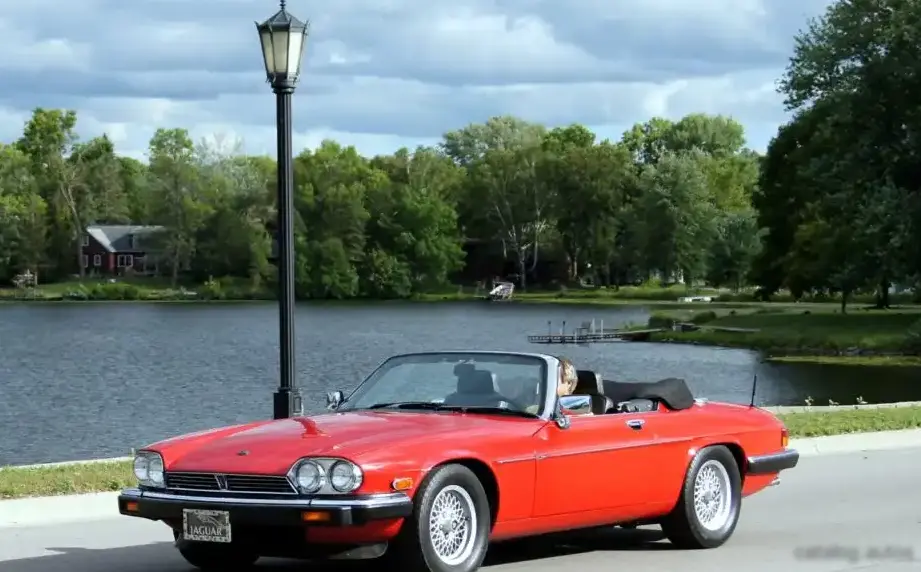
The Jaguar XJSc Convertible 6.0, produced between 1990 and 1994, represented the pinnacle of the XJ-S (XJS) model range. It was the final iteration of the XJ-S, a grand touring car that had been in production since 1975, and offered a luxurious open-top experience combined with substantial performance. Positioned as the flagship convertible, the 6.0-liter model sat above the 3.6 and 4.0-liter variants in terms of price and performance, appealing to buyers seeking the ultimate expression of Jaguar’s grand touring philosophy. The XJSc Convertible was built on the XJ-S platform (internally designated as XJ41), which underwent several revisions throughout its lifespan, culminating in the more refined and powerful 6.0-liter version.
Technical Specifications
| Brand | Jaguar |
| Model | XJS |
| Generation | XJSc Convertible |
| Type (Engine) | 6.0 (318 Hp) |
| Start of production | 1990 |
| End of production | 1994 |
| Powertrain Architecture | Internal Combustion engine |
| Body type | Cabriolet |
| Seats | 4 |
| Doors | 2 |
| Fuel consumption (urban) | 21.9 l/100 km (10.7 US mpg, 12.9 UK mpg, 4.6 km/l) |
| Fuel consumption (extra urban) | 10.6 l/100 km (22.2 US mpg, 26.6 UK mpg, 9.4 km/l) |
| Fuel consumption (combined) | 13 l/100 km (18.1 US mpg, 21.7 UK mpg, 7.7 km/l) |
| Fuel Type | Petrol (Gasoline) |
| Acceleration 0 – 100 km/h | 7.4 sec |
| Acceleration 0 – 62 mph | 7.4 sec |
| Acceleration 0 – 60 mph | 7 sec |
| Maximum speed | 250 km/h (155.34 mph) |
| Weight-to-power ratio | 6 kg/Hp, 165.6 Hp/tonne |
| Weight-to-torque ratio | 4.1 kg/Nm, 241.1 Nm/tonne |
| Power | 318 Hp @ 5400 rpm |
| Power per litre | 53.1 Hp/l |
| Torque | 463 Nm @ 3750 rpm (341.49 lb.-ft. @ 3750 rpm) |
| Engine layout | Front, Longitudinal |
| Engine displacement | 5994 cm3 (365.78 cu. in.) |
| Number of cylinders | 12 |
| Engine configuration | V-engine |
| Cylinder Bore | 90 mm (3.54 in.) |
| Piston Stroke | 78.5 mm (3.09 in.) |
| Compression ratio | 11:1 |
| Number of valves per cylinder | 2 |
| Fuel injection system | Multi-port manifold injection |
| Engine aspiration | Naturally aspirated engine |
| Kerb Weight | 1920 kg (4232.88 lbs.) |
| Max. weight | 2130 kg (4695.85 lbs.) |
| Max load | 210 kg (462.97 lbs.) |
| Trunk (boot) space – minimum | 407 l (14.37 cu. ft.) |
| Fuel tank capacity | 89 l (23.51 US gal | 19.58 UK gal) |
| Length | 4820 mm (189.76 in.) |
| Width | 1793 mm (70.59 in.) |
| Height | 1279 mm (50.35 in.) |
| Wheelbase | 2588 mm (101.89 in.) |
| Front track | 1489 mm (58.62 in.) |
| Rear (Back) track | 1504 mm (59.21 in.) |
| Drivetrain Architecture | The Internal combustion engine (ICE) drives the rear wheels of the vehicle. |
| Drive wheel | Rear wheel drive |
| Number of gears and type of gearbox | 4 gears, automatic transmission |
| Front suspension | Double wishbone |
| Rear suspension | Double wishbone |
| Front brakes | Ventilated discs |
| Rear brakes | Disc |
| Assisting systems | ABS (Anti-lock braking system), Hydraulic Steering |
| Tires size | 230/65 ZR16 |
Powertrain & Engine Architecture
The heart of the XJSc 6.0 was Jaguar’s 5.994-liter (365.78 cu. in.) V12 engine, designated as the AJ6. It was a naturally aspirated, 60-degree V12 featuring a cast iron block and aluminum cylinder heads. This engine represented a significant upgrade over the earlier V12s, benefiting from improved fuel injection and ignition systems. The engine utilized a Bosch Motronic fuel injection system, managing fuel delivery and ignition timing for optimal performance and efficiency. The valvetrain employed two valves per cylinder, operated by a single overhead camshaft. The engine produced 318 horsepower at 5400 rpm and 463 Nm (341.49 lb-ft) of torque at 3750 rpm. The engine was mated to a four-speed automatic transmission, a Chrysler TorqueFlite A727 unit, which was chosen for its robustness and ability to handle the V12’s substantial torque output. While reliable, the TorqueFlite transmission wasn’t known for its particularly quick shifts compared to some contemporary automatic gearboxes.
Driving Characteristics
The XJSc 6.0 offered a distinctly grand touring experience. The combination of the powerful V12 engine and the automatic transmission provided smooth, effortless acceleration. The 0-60 mph sprint took approximately 7 seconds, and the car could reach a top speed of 155 mph. However, the automatic transmission, while comfortable, did detract somewhat from the feeling of direct control offered by the manual transmission options available in other XJ-S models. The gear ratios were geared towards comfortable cruising rather than outright performance. The car felt substantial and planted on the road, but its weight (approximately 4233 lbs) was noticeable in corners. The suspension, while comfortable, wasn’t particularly sporty, prioritizing ride quality over sharp handling.
Equipment & Trim Levels
The XJSc 6.0 Convertible was exceptionally well-equipped, reflecting its position as the range-topping model. Standard features included leather upholstery, power-adjustable seats, air conditioning, power windows and locks, and a premium sound system. The interior trim was typically finished in high-quality wood veneers. Optional extras included a sunroof, upgraded sound systems, and special paint colors. The convertible top was a power-operated soft top, available in a range of colors. The dashboard layout was typical of the XJ-S, featuring a wood-trimmed center console and analog gauges.
Chassis & Braking
The XJSc Convertible utilized a monocoque chassis construction, providing a rigid and strong platform. The suspension system employed double wishbones at both the front and rear, with coil springs and hydraulic dampers. The braking system consisted of ventilated disc brakes at the front and solid disc brakes at the rear. Anti-lock braking system (ABS) was standard, enhancing safety and control. Power steering was also standard, making the car easier to maneuver at low speeds. The XJSc 6.0 featured a stabilizer bar at both the front and rear to reduce body roll during cornering.
Market Reception & Comparison
The XJSc 6.0 Convertible was generally well-received by automotive critics, who praised its luxurious interior, powerful engine, and comfortable ride. However, the car’s high price and relatively high fuel consumption were often cited as drawbacks. Compared to the 3.6 and 4.0-liter XJSc models, the 6.0 offered significantly more performance and a more refined driving experience. However, it also came at a substantial price premium. The 6.0 was often compared to other grand touring convertibles of the era, such as the Mercedes-Benz SL and the BMW Z8, and generally held its own in terms of luxury and performance.
Legacy
The Jaguar XJSc Convertible 6.0 remains a desirable classic car today. The V12 engine, while complex, is generally considered reliable if properly maintained. However, maintenance costs can be high due to the engine’s complexity and the scarcity of parts. The automatic transmission is generally robust, but can require occasional servicing. The XJSc 6.0 has become a sought-after model among Jaguar enthusiasts, and well-maintained examples command high prices in the used car market. It represents a high point in Jaguar’s grand touring heritage, offering a unique blend of luxury, performance, and style.
