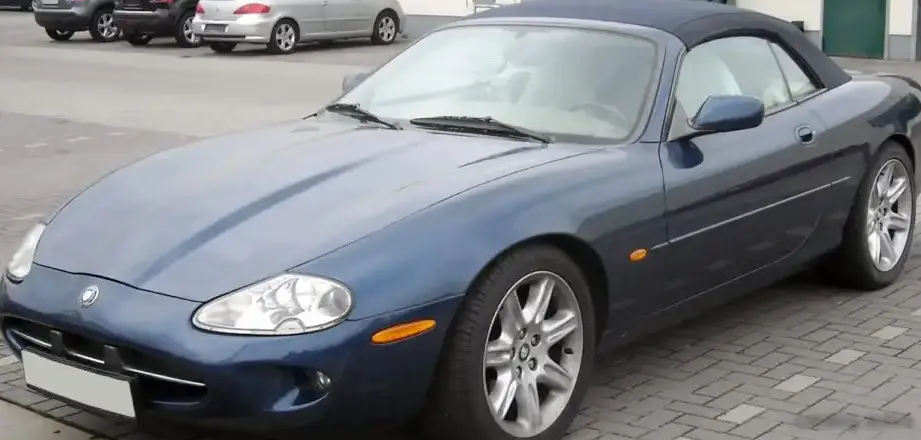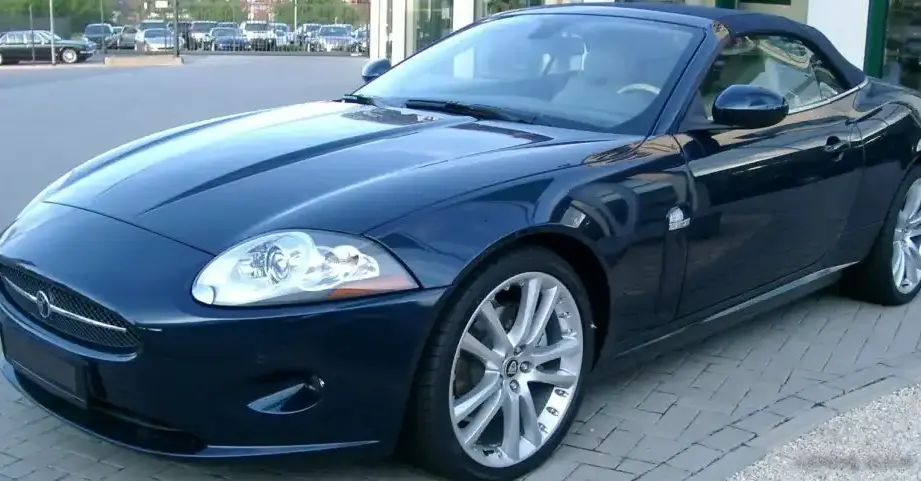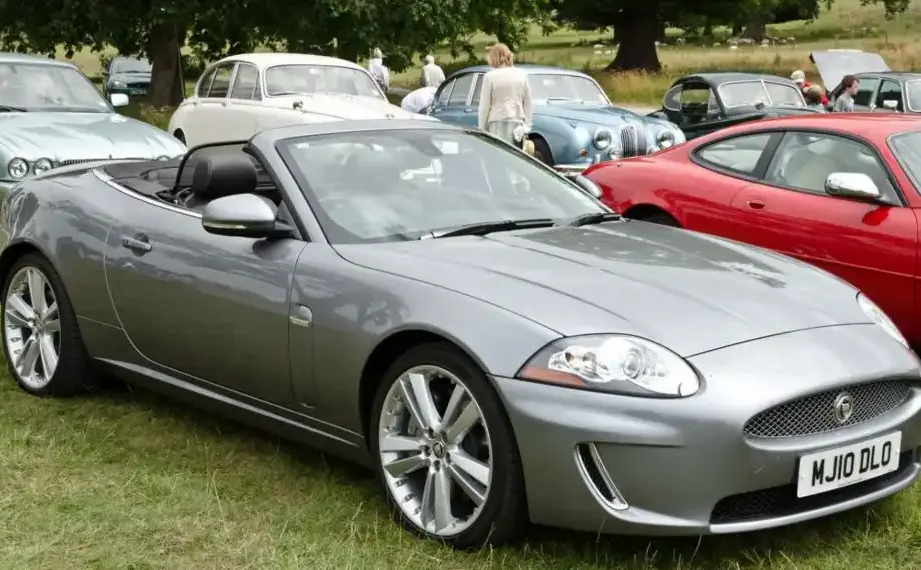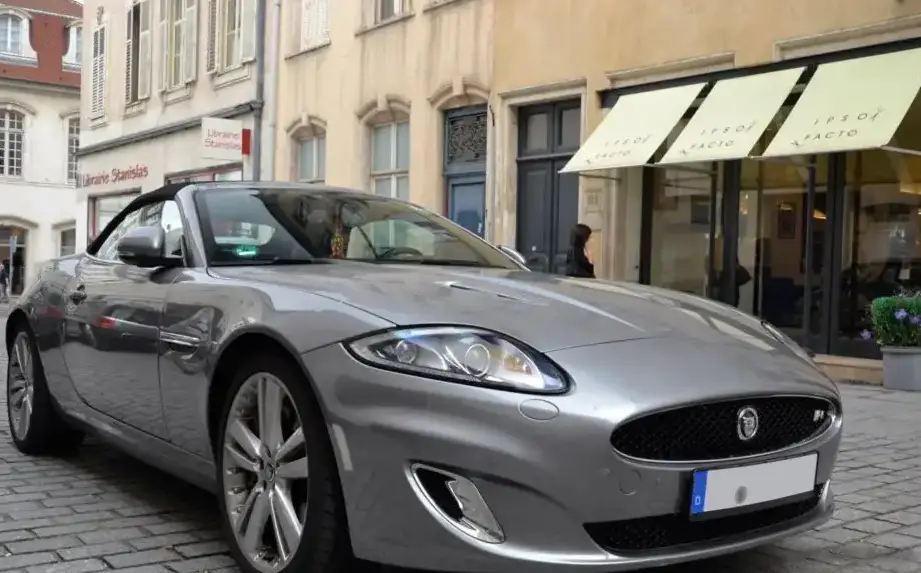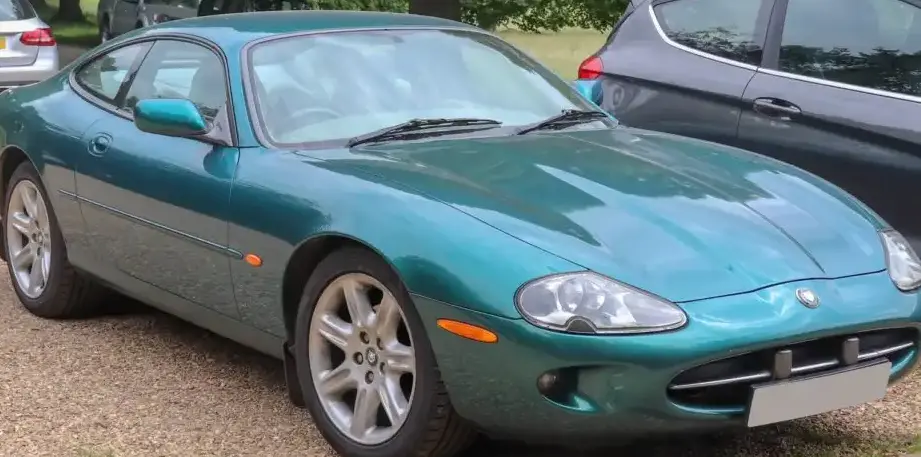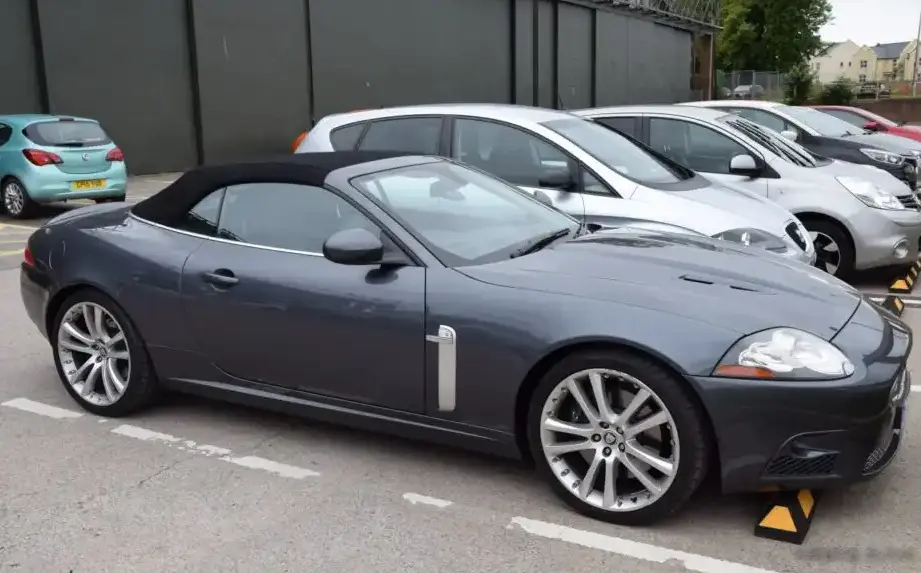
The Jaguar XK Convertible (X150) R 4.2 V8 Automatic, produced from 2006 to 2009, represents the high-performance variant of the second-generation XK convertible. Positioned as the flagship model within the X150 range, it offered a significant step up in power and refinement compared to the standard 4.2-liter XK and the later 5.0-liter models. Built on Jaguar’s D–J platform (shared with the XJ sedan), the X150 aimed to blend traditional British luxury with modern performance and technology. This particular configuration – the 4.2-liter supercharged V8 paired with a six-speed automatic transmission – was a key offering for buyers seeking a powerful and comfortable grand tourer.
Technical Specifications
| Brand | Jaguar |
| Model | XK |
| Generation | XK Convertible (X150) |
| Type (Engine) | R 4.2 V8 (416 Hp) Automatic |
| Start of production | 2006 |
| End of production | 2009 |
| Powertrain Architecture | Internal Combustion engine |
| Body type | Cabriolet |
| Seats | 4 |
| Doors | 2 |
| Fuel consumption (economy) – urban (NEDC) | 19.1 l/100 km (12.3 US mpg, 14.8 UK mpg, 5.2 km/l) |
| Fuel consumption (economy) – extra urban (NEDC) | 8.6 l/100 km (27.4 US mpg, 32.8 UK mpg, 11.6 km/l) |
| Fuel consumption (economy) – combined (NEDC) | 12.3 l/100 km (19.1 US mpg, 23 UK mpg, 8.1 km/l) |
| CO2 emissions (NEDC) | 294 g/km |
| Fuel Type | Petrol (Gasoline) |
| Acceleration 0 – 100 km/h | 5.3 sec |
| Acceleration 0 – 62 mph | 5.3 sec |
| Acceleration 0 – 60 mph | 5 sec |
| Maximum speed | 250 km/h (155.34 mph), Electronically limited |
| Emission standard | Euro 4 |
| Weight-to-power ratio | 4.1 kg/Hp, 243.3 Hp/tonne |
| Weight-to-torque ratio | 3.1 kg/Nm, 327.5 Nm/tonne |
| Power | 416 Hp @ 6250 rpm |
| Power per litre | 99.1 Hp/l |
| Torque | 560 Nm @ 4000 rpm (413.03 lb.-ft. @ 4000 rpm) |
| Engine layout | Front, Longitudinal |
| Engine Model/Code | AJ34S |
| Engine displacement | 4196 cm3 (256.06 cu. in.) |
| Number of cylinders | 8 |
| Engine configuration | V-engine |
| Cylinder Bore | 86 mm (3.39 in.) |
| Piston Stroke | 90.3 mm (3.56 in.) |
| Compression ratio | 9.1:1 |
| Number of valves per cylinder | 4 |
| Fuel injection system | Multi-port manifold injection |
| Engine aspiration | Supercharger, Intercooler |
| Valvetrain | DOHC |
| Engine oil capacity | 7 l (7.4 US qt | 6.16 UK qt) |
| Coolant | 10 l (10.57 US qt | 8.8 UK qt) |
| Kerb Weight | 1710 kg (3769.9 lbs.) |
| Max. weight | 2120 kg (4673.8 lbs.) |
| Max load | 410 kg (903.9 lbs.) |
| Trunk (boot) space – minimum | 200 l (7.06 cu. ft.) |
| Trunk (boot) space – maximum | 283 l (9.99 cu. ft.) |
| Fuel tank capacity | 71.1 l (18.78 US gal | 15.64 UK gal) |
| Length | 4791 mm (188.62 in.) |
| Width with mirrors folded | 1892 mm (74.49 in.) |
| Width including mirrors | 2070 mm (81.5 in.) |
| Height | 1329 mm (52.32 in.) |
| Wheelbase | 2752 mm (108.35 in.) |
| Ride height (ground clearance) | 120 mm (4.72 in.) |
| Minimum turning circle | 10.97 m (35.99 ft.) |
| Drivetrain Architecture | Rear wheel drive |
| Number of gears and type of gearbox | 6 gears, automatic transmission |
| Front suspension | Double wishbone, Transverse stabilizer |
| Rear suspension | Double wishbone, Transverse stabilizer |
| Front brakes | Ventilated discs, 400 mm |
| Rear brakes | Ventilated discs, 350 mm |
| Assisting systems | ABS (Anti-lock braking system) |
| Steering type | Steering rack and pinion |
| Power steering | Hydraulic Steering |
| Front tires | 245/40 R19; 255/35 R20 |
| Rear tires | 275/35 R19; 285/30 R20 |
| Front wheel rims | 8.5J x 19; 9J x 20 |
| Rear wheel rims | 9.5J x 19; 9.5J x 20 |
Powertrain & Engine Architecture
At the heart of the XK R resided the AJ34S 4.2-liter supercharged V8 engine. This engine, a cornerstone of Jaguar’s performance offerings in the 2000s, featured a Roots-type supercharger, providing instant boost and a broad torque curve. The engine utilized multi-port fuel injection and a double overhead camshaft (DOHC) valvetrain with four valves per cylinder. The supercharger, coupled with an intercooler, helped manage intake air temperatures, maximizing efficiency and power output. The six-speed automatic transmission, sourced from ZF, was specifically calibrated for the high-torque output of the supercharged V8. It featured a ‘Sport’ mode for more aggressive shifting and manual control via steering wheel-mounted paddles on later iterations.
Driving Characteristics
The XK R 4.2 Automatic delivered a distinctly grand touring experience. The supercharged V8 provided effortless acceleration, with 0-60 mph times consistently around 5 seconds. The automatic transmission, while not as responsive as a manual, offered smooth and refined gear changes. The torque converter multiplied engine torque, providing strong off-the-line acceleration. Compared to the naturally aspirated 4.2-liter XK, the R model offered a substantial performance increase. While the later 5.0-liter supercharged XK models provided even greater performance, the 4.2-liter R struck a balance between power and usability. The gear ratios were tuned for comfortable cruising at highway speeds, while still providing ample power for overtaking maneuvers.
Equipment & Trim Levels
The XK R came standard with a generous array of features, reflecting its position as the range-topping model. Standard equipment included leather upholstery, heated front seats, automatic climate control, a premium sound system, and parking sensors. Optional extras included adaptive cruise control, navigation system, upgraded leather trim, and various cosmetic enhancements. The interior featured a wood and metal trim, emphasizing the car’s luxurious character. The convertible top was fully automatic and lined for improved noise insulation.
Chassis & Braking
The X150 chassis utilized an aluminum monocoque construction, contributing to its relatively low weight. The suspension system consisted of double wishbones at both the front and rear, with a transverse stabilizer bar to reduce body roll. The XK R featured upgraded brakes compared to the standard XK, with ventilated discs at all four corners. The front brakes measured 400mm in diameter, while the rear brakes were 350mm. Anti-lock braking system (ABS) was standard. The steering was a hydraulic rack and pinion system, providing precise and responsive handling.
Market Reception & Comparison
The XK R 4.2 was generally well-received by automotive critics. It was praised for its powerful engine, comfortable ride, and luxurious interior. However, some critics noted the relatively high fuel consumption and the somewhat dated infotainment system. Compared to rivals such as the BMW 6 Series and Mercedes-Benz SL, the XK R offered a more distinctive British character and a more engaging driving experience. The 4.2-liter engine, while potent, was less fuel-efficient than the later 5.0-liter direct-injection engines. Reliability was generally good, although preventative maintenance was crucial to avoid potential issues with the timing chain tensioners.
Legacy
The Jaguar XK R 4.2 V8 Automatic remains a desirable grand tourer in the used car market. Its combination of performance, luxury, and style continues to appeal to enthusiasts. The AJ34S engine, while requiring regular maintenance, is generally considered robust. The six-speed ZF automatic transmission is also known for its reliability. Values have remained relatively stable, reflecting the car’s enduring appeal and its status as a modern classic. Finding well-maintained examples is key, as neglected cars may require significant investment to restore to their original condition.