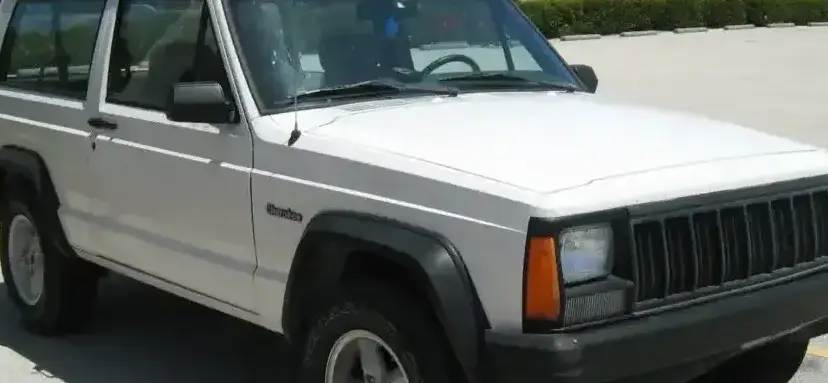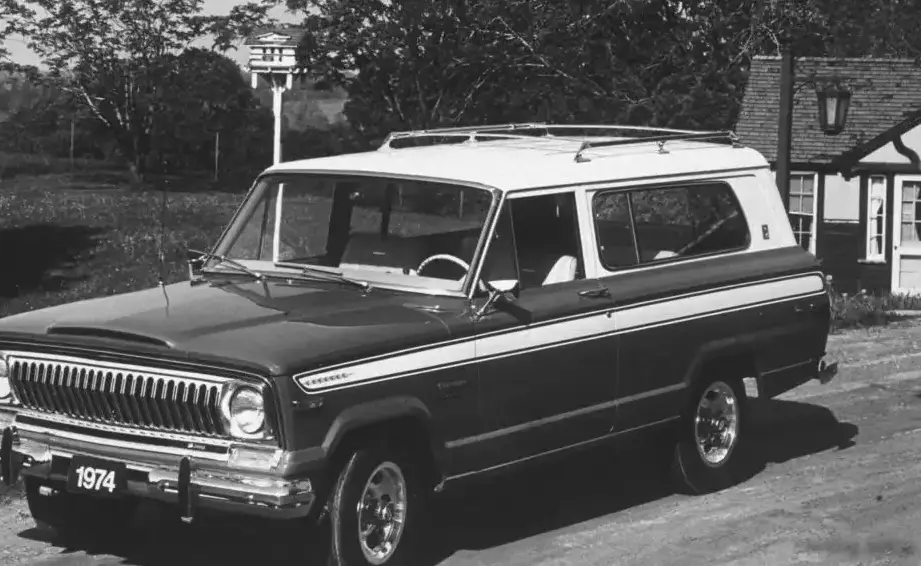
The Jeep Cherokee SJ, particularly the short-wheelbase, two-door model produced between 1975 and 1978 equipped with the 5.9-liter V8 engine and automatic transmission, represents a significant chapter in the history of American off-road vehicles. This configuration, while not the most common, offered a unique blend of power and convenience within the Cherokee lineup. It occupied a middle ground, providing more capability than the inline-six cylinder models, but without the higher price tag and complexity of later fuel-injected versions. The SJ Cherokee was a pivotal vehicle for Jeep, solidifying its reputation for ruggedness and versatility, and this variant catered to buyers seeking a capable and comfortable SUV for both on and off-road adventures.
Technical Specifications
| Brand | Jeep |
| Model | Cherokee |
| Generation | Cherokee I (SJ) 3-door |
| Type (Engine) | 5.9 V8 (140 Hp) 4WD Automatic |
| Start of production | 1975 |
| End of production | 1978 |
| Powertrain Architecture | Internal Combustion engine |
| Body type | SUV |
| Seats | 5 |
| Doors | 3 |
| Fuel Type | Petrol (Gasoline) |
| Maximum speed | 145 km/h (90.1 mph) |
| Weight-to-power ratio | 13.9 kg/Hp, 72.2 Hp/tonne |
| Power | 140 Hp @ 3300 rpm |
| Power per litre | 23.8 Hp/l |
| Engine layout | Front, Longitudinal |
| Engine Model/Code | AMC N |
| Engine displacement | 5893 cm3 (359.61 cu. in.) |
| Number of cylinders | 8 |
| Engine configuration | V-engine |
| Cylinder Bore | 103.63 mm (4.08 in.) |
| Piston Stroke | 87.38 mm (3.44 in.) |
| Compression ratio | 8.25:1 |
| Fuel injection system | Carburettor |
| Engine aspiration | Naturally aspirated engine |
| Valvetrain | OHV |
| Engine oil capacity | 4.7 l (4.97 US qt | 4.14 UK qt) |
| Coolant | 13.2 l (13.95 US qt | 11.61 UK qt) |
| Kerb Weight | 1940 kg (4276.97 lbs.) |
| Max. weight | 2290 kg (5048.59 lbs.) |
| Max load | 350 kg (771.62 lbs.) |
| Trunk (boot) space – maximum | 2693 l (95.1 cu. ft.) |
| Fuel tank capacity | 83 l (21.93 US gal | 18.26 UK gal) |
| Permitted trailer load without brakes | 680 kg (1499.14 lbs.) |
| Length | 4600 mm (181.1 in.) |
| Width | 1920 mm (75.59 in.) |
| Height | 1660 mm (65.35 in.) |
| Wheelbase | 2770 mm (109.06 in.) |
| Front track | 1540 mm (60.63 in.) |
| Rear (Back) track | 1490 mm (58.66 in.) |
| Front overhang | 700 mm (27.56 in.) |
| Rear overhang | 1130 mm (44.49 in.) |
| Ride height (ground clearance) | 196 mm (7.72 in.) |
| Minimum turning circle (turning diameter) | 11.5 m (37.73 ft.) |
| Drivetrain Architecture | The Internal combustion engine (ICE) drives the rear wheels permanently, and the front wheels are driven through an electrically or mechanically operated clutch if necessary. |
| Drive wheel | All wheel drive (4×4) |
| Number of gears and type of gearbox | 3 gears, automatic transmission |
| Front suspension | Leaf spring |
| Rear suspension | Leaf spring |
| Front brakes | Disc |
| Rear brakes | Drum |
| Steering type | Cone worm with recirculation balls |
| Wheel rims size | 7J x 15 |
Powertrain & Engine Architecture
The heart of this Cherokee variant is the AMC 360 cubic inch (5.9-liter) V8 engine, designated as the AMC N code. This engine, a staple of AMC vehicles for many years, is a pushrod (OHV) design known for its robust construction and relatively simple maintenance. The 1975-1978 Cherokees utilized a two-barrel carburetor for fuel delivery, a common setup for the time, prioritizing simplicity over ultimate efficiency. The engine produced 140 horsepower at 3300 rpm, and while not a high output figure by modern standards, it provided ample torque for off-road use and towing. The automatic transmission was a Chrysler-built TorqueFlite A727 three-speed unit. This transmission was known for its durability and smooth operation, although it lacked the fuel efficiency of more modern automatic transmissions. The combination of the V8 and automatic transmission provided a comfortable and relatively effortless driving experience, particularly appealing to buyers who didn’t want to deal with a manual transmission.
Driving Characteristics
The 5.9L V8 automatic Cherokee offered a distinct driving experience. The TorqueFlite transmission, while smooth, had relatively wide gear ratios. This meant that while acceleration was adequate, it wasn’t particularly brisk. The engine’s torque peak was relatively low in the rev range, making it well-suited for crawling over obstacles and towing. Compared to the inline-six cylinder models, the V8 provided significantly more power, especially noticeable when climbing hills or accelerating onto highways. However, it also came with a fuel economy penalty. Compared to the later fuel-injected V8s, this carbureted version felt less refined and responsive, but it was also simpler to diagnose and repair. The short wheelbase of the two-door Cherokee contributed to a more nimble feel than the longer four-door models, making it easier to maneuver in tight spaces.
Equipment & Trim Levels
The 1975-1978 Cherokee SJ with the 5.9 V8 and automatic transmission typically fell into a mid-range trim level. Standard features included basic interior trim, a heater and defroster, and a relatively simple dashboard layout. Options included air conditioning, power steering, upgraded upholstery, and a radio. The interior was generally utilitarian, focusing on durability rather than luxury. The seats were typically covered in vinyl or a combination of vinyl and cloth. The dashboard was functional, with clearly marked gauges for speed, fuel level, temperature, and oil pressure. The availability of optional equipment allowed buyers to customize their Cherokee to some extent, but the overall focus remained on providing a capable and reliable off-road vehicle.
Chassis & Braking
The Cherokee SJ utilized a body-on-frame construction, providing a robust and durable chassis. The suspension consisted of leaf springs at both the front and rear, a common setup for trucks and SUVs of the era. This suspension provided a comfortable ride on paved roads, but it was also capable of handling rough off-road terrain. The front brakes were disc brakes, while the rear brakes were drum brakes. This combination provided adequate stopping power for most driving conditions, but it wasn’t as effective as a four-wheel disc brake system. The steering was a recirculating ball system, which provided a solid feel but required more effort than modern rack-and-pinion steering. The short wheelbase and relatively narrow track width contributed to the Cherokee’s maneuverability, but also made it more prone to body roll in corners.
Market Reception & Comparison
The 5.9 V8 automatic Cherokee was generally well-received by buyers who needed a capable and comfortable SUV. Critics praised its off-road ability and its relatively smooth ride. However, some criticized its fuel economy and its lack of refinement compared to some of its competitors. Compared to the inline-six cylinder models, the V8 offered significantly more power, but it also came with a higher price tag. Compared to the later fuel-injected V8s, this carbureted version was less efficient and less responsive, but it was also simpler to maintain. The Cherokee competed with other SUVs of the era, such as the Ford Bronco and the International Scout, but it distinguished itself with its combination of ruggedness, versatility, and comfort.
Legacy
The 1975-1978 Jeep Cherokee SJ 5.9 V8 automatic holds a respected place among classic Jeep enthusiasts. The AMC 360 V8 engine, while not known for its longevity in all applications, proved to be reasonably durable in the Cherokee, especially when properly maintained. Today, these vehicles are sought after by collectors and off-road enthusiasts. Parts availability is generally good, thanks to the widespread use of AMC components in other vehicles. However, finding well-maintained examples can be challenging, as many have been used hard and neglected over the years. The combination of a powerful V8 engine, a durable automatic transmission, and a rugged chassis makes this Cherokee variant a capable and enjoyable vehicle to own and drive, representing a significant piece of American automotive history.