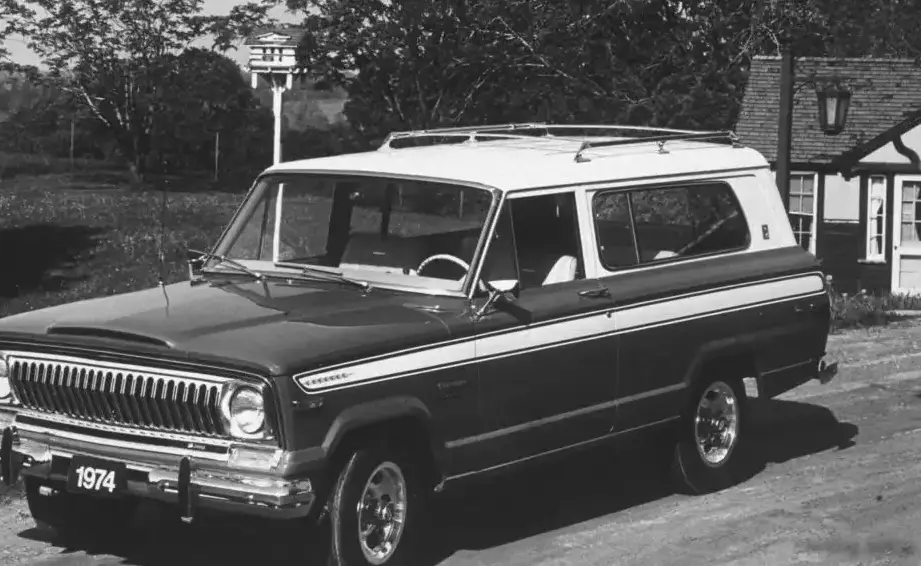
The Jeep Cherokee (SJ) 5.9 V8, produced from 1977 to 1983, represents a significant chapter in the history of the iconic American SUV. This variant, characterized by its substantial 5.9-liter V8 engine and automatic transmission, occupied a premium position within the first-generation Cherokee (SJ) lineup. It was designed to offer a blend of off-road capability, towing capacity, and relative comfort, appealing to buyers who needed a robust vehicle for both work and leisure. The Cherokee SJ series, launched in 1974, was a pivotal model for Jeep, moving away from the utilitarian CJ platform and offering a more family-oriented, enclosed SUV.
Technical Specifications
| Brand | Jeep |
| Model | Cherokee |
| Generation | Cherokee I (SJ) 5-door |
| Type (Engine) | 5.9 V8 (175 Hp) 4WD Automatic |
| Start of production | 1977 |
| End of production | 1983 |
| Powertrain Architecture | Internal Combustion engine |
| Body type | SUV |
| Seats | 6 |
| Doors | 5 |
| Fuel Type | Petrol (Gasoline) |
| Maximum speed | 146 km/h (90.72 mph) |
| Weight-to-power ratio | 11.3 kg/Hp, 88.4 Hp/tonne |
| Power | 175 Hp @ 3600 rpm |
| Power per litre | 29.7 Hp/l |
| Engine layout | Front, Longitudinal |
| Engine Model/Code | AMC P |
| Engine displacement | 5893 cm3 (359.61 cu. in.) |
| Number of cylinders | 8 |
| Engine configuration | V-engine |
| Cylinder Bore | 103.63 mm (4.08 in.) |
| Piston Stroke | 87.38 mm (3.44 in.) |
| Compression ratio | 8.25:1 |
| Fuel injection system | Carburettor |
| Engine aspiration | Naturally aspirated engine |
| Valvetrain | OHV |
| Engine oil capacity | 4.7 l (4.97 US qt | 4.14 UK qt) |
| Coolant | 13.2 l (13.95 US qt | 11.61 UK qt) |
| Kerb Weight | 1980 kg (4365.15 lbs.) |
| Max. weight | 2400 kg (5291.09 lbs.) |
| Max load | 420 kg (925.94 lbs.) |
| Trunk (boot) space – maximum | 2693 l (95.1 cu. ft.) |
| Fuel tank capacity | 83 l (21.93 US gal | 18.26 UK gal) |
| Length | 4620 mm (181.89 in.) |
| Width | 1940 mm (76.38 in.) |
| Height | 1660 mm (65.35 in.) |
| Wheelbase | 2770 mm (109.06 in.) |
| Front track | 1520 mm (59.84 in.) |
| Rear (Back) track | 1470 mm (57.87 in.) |
| Front overhang | 720 mm (28.35 in.) |
| Rear overhang | 1130 mm (44.49 in.) |
| Drivetrain Architecture | The Internal combustion engine (ICE) drives the rear wheels permanently, and the front wheels are driven through an electrically or mechanically operated clutch if necessary. |
| Drive wheel | All wheel drive (4×4) |
| Number of gears and type of gearbox | 3 gears, automatic transmission |
| Front suspension | Leaf spring |
| Rear suspension | Leaf spring |
| Front brakes | Disc |
| Rear brakes | Drum |
| Steering type | Cone worm with recirculation balls |
Powertrain & Engine Architecture
The heart of the Cherokee 5.9 V8 is the AMC-built 358 cubic inch (5.9-liter) V8 engine, designated as the AMC P engine family. This engine, a staple of AMC vehicles during the 1970s and early 1980s, featured a cast iron block and cylinder heads, and an overhead valve (OHV) valvetrain. The 5.9L engine utilized a two-barrel carburetor for fuel delivery, a relatively simple system for the time, prioritizing reliability and ease of maintenance over ultimate efficiency. The engine produced 175 horsepower at 3600 rpm and a substantial amount of torque, making it well-suited for towing and off-road driving. The automatic transmission was a Chrysler-sourced TorqueFlite A727 three-speed automatic, known for its durability. This transmission was chosen for its ability to handle the engine’s torque output and provide smooth, if not particularly fuel-efficient, operation.
Driving Characteristics
The Cherokee 5.9 V8 offered a distinctly different driving experience compared to the four-cylinder or inline-six engine options available on the SJ Cherokee. The V8 provided significantly more power and torque, resulting in brisk acceleration and effortless cruising. However, the three-speed automatic transmission, while robust, lacked the sophistication of more modern gearboxes. Gear ratios were optimized for low-end torque, making it capable in off-road situations, but at the expense of high-speed efficiency. The Cherokee 5.9 V8 wasn’t a sports car; its strength lay in its ability to tackle challenging terrain and haul heavy loads. Compared to the manual transmission versions, the automatic offered greater convenience but reduced driver control and slightly lower fuel economy.
Equipment & Trim Levels
The 5.9 V8 Cherokee typically came with a higher level of standard equipment than the base models. This included features like power steering, power brakes, and upgraded interior trim. Upholstery was typically cloth or vinyl, with options for leather available. Air conditioning was a popular option, as was a radio. The trim level often included exterior brightwork, such as chrome bumpers and trim, and sometimes featured special badging to denote the V8 engine. The interior dashboard configuration was relatively simple, reflecting the vehicle’s utilitarian origins, but offered a functional layout with easy-to-read gauges.
Chassis & Braking
The Cherokee SJ utilized a body-on-frame construction, providing a robust and durable chassis. The suspension consisted of leaf springs at both the front and rear, a design choice that prioritized load-carrying capacity and off-road durability over ride comfort. The front brakes were disc brakes, providing adequate stopping power, while the rear brakes were drum brakes. Steering was accomplished via a cone worm and recirculating ball system, which offered a solid feel but lacked the precision of more modern steering technologies. The relatively heavy weight of the V8 engine and automatic transmission necessitated a robust suspension and braking system.
Market Reception & Comparison
The Cherokee 5.9 V8 was generally well-received by automotive critics and buyers who needed a capable and reliable SUV. It was praised for its powerful engine, off-road capability, and spacious interior. However, its fuel economy was a common criticism, particularly during the late 1970s and early 1980s when fuel prices were rising. Compared to the four-cylinder and inline-six versions, the V8 offered significantly more performance but at a higher price point and with lower fuel efficiency. The V8 Cherokee appealed to a different segment of the market – those who prioritized power and towing capacity over fuel economy.
Legacy
The Jeep Cherokee (SJ) 5.9 V8 holds a significant place in automotive history as a pioneering SUV that helped define the segment. While the AMC 358 V8 engine isn’t known for being particularly long-lived or fuel-efficient, it provided a robust and reliable power source for many years. Today, these Cherokees are sought after by collectors and enthusiasts who appreciate their classic styling, rugged construction, and powerful V8 engines. Finding well-maintained examples can be challenging, as many have been used extensively for off-road adventures or as work vehicles. However, the Cherokee 5.9 V8 remains a testament to Jeep’s enduring legacy of building capable and versatile SUVs.