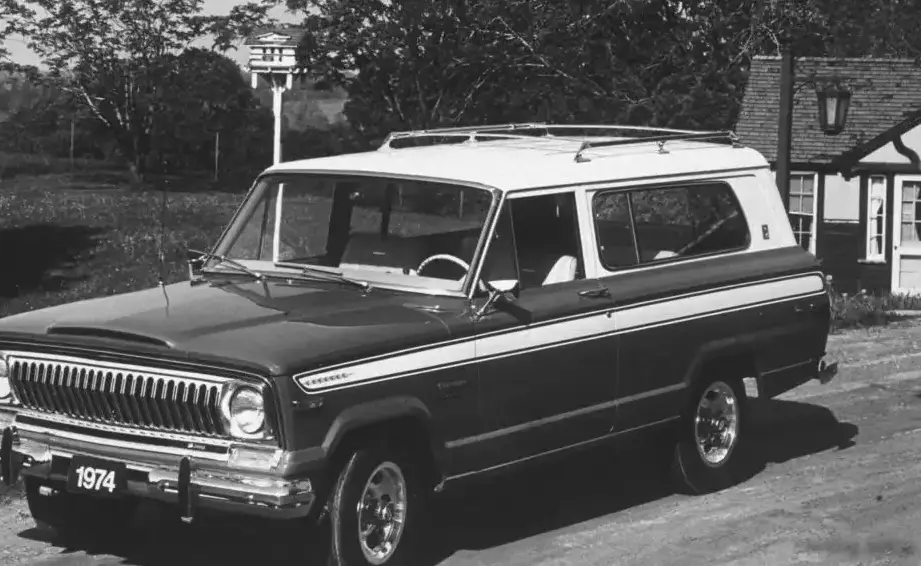
The Jeep Cherokee II (XJ), specifically the 3-door model equipped with the 4.0-liter inline-six engine producing 190 horsepower and paired with a four-speed automatic transmission, was a significant offering in the compact SUV segment during its production run from 1993 to 1998. This variant occupied a middle ground within the XJ Cherokee lineup, offering a balance between capability, comfort, and affordability. It represented a popular choice for buyers seeking a versatile vehicle suitable for both daily commuting and off-road adventures. The XJ platform, renowned for its robust unibody construction and solid axles, provided a foundation for a vehicle that proved both durable and capable.
Technical Specifications
| Brand | Jeep |
| Model | Cherokee |
| Generation | Cherokee II (XJ) 3-door |
| Type (Engine) | 4.0 i (190 Hp) 4WD Automatic |
| Start of production | 1993 |
| End of production | 1998 |
| Powertrain Architecture | Internal Combustion engine |
| Body type | SUV |
| Seats | 5 |
| Doors | 3 |
| Fuel consumption (combined) | 13.4 l/100 km (17.6 US mpg, 21.1 UK mpg, 7.5 km/l) |
| Fuel Type | Petrol (Gasoline) |
| Weight-to-power ratio | 7.3 kg/Hp, 137.6 Hp/tonne |
| Weight-to-torque ratio | 4.5 kg/Nm, 220.9 Nm/tonne |
| Power | 190 Hp @ 4750 rpm |
| Power per litre | 48 Hp/l |
| Torque | 305 Nm @ 4000 rpm (224.96 lb.-ft. @ 4000 rpm) |
| Engine layout | Front, Longitudinal |
| Engine displacement | 3960 cm3 (241.65 cu. in.) |
| Number of cylinders | 6 |
| Engine configuration | Inline |
| Cylinder Bore | 98.5 mm (3.88 in.) |
| Piston Stroke | 86.7 mm (3.41 in.) |
| Compression ratio | 8.8:1 |
| Number of valves per cylinder | 2 |
| Fuel injection system | Multi-port manifold injection |
| Engine aspiration | Naturally aspirated engine |
| Engine oil capacity | 5.7 l (6.02 US qt | 5.02 UK qt) |
| Coolant | 11.4 l (12.05 US qt | 10.03 UK qt) |
| Kerb Weight | 1381 kg (3044.58 lbs.) |
| Trunk (boot) space – minimum | 652 l (23.03 cu. ft.) |
| Trunk (boot) space – maximum | 1315 l (46.44 cu. ft.) |
| Fuel tank capacity | 76 l (20.08 US gal | 16.72 UK gal) |
| Length | 4288 mm (168.82 in.) |
| Width | 1720 mm (67.72 in.) |
| Height | 1622 mm (63.86 in.) |
| Wheelbase | 2575 mm (101.38 in.) |
| Front track | 1473 mm (57.99 in.) |
| Rear (Back) track | 1473 mm (57.99 in.) |
| Drive wheel | All wheel drive (4×4) |
| Number of gears and type of gearbox | 4 gears, automatic transmission |
| Front suspension | Coil spring |
| Rear suspension | Leaf spring |
| Front brakes | Ventilated discs |
| Rear brakes | Drum |
| Assisting systems | ABS (Anti-lock braking system) |
| Steering type | Steering rack and pinion |
| Power steering | Hydraulic Steering |
| Tires size | 225/75 R15 S |
| Wheel rims size | 15 |
Powertrain & Engine Architecture
The heart of this Cherokee variant is the 4.0-liter (3960 cc) inline-six cylinder engine, designated as the 4.0i. This engine, part of the AMC/Jeep 4.0L family, is renowned for its durability and relatively simple design. It features a cast iron block and cylinder head, a 8.8:1 compression ratio, and a multi-port fuel injection system. The engine’s valvetrain utilizes two valves per cylinder, operated by a single overhead camshaft. The 190 horsepower output at 4750 rpm and 305 Nm (224.96 lb-ft) of torque at 4000 rpm provided adequate power for both on-road driving and moderate off-road use. The automatic transmission is a Chrysler-sourced 42RE four-speed unit. This transmission, while reliable, is not known for its particularly quick shifts or fuel efficiency compared to more modern automatics. The transmission’s gear ratios were optimized for a balance of acceleration and towing capacity.
Driving Characteristics
The 190 hp 4.0L automatic Cherokee offered a comfortable and capable driving experience. Acceleration was adequate, but not particularly brisk, with a 0-60 mph time estimated around 9-10 seconds. The automatic transmission, while smooth, could feel somewhat sluggish during quick acceleration or when attempting to pass on the highway. The 4WD system, typically a part-time system with a 2-Hi, 4-Hi, and 4-Lo range, provided excellent traction in off-road conditions. The leaf spring rear suspension, while contributing to the vehicle’s load-carrying capacity, could result in a somewhat bouncy ride, especially when unladen. Compared to the manual transmission versions, the automatic offered less driver engagement but greater convenience. The higher-output versions, such as those found in the Grand Cherokee, provided noticeably more power and quicker acceleration.
Equipment & Trim Levels
The 3-door Cherokee 4.0L Automatic typically came standard with features such as air conditioning, power steering, a basic AM/FM radio, and cloth upholstery. Higher trim levels, such as the Limited, added features like upgraded sound systems, power windows and locks, cruise control, and leather upholstery. Optional extras included a sunroof, upgraded wheels, and a tow package. The interior design was functional and utilitarian, prioritizing durability over luxury. The dashboard layout was straightforward, with easy-to-read gauges and controls.
Chassis & Braking
The Cherokee II (XJ) utilized a robust unibody construction, providing a solid and durable platform. The front suspension featured coil springs, while the rear suspension employed leaf springs. This combination offered a good balance of ride comfort and load-carrying capacity. The braking system consisted of ventilated discs at the front and drum brakes at the rear. Anti-lock brakes (ABS) were often included as standard equipment, enhancing safety. The steering system was a rack-and-pinion setup with hydraulic power assist, providing responsive and precise steering.
Market Reception & Comparison
The 3-door Cherokee 4.0L Automatic was generally well-received by automotive critics and consumers alike. It was praised for its off-road capability, durability, and relatively affordable price. However, some critics noted the engine’s relatively low fuel economy and the automatic transmission’s lack of responsiveness. Compared to other SUVs in its class, such as the Ford Explorer and Chevrolet Blazer, the Cherokee offered a more rugged and utilitarian character. The smaller engine variants offered better fuel economy but lacked the power and towing capacity of the 4.0L. The 4.0L engine, while more expensive to operate, was considered the preferred choice for buyers who needed a capable and reliable vehicle for both on-road and off-road use.
Legacy
The Jeep Cherokee II (XJ) 4.0L Automatic has developed a strong following among enthusiasts and collectors. The 4.0L inline-six engine is known for its exceptional longevity and relatively simple maintenance requirements. While age and mileage can lead to common issues such as oil leaks and corrosion, the engine is generally considered to be very reliable. Today, well-maintained examples of this Cherokee variant command reasonable prices in the used car market, and it remains a popular choice for those seeking a classic and capable SUV. The XJ Cherokee’s enduring popularity is a testament to its robust design, off-road capability, and overall durability.