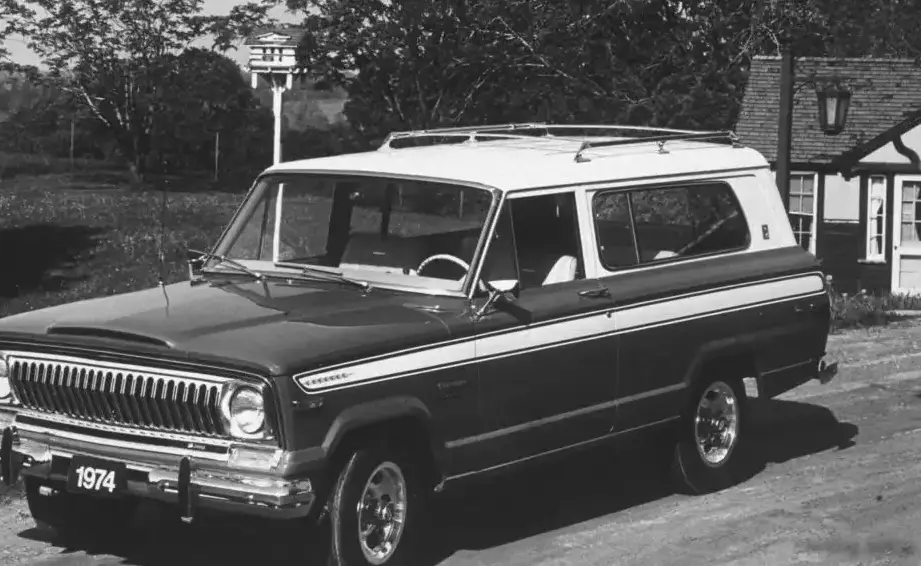
The Jeep Cherokee II (XJ) 3-door 4.0i Country, produced from 1993 to 1999, represented a significant offering within the compact SUV segment. This variant, powered by the 4.0-liter inline-six engine, was positioned as a more refined and capable option within the XJ Cherokee lineup, appealing to buyers seeking a balance of on-road comfort and off-road prowess. The three-door configuration, while less common than the five-door model, offered a more nimble and sporty driving experience. It was a key model for Jeep during a period where the brand was solidifying its reputation for ruggedness and versatility, particularly in the North American market.
Technical Specifications
| Brand | Jeep |
| Model | Cherokee |
| Generation | Cherokee II (XJ) 3-door |
| Type (Engine) | 4.0 i Country (190 Hp) |
| Start of production | 1993 |
| End of production | 1999 |
| Powertrain Architecture | Internal Combustion engine |
| Body type | SUV |
| Seats | 5 |
| Doors | 3 |
| Fuel consumption (combined) | 12.4 l/100 km (19 US mpg, 22.8 UK mpg, 8.1 km/l) |
| Fuel Type | Petrol (Gasoline) |
| Weight-to-power ratio | 6.9 kg/Hp, 145.6 Hp/tonne |
| Weight-to-torque ratio | 4.3 kg/Nm, 233.7 Nm/tonne |
| Power | 190 Hp @ 4750 rpm |
| Power per litre | 48 Hp/l |
| Torque | 305 Nm @ 4000 rpm (224.96 lb.-ft. @ 4000 rpm) |
| Engine layout | Front, Longitudinal |
| Engine displacement | 3960 cm3 (241.65 cu. in.) |
| Number of cylinders | 6 |
| Engine configuration | Inline |
| Cylinder Bore | 98.5 mm (3.88 in.) |
| Piston Stroke | 86.7 mm (3.41 in.) |
| Compression ratio | 8.8:1 |
| Number of valves per cylinder | 2 |
| Fuel injection system | Multi-port manifold injection |
| Engine aspiration | Naturally aspirated |
| Engine oil capacity | 5.7 l (6.02 US qt | 5.02 UK qt) |
| Coolant capacity | 11.4 l (12.05 US qt | 10.03 UK qt) |
| Kerb Weight | 1305 kg (2877.03 lbs.) |
| Trunk (boot) space – minimum | 652 l (23.03 cu. ft.) |
| Trunk (boot) space – maximum | 1315 l (46.44 cu. ft.) |
| Fuel tank capacity | 76 l (20.08 US gal | 16.72 UK gal) |
| Length | 4288 mm (168.82 in.) |
| Width | 1720 mm (67.72 in.) |
| Height | 1621 mm (63.82 in.) |
| Wheelbase | 2575 mm (101.38 in.) |
| Front track | 1473 mm (57.99 in.) |
| Rear track | 1473 mm (57.99 in.) |
| Drivetrain Architecture | Rear wheel drive |
| Number of gears | 5 |
| Type of gearbox | Manual transmission |
| Front suspension | Coil spring |
| Rear suspension | Leaf spring |
| Front brakes | Ventilated discs |
| Rear brakes | Drum |
| Assisting systems | ABS (Anti-lock braking system), Hydraulic Power Steering |
| Tires size | 225/70 R15 S |
Powertrain & Engine Architecture
The heart of the Cherokee 4.0i Country was the 4.0-liter (3960 cc) inline-six cylinder engine, internally designated as the Renix 4.0L initially, and later updated to the more common PowerTech engine. This engine was renowned for its durability and relatively smooth power delivery. It featured a cast iron block and aluminum cylinder head, utilizing a multi-port fuel injection system. The engine produced 190 horsepower at 4750 rpm and 305 Nm (224.96 lb-ft) of torque at 4000 rpm. The 5-speed manual transmission was standard, providing a direct connection to the rear wheels. The engine’s longitudinal mounting allowed for a traditional rear-wheel-drive layout, contributing to its off-road capability. The Renix engine, found in earlier models, utilized a unique distributorless ignition system, while the later PowerTech version adopted a more conventional coil-pack setup.
Driving Characteristics
The 3-door Cherokee 4.0i Country with the manual transmission offered a surprisingly engaging driving experience. While not a sports car, the 4.0-liter engine provided ample torque for both on-road passing and off-road climbing. The manual gearbox allowed for precise control, and the relatively short wheelbase of the 3-door model made it feel more nimble than its 5-door counterpart. Compared to the base 2.5-liter four-cylinder engine, the 4.0-liter offered a substantial performance upgrade. While the 4.0L wasn’t as fuel-efficient as the smaller engine, the added power and capability were often considered worthwhile by enthusiasts. The rear-wheel-drive configuration, combined with the leaf-spring rear suspension, provided a robust and capable platform for tackling rough terrain.
Equipment & Trim Levels
The “Country” trim level signified a step up in features and refinement. Standard equipment typically included air conditioning, a decent sound system, upgraded interior trim, and power steering. The interior featured cloth upholstery, and the dashboard layout was functional and straightforward. Optional extras could include a sunroof, upgraded sound systems, and various off-road packages. The 3-door model generally had a slightly more spartan interior compared to the 5-door, focusing on practicality and durability.
Chassis & Braking
The Cherokee II (XJ) utilized a body-on-frame construction, providing a robust and durable chassis. The front suspension consisted of coil springs, while the rear employed leaf springs – a traditional setup for a rugged SUV. The front brakes were ventilated discs, providing adequate stopping power, while the rear brakes were drums. Anti-lock brakes (ABS) were available, enhancing safety. The track width was consistent front and rear, contributing to stability. The suspension tuning prioritized ride comfort and off-road capability, rather than sporty handling.
Market Reception & Comparison
The Cherokee 4.0i Country was generally well-received by automotive critics and consumers alike. It was praised for its robust construction, capable engine, and off-road prowess. Fuel economy, however, was a common criticism, as the 4.0-liter engine was not particularly fuel-efficient. Compared to the base 2.5-liter model, the 4.0i Country commanded a higher price but offered significantly more performance and capability. It also offered a more refined experience than some of its competitors, such as the Nissan Pathfinder and Isuzu Trooper.
Legacy
The Jeep Cherokee II (XJ) is widely regarded as a classic SUV, and the 4.0-liter inline-six engine is particularly revered for its durability and longevity. Even today, well-maintained examples of the 4.0i Country are sought after by enthusiasts and collectors. The powertrain is known for its ability to withstand high mileage with proper maintenance. The XJ Cherokee’s simple design and readily available parts make it a relatively easy vehicle to maintain and repair. In the used car market, these Cherokees hold their value reasonably well, particularly those in good condition with low mileage. The 3-door model, while less common, is often preferred by those seeking a more unique and sporty driving experience.