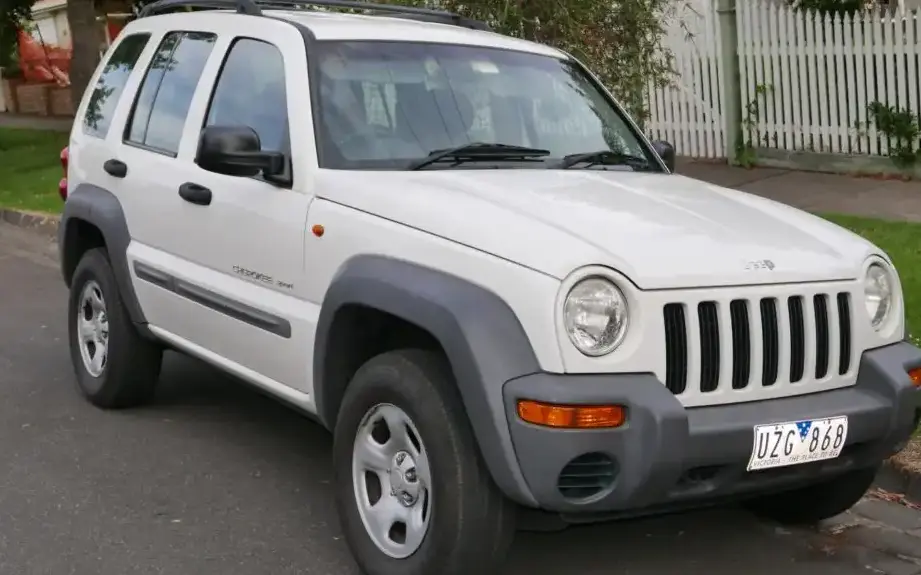
The Jeep Cherokee III (KJ) 2.8 TD, produced between 2003 and 2008, represented a significant departure for the iconic American brand. Moving away from the unibody construction of its predecessor, the KJ Cherokee returned to a traditional body-on-frame design, sharing a platform with the Dodge Nitro and Liberty. This particular variant, powered by a 2.8-liter turbocharged diesel engine producing 150 horsepower, was primarily aimed at the European market where diesel engines were – and continue to be – highly favored for their fuel efficiency and torque. Within the broader Cherokee KJ lineup, the 2.8 TD occupied a middle ground, offering a balance between performance and economy, positioned below the more powerful gasoline engines and above the base-level models.
Technical Specifications
| Brand | Jeep |
| Model | Cherokee |
| Generation | Cherokee III (KJ) |
| Type (Engine) | 2.8 TD (150 Hp) |
| Start of production | 2003 |
| End of production | 2008 |
| Powertrain Architecture | Internal Combustion engine |
| Body type | SUV |
| Seats | 5 |
| Doors | 5 |
| Fuel consumption (urban) | 11.7 l/100 km (20.1 US mpg, 24.1 UK mpg, 8.5 km/l) |
| Fuel consumption (extra urban) | 8.4 l/100 km (28 US mpg, 33.6 UK mpg, 11.9 km/l) |
| Fuel consumption (combined) | 10.3 l/100 km (22.8 US mpg, 27.4 UK mpg, 9.7 km/l) |
| Fuel Type | Diesel |
| Acceleration 0 – 100 km/h | 12.6 sec |
| Acceleration 0 – 62 mph | 12.6 sec |
| Acceleration 0 – 60 mph | 12 sec |
| Maximum speed | 174 km/h (108.12 mph) |
| Weight-to-power ratio | 12.3 kg/Hp, 81.3 Hp/tonne |
| Weight-to-torque ratio | 5.1 kg/Nm, 195.1 Nm/tonne |
| Power | 150 Hp @ 3750 rpm |
| Power per litre | 54 Hp/l |
| Torque | 360 Nm @ 2600 rpm (265.52 lb.-ft. @ 2600 rpm) |
| Engine layout | Front, Longitudinal |
| Engine Model/Code | R428 |
| Engine displacement | 2776 cm3 (169.4 cu. in.) |
| Number of cylinders | 4 |
| Engine configuration | Inline |
| Cylinder Bore | 94 mm (3.7 in.) |
| Piston Stroke | 100 mm (3.94 in.) |
| Compression ratio | 17.5:1 |
| Number of valves per cylinder | 4 |
| Fuel injection system | Diesel Commonrail |
| Engine aspiration | Turbocharger, Intercooler |
| Valvetrain | DOHC |
| Engine oil capacity | 6.5 l (6.87 US qt | 5.72 UK qt) |
| Coolant | 12.5 l (13.21 US qt | 11 UK qt) |
| Kerb Weight | 1845 kg (4067.53 lbs.) |
| Max. weight | 2540 kg (5599.74 lbs.) |
| Max load | 695 kg (1532.21 lbs.) |
| Trunk (boot) space – minimum | 820 l (28.96 cu. ft.) |
| Trunk (boot) space – maximum | 1950 l (68.86 cu. ft.) |
| Fuel tank capacity | 76 l (20.08 US gal | 16.72 UK gal) |
| Length | 4430 mm (174.41 in.) |
| Width | 1820 mm (71.65 in.) |
| Height | 1865 mm (73.43 in.) |
| Wheelbase | 2650 mm (104.33 in.) |
| Front track | 1525 mm (60.04 in.) |
| Rear (Back) track | 1525 mm (60.04 in.) |
| Drive wheel | All wheel drive (4×4) |
| Number of gears and type of gearbox | 5 gears, automatic transmission |
| Front suspension | Double wishbone |
| Rear suspension | Transverse stabilizer |
| Front brakes | Ventilated discs |
| Rear brakes | Disc |
| Assisting systems | ABS (Anti-lock braking system) |
| Steering type | Steering rack and pinion |
| Power steering | Hydraulic Steering |
| Tires size | 235/70 R16 |
Powertrain & Engine Architecture
The heart of the Cherokee 2.8 TD is the R428 engine, a 2.8-liter inline-four cylinder diesel. This engine utilized a common rail direct injection system, a technology that allowed for precise fuel delivery and improved combustion efficiency. The R428 featured a turbocharger with an intercooler, boosting power output to 150 horsepower and 360 Nm (265 lb-ft) of torque. The engine employed a double overhead camshaft (DOHC) valvetrain with four valves per cylinder, contributing to its relatively high specific output for a diesel engine of its era. The automatic transmission paired with this engine was a five-speed unit, designed to handle the diesel’s torque curve. While not known for blistering acceleration, the transmission provided smooth shifts and adequate performance for everyday driving and towing.
Driving Characteristics
The 2.8 TD automatic Cherokee offered a comfortable and capable driving experience. The diesel engine’s torque was readily available from low RPMs, making it well-suited for off-road driving and hauling loads. However, the 150 horsepower output meant that acceleration was not particularly brisk, especially when fully loaded or climbing steep hills. The five-speed automatic transmission, while smooth, lacked the responsiveness of a manual gearbox. Compared to the gasoline-powered Cherokee models, the 2.8 TD prioritized fuel efficiency and low-end grunt over outright speed. The automatic transmission’s gear ratios were optimized for fuel economy and towing capacity, rather than sporty performance.
Equipment & Trim Levels
The Cherokee 2.8 TD typically came equipped with a reasonable level of standard features, including air conditioning, power windows and locks, and an AM/FM radio. Higher trim levels offered upgrades such as leather upholstery, a premium sound system, and alloy wheels. Optional extras included a sunroof, navigation system, and upgraded suspension components. The interior design was functional and durable, reflecting the Cherokee’s intended use as a rugged and practical SUV. The dashboard layout was straightforward, with easy-to-read gauges and intuitive controls.
Chassis & Braking
The Cherokee KJ featured a robust body-on-frame chassis, providing a solid foundation for both on-road and off-road driving. The front suspension utilized a double wishbone design, while the rear suspension employed a solid axle with coil springs and a transverse stabilizer bar. This setup offered a good balance between ride comfort and handling. Braking duties were handled by ventilated discs at the front and solid discs at the rear. An anti-lock braking system (ABS) was standard, enhancing safety and control during emergency braking situations. The steering system was a hydraulic rack and pinion setup, providing precise and responsive steering feel.
Market Reception & Comparison
The Jeep Cherokee 2.8 TD was generally well-received in European markets, where diesel engines were highly popular. Critics praised its fuel efficiency, torque, and off-road capability. However, some reviewers noted its relatively slow acceleration and the lack of refinement compared to some of its competitors. Compared to the gasoline-powered Cherokee models, the 2.8 TD offered significantly better fuel economy, making it a more economical choice for long-distance driving. In terms of reliability, the R428 engine proved to be reasonably durable, although some owners reported issues with the fuel injection system and turbocharger.
Legacy
The Jeep Cherokee KJ 2.8 TD has established a reputation as a reliable and capable SUV, particularly in the used car market. The R428 diesel engine, while not the most powerful, is known for its longevity and relatively low maintenance costs. Today, these Cherokees are often sought after by enthusiasts looking for a rugged and affordable off-road vehicle. While parts availability can be a concern for some components, the Cherokee’s robust construction and relatively simple mechanical design make it a relatively easy vehicle to maintain and repair. The 2.8 TD variant remains a popular choice for those seeking a balance between fuel efficiency, torque, and off-road capability in a classic American SUV.