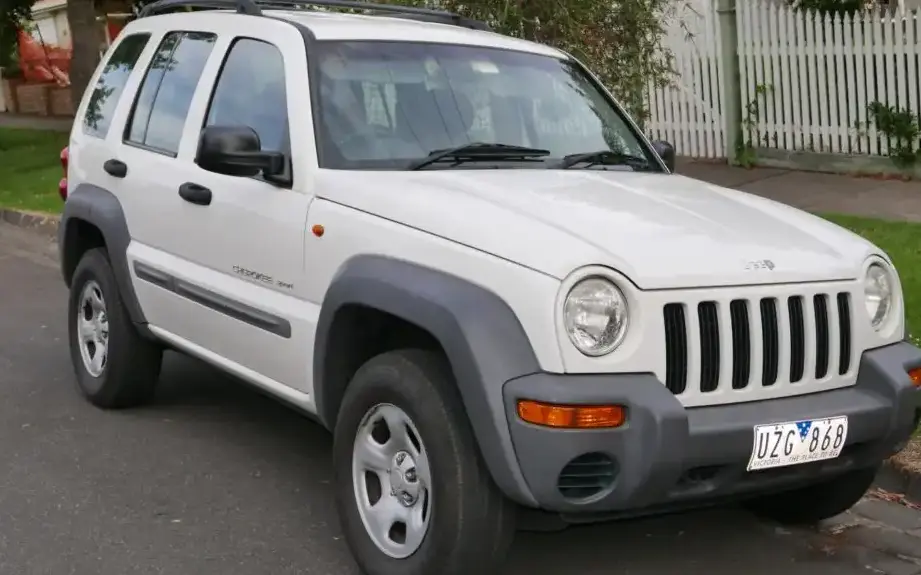
The Jeep Cherokee III (KJ), produced from 2002 to 2008, represented a significant departure from its unibody S-10 based predecessor. This generation marked a return to traditional body-on-frame construction, aiming to recapture the ruggedness and off-road capability associated with the Cherokee nameplate. The 3.7 i V6 variant, equipped with a 5-speed automatic transmission, occupied a middle ground in the Cherokee KJ lineup, offering a balance between affordability and performance. It served as a popular choice for buyers seeking a capable SUV for daily driving and occasional off-road excursions.
Technical Specifications
| Brand | Jeep |
| Model | Cherokee |
| Generation | Cherokee III (KJ) |
| Type (Engine) | 3.7 i V6 (210 Hp) |
| Start of production | 2002 |
| End of production | 2008 |
| Powertrain Architecture | Internal Combustion engine |
| Body type | SUV |
| Seats | 5 |
| Doors | 5 |
| Fuel consumption (urban) | 18.6 l/100 km (12.6 US mpg, 15.2 UK mpg, 5.4 km/l) |
| Fuel consumption (extra urban) | 10.3 l/100 km (22.8 US mpg, 27.4 UK mpg, 9.7 km/l) |
| Fuel consumption (combined) | 13 l/100 km (18.1 US mpg, 21.7 UK mpg, 7.7 km/l) |
| Fuel Type | Petrol (Gasoline) |
| Acceleration 0 – 100 km/h | 10.8 sec |
| Acceleration 0 – 62 mph | 10.8 sec |
| Acceleration 0 – 60 mph | 10.3 sec |
| Maximum speed | 180 km/h (111.85 mph) |
| Weight-to-power ratio | 8.4 kg/Hp, 118.6 Hp/tonne |
| Weight-to-torque ratio | 5.8 kg/Nm, 173.4 Nm/tonne |
| Power | 210 Hp @ 5200 rpm |
| Power per litre | 56.8 Hp/l |
| Torque | 307 Nm @ 4000 rpm (226.43 lb.-ft. @ 4000 rpm) |
| Engine layout | Front, Longitudinal |
| Engine Model/Code | EKG |
| Engine displacement | 3700 cm3 (225.79 cu. in.) |
| Number of cylinders | 6 |
| Engine configuration | V-engine |
| Cylinder Bore | 93 mm (3.66 in.) |
| Piston Stroke | 90.8 mm (3.57 in.) |
| Compression ratio | 9.1:1 |
| Number of valves per cylinder | 2 |
| Fuel injection system | Multi-port manifold injection |
| Engine aspiration | Naturally aspirated engine |
| Valvetrain | OHC |
| Engine oil capacity | 4.7 l (4.97 US qt | 4.14 UK qt) |
| Kerb Weight | 1770 kg (3902.18 lbs.) |
| Max. weight | 2390 kg (5269.05 lbs.) |
| Max load | 620 kg (1366.87 lbs.) |
| Trunk (boot) space – minimum | 820 l (28.96 cu. ft.) |
| Trunk (boot) space – maximum | 1950 l (68.86 cu. ft.) |
| Fuel tank capacity | 76 l (20.08 US gal | 16.72 UK gal) |
| Length | 4430 mm (174.41 in.) |
| Width | 1820 mm (71.65 in.) |
| Height | 1865 mm (73.43 in.) |
| Wheelbase | 2650 mm (104.33 in.) |
| Front track | 1525 mm (60.04 in.) |
| Rear (Back) track | 1515 mm (59.65 in.) |
| Drive wheel | All wheel drive (4×4) |
| Number of gears and type of gearbox | 5 gears, automatic transmission |
| Front suspension | Double wishbone |
| Rear suspension | Transverse stabilizer |
| Front brakes | Ventilated discs |
| Rear brakes | Disc |
| Assisting systems | ABS (Anti-lock braking system) |
| Steering type | Steering rack and pinion |
| Power steering | Hydraulic Steering |
| Tires size | 235/70 R16 |
Powertrain & Engine Architecture
The heart of the Cherokee 3.7 was the EKG engine, a 3.7-liter (225.79 cubic inches) V6. This engine was a member of the Chrysler/Dodge/Jeep “Global Engine” family, known for its relatively simple design and robust construction. It featured a 90-degree V-angle, a cast iron block, and aluminum cylinder heads. The engine utilized a multi-point fuel injection system and an overhead camshaft (OHC) valvetrain with two valves per cylinder. The 3.7L V6 produced 210 horsepower at 5200 rpm and 226 lb-ft of torque at 4000 rpm. Paired with this engine was a 5-speed automatic transmission (typically the 545RFE), chosen for its smooth operation and suitability for both on-road comfort and moderate off-road use. The transmission was electronically controlled, adapting shift points based on driving conditions and throttle input.
Driving Characteristics
The 3.7L V6 with the automatic transmission delivered adequate, but not exhilarating, performance. Acceleration from 0-60 mph took around 10.3 seconds, making it competitive with other mid-size SUVs of the era. The automatic transmission provided smooth shifts, but could sometimes feel hesitant during quick acceleration. Compared to the available 4.0L inline-six engine, the 3.7L offered slightly less low-end torque, requiring more throttle input for tasks like towing or climbing steep hills. However, the 3.7L generally provided better fuel economy than the 4.0L. The automatic transmission’s gear ratios were tuned for a balance of fuel efficiency and drivability, prioritizing comfortable cruising over sporty performance.
Equipment & Trim Levels
The 3.7L automatic Cherokee typically came standard with features like air conditioning, power windows and locks, a CD player, and cloth upholstery. Higher trim levels, such as the Limited, added features like leather upholstery, heated seats, a premium sound system, and alloy wheels. Optional extras included a sunroof, a navigation system, and a rear entertainment system. The interior design was functional and straightforward, prioritizing practicality over luxury. The dashboard layout was clean and easy to use, with clearly labeled controls.
Chassis & Braking
The Cherokee KJ utilized a traditional body-on-frame construction, providing a robust and durable platform. The front suspension featured an independent double wishbone design, while the rear suspension employed a solid axle with coil springs and a transverse stabilizer bar. This setup offered a good balance of ride comfort and off-road capability. Braking duties were handled by ventilated discs at the front and solid discs at the rear. Anti-lock brakes (ABS) were standard, enhancing safety and control during emergency braking situations. The steering system was a hydraulic rack-and-pinion setup, providing responsive and precise steering feel.
Market Reception & Comparison
The Cherokee 3.7L automatic received generally positive reviews from automotive critics. It was praised for its comfortable ride, spacious interior, and capable off-road performance. However, some critics noted that the 3.7L engine lacked the power and refinement of some competitors. Fuel economy was considered average for its class. Compared to the 4.0L inline-six version, the 3.7L offered a more affordable entry point into the Cherokee lineup, but at the expense of some performance. The 3.7L was also often compared to other mid-size SUVs like the Ford Explorer and Toyota 4Runner, generally holding its own in terms of value and capability.
Legacy
The Jeep Cherokee KJ, including the 3.7L V6 variant, has proven to be a relatively reliable vehicle over the long term. The EKG engine is known for its durability, although regular maintenance is crucial to prevent issues like oil leaks and timing chain wear. The automatic transmission is also generally reliable, but may require servicing at higher mileage. Today, the Cherokee KJ remains a popular choice in the used car market, particularly among buyers seeking a capable and affordable SUV. Its body-on-frame construction and available four-wheel drive system make it well-suited for a variety of driving conditions, and its relatively simple design makes it easier to maintain and repair than many modern SUVs.