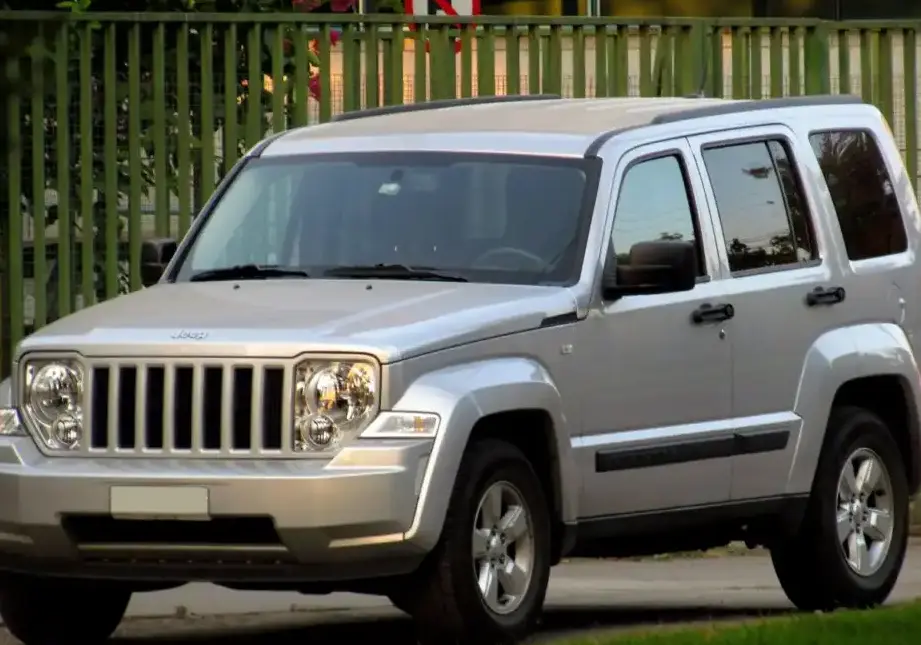
The Jeep Cherokee IV (KK) 2.8 CRD, produced from 2008 to 2012, marked a significant shift for the iconic American brand. Traditionally known for body-on-frame construction, the KK Cherokee adopted a unibody design, aiming to combine off-road prowess with on-road comfort and refinement. This variant, powered by a 2.8-liter turbocharged diesel engine producing 177 horsepower, was primarily targeted at the European market, where diesel engines were – and remain – popular for their fuel efficiency and torque characteristics. Within the broader KK Cherokee lineup, the 2.8 CRD occupied a middle ground, balancing the base 3.7-liter V6 gasoline engine and the more powerful 4.7-liter V8 options.
Technical Specifications
| Brand | Jeep |
| Model | Cherokee |
| Generation | Cherokee IV (KK) |
| Type (Engine) | 2.8 CRD (177 Hp) |
| Start of production | 2008 |
| End of production | 2012 |
| Powertrain Architecture | Internal Combustion engine |
| Body type | SUV |
| Seats | 5 |
| Doors | 5 |
| Fuel consumption (urban) | 12.2 l/100 km (19.3 US mpg, 23.2 UK mpg, 8.2 km/l) |
| Fuel consumption (extra urban) | 7.8 l/100 km (30.2 US mpg, 36.2 UK mpg, 12.8 km/l) |
| Fuel consumption (combined) | 9.4 l/100 km (25 US mpg, 30.1 UK mpg, 10.6 km/l) |
| Fuel Type | Diesel |
| Acceleration 0 – 100 km/h | 10.5 sec |
| Acceleration 0 – 62 mph | 10.5 sec |
| Acceleration 0 – 60 mph | 10 sec |
| Maximum speed | 179 km/h (111.23 mph) |
| Emission standard | Euro 4 |
| Weight-to-power ratio | 11.2 kg/Hp, 89.4 Hp/tonne |
| Weight-to-torque ratio | 4.3 kg/Nm, 232.3 Nm/tonne |
| Power | 177 Hp @ 3800 rpm |
| Power per litre | 63.7 Hp/l |
| Torque | 460 Nm @ 2000 rpm (339.28 lb.-ft. @ 2000 rpm) |
| Engine layout | Front, Longitudinal |
| Engine Model/Code | ENS |
| Engine displacement | 2778 cm3 (169.52 cu. in.) |
| Number of cylinders | 4 |
| Engine configuration | Inline |
| Cylinder Bore | 94 mm (3.7 in.) |
| Piston Stroke | 100 mm (3.94 in.) |
| Compression ratio | 17.5:1 |
| Number of valves per cylinder | 4 |
| Fuel injection system | Diesel Commonrail |
| Engine aspiration | Turbocharger, Intercooler |
| Valvetrain | DOHC |
| Engine oil capacity | 6.6 l (6.97 US qt | 5.81 UK qt) |
| Coolant | 12 l (12.68 US qt | 10.56 UK qt) |
| Kerb Weight | 1980 kg (4365.15 lbs.) |
| Max. weight | 2520 kg (5555.65 lbs.) |
| Max load | 540 kg (1190.5 lbs.) |
| Trunk (boot) space – minimum | 419 l (14.8 cu. ft.) |
| Trunk (boot) space – maximum | 1404 l (49.58 cu. ft.) |
| Fuel tank capacity | 70 l (18.49 US gal | 15.4 UK gal) |
| Length | 4493 mm (176.89 in.) |
| Width | 1839 mm (72.4 in.) |
| Height | 1797 mm (70.75 in.) |
| Wheelbase | 2694 mm (106.06 in.) |
| Front track | 1549 mm (60.98 in.) |
| Rear (Back) track | 1549 mm (60.98 in.) |
| Drive wheel | All wheel drive (4×4) |
| Number of gears and type of gearbox | 5 gears, automatic transmission |
| Front suspension | Independent coil spring |
| Front brakes | Ventilated discs |
| Rear brakes | Ventilated discs |
| Assisting systems | ABS (Anti-lock braking system) |
| Tires size | 235/65 R17; 235/60 R18 |
Powertrain & Engine Architecture
The Cherokee 2.8 CRD’s powerplant is the ENS engine, a 2.8-liter inline-four cylinder diesel. This engine was sourced from VM Motori, an Italian manufacturer specializing in diesel engines. It incorporated a common rail direct injection system, delivering fuel at extremely high pressure for enhanced combustion efficiency and reduced emissions. A variable geometry turbocharger (VGT) and intercooler were employed to maximize power and torque output. The engine’s DOHC (Double Overhead Camshaft) valvetrain, featuring four valves per cylinder, further optimized breathing and performance. The 2.8 CRD was paired with a five-speed automatic transmission, engineered for smooth shifting and adequate power delivery in both on and off-road scenarios. This transmission wasn’t particularly focused on sportiness, prioritizing comfort and fuel economy over rapid gear changes.
Driving Characteristics
The 177 horsepower and 460 Nm (339 lb-ft) of torque generated by the 2.8 CRD engine provided respectable performance for the Cherokee. Acceleration from 0-60 mph took approximately 10.5 seconds, sufficient for everyday driving but not exceptionally quick. The powertrain’s true strength resided in its mid-range torque, enabling it to confidently navigate steep inclines and tow moderate loads. In comparison to the 3.7-liter V6, the diesel offered considerably more torque at lower RPMs, resulting in a more relaxed driving experience, particularly when the vehicle was loaded. However, it lacked the outright horsepower of the V6 and the 4.7-liter V8. The automatic transmission, while smooth, could feel somewhat hesitant, especially during kickdown maneuvers. The gear ratios were optimized for fuel efficiency rather than outright performance.
Equipment & Trim Levels
The 2.8 CRD Cherokee generally came equipped with a fairly comprehensive set of standard features, including air conditioning, power windows and locks, a CD player with an auxiliary input, and alloy wheels. Higher trim levels, such as the Limited, added features like leather upholstery, heated front seats, a premium sound system, and a sunroof. Optional extras included a navigation system, rear parking sensors, and a tow package. The interior design was generally functional and comfortable, though not overly luxurious. The dashboard layout was straightforward and user-friendly.
Chassis & Braking
The Cherokee KK featured a fully independent suspension system, utilizing coil springs and stabilizer bars at both the front and rear. This configuration struck a balance between ride comfort and handling. The front suspension employed MacPherson struts, while the rear utilized a multi-link design. Braking was provided by ventilated discs on all four wheels, offering ample stopping power. An Anti-lock Braking System (ABS) was standard. The chassis was engineered to be robust enough to handle both on-road and off-road conditions, and the 4×4 system offered various modes for different terrains.
Market Reception & Comparison
The 2.8 CRD Cherokee was generally well-received in Europe, where its fuel efficiency and torque were highly valued. Critics praised its comfortable ride, capable 4×4 system, and spacious interior. However, some reviewers noted the somewhat sluggish response of the automatic transmission and the engine’s comparatively noisy operation relative to gasoline engines. Compared to the 3.7-liter V6, the 2.8 CRD delivered significantly better fuel economy – around 25 mpg combined versus 18-20 mpg for the V6 – but less overall power. The 4.7-liter V8 offered the best performance but at the cost of fuel economy.
Legacy
The Jeep Cherokee KK 2.8 CRD has proven to be a relatively reliable vehicle, although, as with any diesel, it necessitates regular maintenance. The VM Motori engine is known for its durability, but potential issues can include injector problems and turbocharger wear. The automatic transmission, while generally dependable, can experience issues with solenoid failure. Today, the 2.8 CRD Cherokee represents a good value in the used car market, offering a capable and fuel-efficient SUV for those who require off-road capability without demanding blistering performance. Its combination of American ruggedness and European diesel efficiency continues to appeal to a specific segment of buyers.