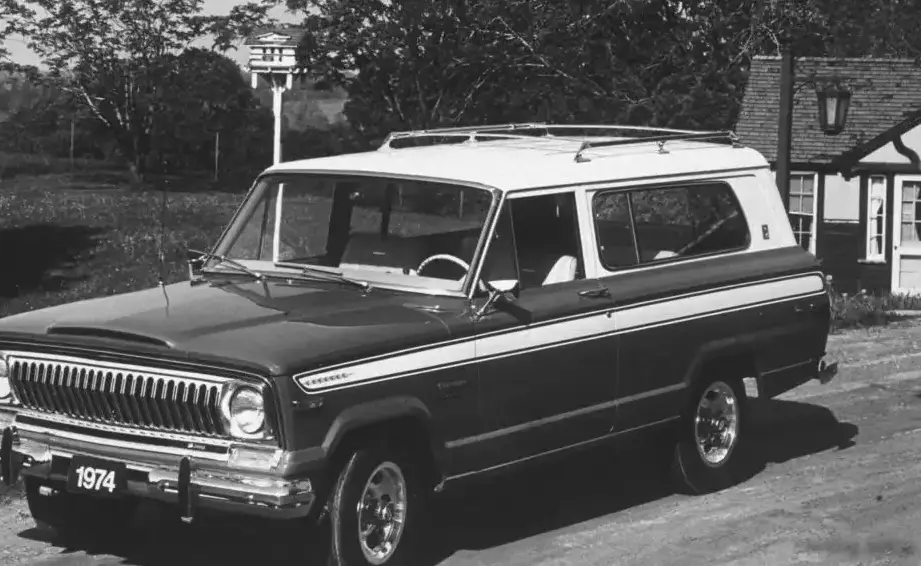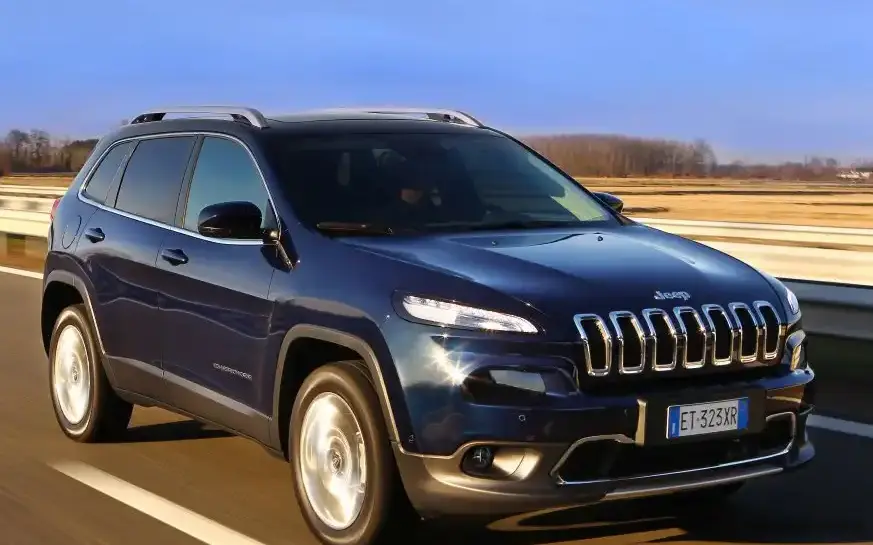
The Jeep Cherokee V (KL) 2.2 MultiJet TD 4WD Automatic, produced from 2015 to 2017, represents a significant entry in the mid-size SUV segment for the American brand. This variant, powered by a turbocharged diesel engine and paired with a nine-speed automatic transmission, was primarily aimed at the European market, where diesel engines held a substantial share of the SUV landscape. It occupied a mid-range position within the KL Cherokee lineup, offering a balance between fuel efficiency, torque for towing, and all-weather capability. The KL Cherokee itself was a departure from its predecessor, the Liberty, adopting a more refined and car-like unibody construction, moving away from the traditional body-on-frame design.
Technical Specifications
| Brand | Jeep |
| Model | Cherokee |
| Generation | Cherokee V (KL) |
| Type (Engine) | 2.2 MultiJet TD (200 Hp) 4WD Automatic |
| Start of production | 2015 |
| End of production | 2017 |
| Powertrain Architecture | Internal Combustion engine |
| Body type | SUV |
| Seats | 5 |
| Doors | 5 |
| Fuel consumption (urban) | 6.9 l/100 km (34.1 US mpg, 40.9 UK mpg, 14.5 km/l) |
| Fuel consumption (extra urban) | 4.9 l/100 km (48 US mpg, 57.6 UK mpg, 20.4 km/l) |
| Fuel consumption (combined) | 5.6 l/100 km (42 US mpg, 50.4 UK mpg, 17.9 km/l) |
| CO2 emissions | 149 g/km |
| Fuel Type | Diesel |
| Acceleration 0 – 100 km/h | 8.5 sec |
| Acceleration 0 – 62 mph | 8.5 sec |
| Acceleration 0 – 60 mph | 8.1 sec |
| Maximum speed | 204 km/h (126.76 mph) |
| Emission standard | Euro 6 |
| Weight-to-power ratio | 9.8 kg/Hp, 102.4 Hp/tonne |
| Weight-to-torque ratio | 4.4 kg/Nm, 225.3 Nm/tonne |
| Power | 200 Hp @ 3500 rpm |
| Torque | 440 Nm @ 2500 rpm (324.53 lb.-ft. @ 2500 rpm) |
| Engine layout | Front, Longitudinal |
| Engine Model/Code | EBU |
| Engine displacement | 2184 cm3 (133.28 cu. in.) |
| Number of cylinders | 4 |
| Engine configuration | Inline |
| Cylinder Bore | 83.8 mm (3.3 in.) |
| Piston Stroke | 99 mm (3.9 in.) |
| Compression ratio | 16.5:1 |
| Number of valves per cylinder | 4 |
| Fuel injection system | Diesel Commonrail |
| Engine aspiration | Turbocharger, Intercooler |
| Valvetrain | DOHC |
| Engine oil capacity | 4.1 l (4.33 US qt | 3.61 UK qt) |
| Coolant | 6.8 l (7.19 US qt | 5.98 UK qt) |
| Kerb Weight | 1953 kg (4305.63 lbs.) |
| Max. weight | 2495 kg (5500.53 lbs.) |
| Max load | 542 kg (1194.91 lbs.) |
| Trunk (boot) space – minimum | 412 l (14.55 cu. ft.) |
| Trunk (boot) space – maximum | 1267 l (44.74 cu. ft.) |
| Fuel tank capacity | 60 l (15.85 US gal | 13.2 UK gal) |
| Max. roof load | 68 kg (149.91 lbs.) |
| Permitted trailer load with brakes (12%) | 2495 kg (5500.53 lbs.) |
| Permitted trailer load without brakes | 450 kg (992.08 lbs.) |
| Permitted towbar download | 125 kg (275.58 lbs.) |
| Length | 4624 mm (182.05 in.) |
| Width | 1859 mm (73.19 in.) |
| Width including mirrors | 2089 mm (82.24 in.) |
| Height | 1670 mm (65.75 in.) |
| Wheelbase | 2700 mm (106.3 in.) |
| Front track | 1586 mm (62.44 in.) |
| Rear (Back) track | 1584 mm (62.36 in.) |
| Ride height (ground clearance) | 157 mm (6.18 in.) |
| Minimum turning circle | 11 m (36.09 ft.) |
| Approach angle | 18.2° |
| Departure angle | 24.0° |
| Ramp-over angle | 18.4° |
| Drive wheel | All wheel drive (4×4) |
| Number of gears and type of gearbox | 9 gears, automatic transmission |
| Front suspension | Independent type McPherson |
| Rear suspension | Independent multi-link suspension |
| Front brakes | Ventilated discs |
| Rear brakes | Disc |
| Assisting systems | ABS (Anti-lock braking system) |
| Steering type | Steering rack and pinion |
| Tires size | 225/55 R18 |
| Wheel rims size | 7J x 18 |
Powertrain & Engine Architecture
The heart of this Cherokee variant is the 2.2-liter MultiJet II turbodiesel engine, designated with the engine code EBU. This engine is a member of the Fiat-sourced diesel family, utilized across various Stellantis (then Fiat Chrysler Automobiles) platforms. It features a common-rail direct injection system, delivering fuel at extremely high pressures for optimized combustion. The engine employs a variable geometry turbocharger (VGT) and an intercooler to enhance power and efficiency. The DOHC (Double Overhead Camshaft) valvetrain, with four valves per cylinder, contributes to improved breathing and overall performance. The nine-speed automatic transmission, developed by ZF, was a key feature of the KL Cherokee. It offered a wide range of gear ratios, aimed at maximizing fuel economy and providing smooth acceleration. This transmission was known for its complexity and, in early iterations, some reliability concerns, but Jeep issued software updates to address many of these issues.
Driving Characteristics
The 200 horsepower and 440 Nm (324 lb-ft) of torque provided by the 2.2 MultiJet engine delivered respectable performance for a mid-size SUV. Acceleration from 0-60 mph was achieved in around 8.1 seconds, making it adequately quick for everyday driving and highway merging. The nine-speed automatic transmission, while offering a wide gear spread, could sometimes feel hesitant or exhibit noticeable shifts, particularly at lower speeds. Compared to the available 3.2-liter Pentastar V6 engine, the diesel offered significantly more torque at lower RPMs, making it better suited for towing and off-road situations. However, the V6 provided quicker acceleration and a more refined driving experience. The diesel’s strength lay in its fuel efficiency, offering considerably better mileage than the gasoline counterpart.
Equipment & Trim Levels
The 2.2 MultiJet Automatic typically came equipped with a reasonable level of standard features. These included air conditioning, power windows and locks, a touchscreen infotainment system with Bluetooth connectivity, and alloy wheels. Higher trim levels, such as the Limited or Trailhawk, added features like leather upholstery, heated seats, a premium sound system, and advanced safety technologies like blind-spot monitoring and rear cross-traffic alert. Optional extras included a panoramic sunroof, navigation system, and a tow package. Interior upholstery was generally cloth on lower trims, upgrading to leather on higher-spec models. The dashboard layout was modern and functional, with a focus on user-friendliness.
Chassis & Braking
The KL Cherokee utilized a unibody construction, providing a good balance between rigidity and weight. The front suspension featured independent McPherson struts, while the rear employed an independent multi-link setup. This configuration delivered a comfortable ride and competent handling. Braking duties were handled by ventilated discs at the front and solid discs at the rear. ABS (Anti-lock Braking System) was standard. The suspension tuning was generally geared towards comfort, but the Trailhawk trim featured a more aggressive suspension setup and increased ground clearance for enhanced off-road capability.
Market Reception & Comparison
The 2.2 MultiJet Cherokee was well-received in Europe, where diesel SUVs were popular. Critics praised its fuel efficiency, torque, and all-weather capability. However, some reviewers noted the transmission’s occasional hesitation and the engine’s slightly noisy operation compared to gasoline engines. Compared to competitors like the Volkswagen Tiguan and Ford Kuga, the Cherokee offered a more rugged aesthetic and a more capable four-wheel-drive system, particularly in the Trailhawk trim. Fuel economy was competitive, and reliability proved to be generally good, although the nine-speed transmission required occasional software updates to address early issues.
Legacy
The 2.2 MultiJet engine proved to be a relatively durable powertrain, with many examples still on the road today. Regular maintenance, including timely oil changes and filter replacements, is crucial for long-term reliability. The nine-speed automatic transmission, while initially prone to some issues, has become more reliable with software updates and improved manufacturing processes. In the used car market, the 2.2 MultiJet Cherokee represents a good value proposition for buyers seeking a fuel-efficient and capable SUV. However, potential buyers should be aware of the transmission’s history and ensure that any vehicle they consider has received the necessary software updates. The KL Cherokee, in general, marked a significant step forward for the Jeep brand, offering a more refined and modern SUV experience.