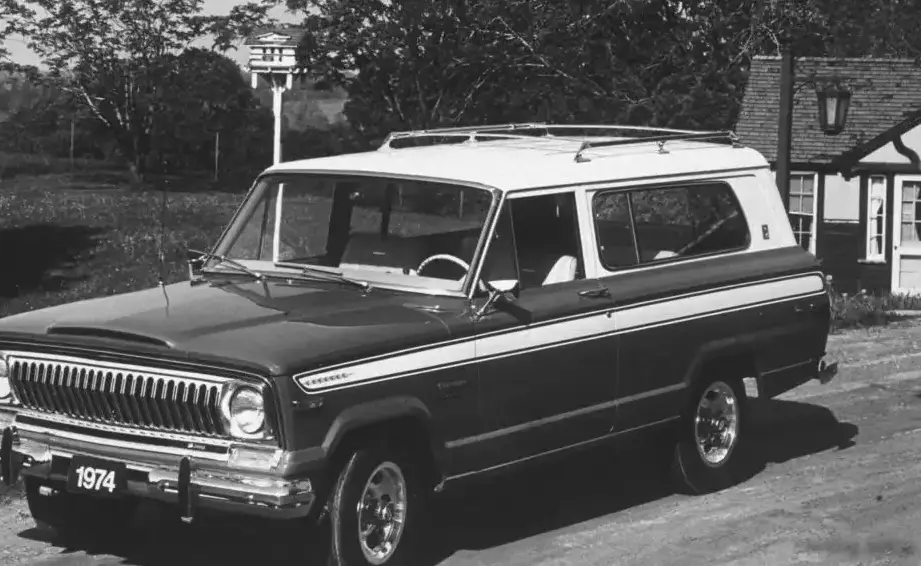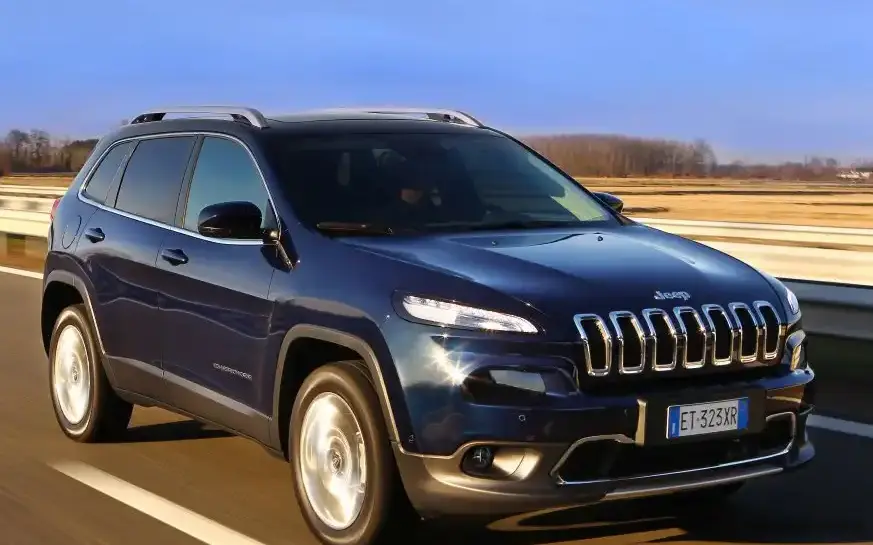
The Jeep Cherokee V (KL) 2.4 MultiAir2 TIGERSHARK, equipped with a 177 horsepower engine and a 9-speed automatic transmission with four-wheel drive, was a significant offering in the compact SUV segment from 2013 to 2017. Positioned as a mid-range option within the KL Cherokee lineup, it aimed to balance fuel efficiency with respectable performance and capability. This variant represented Jeep’s attempt to modernize the Cherokee, moving away from the rugged, body-on-frame designs of its predecessors towards a more comfortable and fuel-conscious unibody construction. It was primarily marketed towards North American consumers seeking a versatile SUV for daily commuting and light off-road adventures.
Technical Specifications
| Brand | Jeep |
| Model | Cherokee |
| Generation | Cherokee V (KL) |
| Type (Engine) | 2.4 MultiAir2 TIGERSHARK (177 Hp) 4WD Automatic |
| Start of production | 2013 |
| End of production | 2017 |
| Powertrain Architecture | Internal Combustion engine |
| Body type | SUV |
| Seats | 5 |
| Doors | 5 |
| Fuel consumption (urban) | 12 l/100 km (19.6 US mpg, 23.5 UK mpg, 8.3 km/l) |
| Fuel consumption (extra urban) | 6.8 l/100 km (34.6 US mpg, 41.5 UK mpg, 14.7 km/l) |
| Fuel consumption (combined) | 8.8 l/100 km (26.7 US mpg, 32.1 UK mpg, 11.4 km/l) |
| CO2 emissions | 204 g/km |
| Fuel Type | Petrol (Gasoline) |
| Acceleration 0 – 100 km/h | 10.4 sec |
| Acceleration 0 – 62 mph | 10.4 sec |
| Acceleration 0 – 60 mph | 9.9 sec |
| Maximum speed | 187 km/h (116.2 mph) |
| Emission standard | Euro 6 |
| Weight-to-power ratio | 10.4 kg/Hp, 96.1 Hp/tonne |
| Weight-to-torque ratio | 8 kg/Nm, 124.3 Nm/tonne |
| Power | 177 Hp @ 6400 rpm |
| Power per litre | 75 Hp/l |
| Torque | 229 Nm @ 3900 rpm (168.9 lb.-ft. @ 3900 rpm) |
| Engine layout | Front, Longitudinal |
| Engine Model/Code | ED6 |
| Engine displacement | 2360 cm3 (144.02 cu. in.) |
| Number of cylinders | 4 |
| Engine configuration | Inline |
| Cylinder Bore | 88 mm (3.46 in.) |
| Piston Stroke | 97 mm (3.82 in.) |
| Compression ratio | 10:1 |
| Number of valves per cylinder | 4 |
| Fuel injection system | Multi-port manifold injection |
| Engine aspiration | Naturally aspirated engine |
| Valvetrain | SOHC |
| Engine oil capacity | 5.2 l (5.49 US qt | 4.58 UK qt) |
| Coolant | 6.8 l (7.19 US qt | 5.98 UK qt) |
| Kerb Weight | 1842-1866 kg (4060.91 – 4113.83 lbs.) |
| Trunk (boot) space – minimum | 591 l (20.87 cu. ft.) |
| Trunk (boot) space – maximum | 1267 l (44.74 cu. ft.) |
| Fuel tank capacity | 60 l (15.85 US gal | 13.2 UK gal) |
| Permitted trailer load with brakes (12%) | 2200 kg (4850.17 lbs.) |
| Length | 4624 mm (182.05 in.) |
| Width | 1859 mm (73.19 in.) |
| Height | 1670 mm (65.75 in.) |
| Wheelbase | 2700 mm (106.3 in.) |
| Front track | 1586 mm (62.44 in.) |
| Rear (Back) track | 1584 mm (62.36 in.) |
| Ride height (ground clearance) | 157-168 mm (6.18 – 6.61 in.) |
| Minimum turning circle (turning diameter) | 11.6 m (38.06 ft.) |
| Approach angle | 18.2° |
| Departure angle | 24.0° |
| Drive wheel | All wheel drive (4×4) |
| Number of gears and type of gearbox | 9 gears, automatic transmission |
| Front suspension | Independent type McPherson |
| Rear suspension | Independent multi-link suspension |
| Front brakes | Ventilated discs |
| Rear brakes | Disc |
| Assisting systems | ABS (Anti-lock braking system) |
| Steering type | Steering rack and pinion |
| Tires size | 225/60 R17; 225/55 R18; 245/65 R17 |
| Wheel rims size | 7J x 17; 7J x 18; 7.5J x 17 |
Powertrain & Engine Architecture
The heart of this Cherokee variant is the 2.4-liter “Tigershark” inline-four engine, internally designated as the ED6. This engine utilizes Jeep’s MultiAir2 technology, a second-generation electro-hydraulic valve actuation system. MultiAir2 allows for independent control of intake valve timing and lift, optimizing combustion efficiency and reducing emissions. The engine employs multi-port fuel injection and a relatively modest 10:1 compression ratio. The 9-speed automatic transmission, sourced from ZF, was a key feature, offering a wide gear ratio spread for improved fuel economy and acceleration. This transmission was known for its smooth shifts, but early iterations experienced some software glitches that were addressed through updates.
Driving Characteristics
The 177 horsepower and 229 lb-ft of torque provided adequate, but not exhilarating, performance. Acceleration from 0-60 mph took around 9.9 seconds. The 9-speed automatic transmission, while efficient, could sometimes feel hesitant during quick acceleration, particularly in lower gears. Compared to the available 3.2-liter V6 engine, the 2.4L MultiAir2 offered significantly less power, resulting in slower acceleration and a less responsive driving experience. However, the 2.4L engine excelled in fuel economy, achieving around 26.7 US mpg in combined driving, making it a more economical choice for daily commuting. The four-wheel-drive system provided enhanced traction in inclement weather and on light off-road trails.
Equipment & Trim Levels
The 2.4L MultiAir2 engine was typically offered in lower to mid-range trim levels, such as the Latitude and Limited. Standard features generally included air conditioning, a touchscreen infotainment system, Bluetooth connectivity, and a rearview camera. Higher trim levels added features like leather upholstery, heated seats, a power liftgate, and advanced safety technologies. Optional extras included a panoramic sunroof, navigation system, and premium audio system.
Chassis & Braking
The KL Cherokee utilized a unibody construction, a departure from the previous generation’s body-on-frame design. This resulted in a lighter and more rigid chassis, improving handling and ride comfort. The front suspension featured independent McPherson struts, while the rear employed an independent multi-link setup. Brakes consisted of ventilated discs at the front and solid discs at the rear. ABS was standard. The suspension tuning was geared towards comfort, providing a relatively smooth ride on paved roads, but it wasn’t as sporty or capable as some competitors.
Market Reception & Comparison
Critics generally praised the Cherokee’s improved interior quality and fuel efficiency compared to its predecessor. However, the 2.4L engine was often criticized for feeling underpowered, especially when fully loaded or towing. The 9-speed automatic transmission also received mixed reviews, with some testers noting occasional sluggishness. Compared to competitors like the Honda CR-V and Toyota RAV4, the Cherokee offered a more rugged aesthetic and a more capable four-wheel-drive system, but it lagged behind in terms of fuel economy and overall refinement. The V6 engine was often recommended for buyers prioritizing performance.
Legacy
The 2.4L MultiAir2 engine, while not without its quirks, proved to be reasonably reliable in the Cherokee. Common issues included occasional oil consumption and potential problems with the MultiAir2 system itself, though these were often addressed through software updates and preventative maintenance. On the used car market, the 2.4L Cherokee represents a more affordable entry point into the Cherokee lineup. Its fuel efficiency and adequate performance make it a practical choice for budget-conscious buyers seeking a versatile SUV. However, potential buyers should be aware of the potential for oil consumption and ensure the transmission has received all necessary software updates.