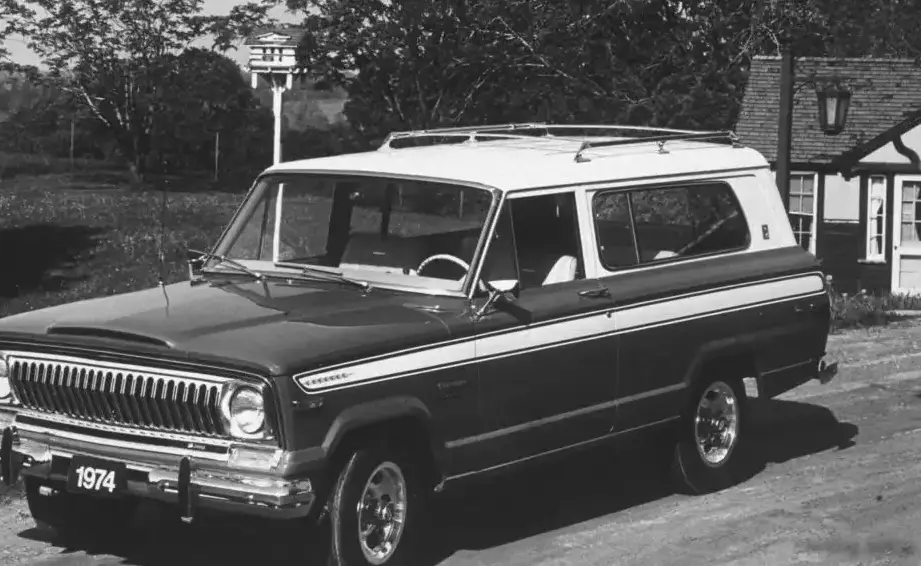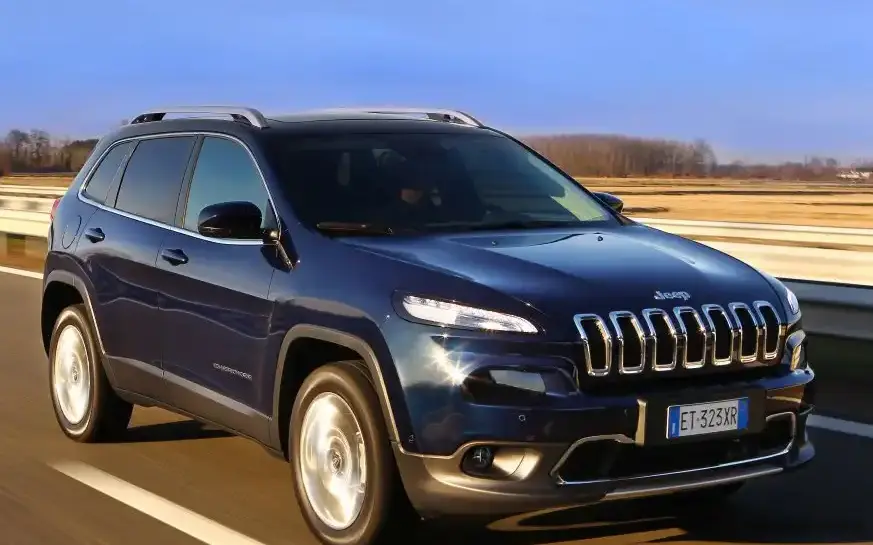
The Jeep Cherokee (KL) 2.4 MultiAir2 TIGERSHARK 177 horsepower automatic, produced from 2013 to 2017, represented a key entry point into the redesigned Cherokee lineup. This fifth generation of the Cherokee aimed to blend traditional Jeep capability with improved on-road refinement and fuel efficiency. Positioned as a mid-range offering, it served as a more accessible alternative to the higher-powered 3.2L V6 models, targeting buyers prioritizing fuel economy and everyday usability over outright performance. The KL Cherokee marked a significant departure from its predecessor, the Liberty, adopting a unibody construction and a more modern design aesthetic.
Technical Specifications
| Brand | Jeep |
| Model | Cherokee |
| Generation | Cherokee V (KL) |
| Type (Engine) | 2.4 MultiAir2 TIGERSHARK (177 Hp) Automatic |
| Start of production | 2013 |
| End of production | 2017 |
| Powertrain Architecture | Internal Combustion engine |
| Body type | SUV |
| Seats | 5 |
| Doors | 5 |
| Fuel consumption (urban) | 11.6 l/100 km (20.3 US mpg) |
| Fuel consumption (extra urban) | 6.3 l/100 km (37.3 US mpg) |
| Fuel consumption (combined) | 8.3 l/100 km (28.3 US mpg) |
| CO2 emissions | 193 g/km |
| Fuel Type | Petrol (Gasoline) |
| Acceleration 0 – 100 km/h | 10.5 sec |
| Acceleration 0 – 62 mph | 10.5 sec |
| Acceleration 0 – 60 mph | 10 sec |
| Maximum speed | 196 km/h (121.79 mph) |
| Emission standard | Euro 6 |
| Weight-to-power ratio | 9.8 kg/Hp |
| Weight-to-torque ratio | 7.6 kg/Nm |
| Power | 177 Hp @ 6400 rpm |
| Torque | 229 Nm @ 3900 rpm (168.9 lb.-ft. @ 3900 rpm) |
| Engine layout | Front, Longitudinal |
| Engine Model/Code | ED6 |
| Engine displacement | 2360 cm3 (144.02 cu. in.) |
| Number of cylinders | 4 |
| Engine configuration | Inline |
| Cylinder Bore | 88 mm (3.46 in.) |
| Piston Stroke | 97 mm (3.82 in.) |
| Compression ratio | 10:1 |
| Number of valves per cylinder | 4 |
| Fuel injection system | Multi-port manifold injection |
| Engine aspiration | Naturally aspirated engine |
| Valvetrain | SOHC |
| Engine oil capacity | 5.2 l (5.49 US qt | 4.58 UK qt) |
| Coolant capacity | 6.8 l (7.19 US qt | 5.98 UK qt) |
| Kerb Weight | 1738-1761 kg (3831.63 – 3882.34 lbs.) |
| Trunk (boot) space – minimum | 591 l (20.87 cu. ft.) |
| Trunk (boot) space – maximum | 1267 l (44.74 cu. ft.) |
| Fuel tank capacity | 60 l (15.85 US gal | 13.2 UK gal) |
| Permitted trailer load with brakes (12%) | 2200 kg (4850.17 lbs.) |
| Length | 4623 mm (182.01 in.) |
| Width | 1859 mm (73.19 in.) |
| Height | 1669 mm (65.71 in.) |
| Wheelbase | 2699 mm (106.26 in.) |
| Front track | 1586 mm (62.44 in.) |
| Rear track | 1584 mm (62.36 in.) |
| Ride height (ground clearance) | 142-151 mm (5.59 – 5.94 in.) |
| Minimum turning circle | 11 m (36.09 ft.) |
| Front suspension | Independent type McPherson |
| Rear suspension | Independent multi-link suspension |
| Front brakes | Ventilated discs |
| Rear brakes | Disc |
| Number of gears | 9 |
| Gearbox type | Automatic transmission |
Powertrain & Engine Architecture
The heart of this Cherokee variant is the 2.4-liter MultiAir2 Tigershark inline-four cylinder engine, designated as the ED6 engine code. This engine utilizes Fiat’s MultiAir2 technology, a fully variable valve lift system. MultiAir2 allows for independent control of intake valve timing and lift, optimizing combustion efficiency and reducing emissions. The system employs electro-hydraulic actuators to adjust valve behavior based on engine load and speed. Fuel delivery is managed by a multi-port fuel injection system. The engine produces 177 horsepower at 6400 rpm and 229 Nm (168.9 lb-ft) of torque at 3900 rpm. Paired with this engine is a ZF-sourced 9-speed automatic transmission. This transmission was a key feature of the KL Cherokee, offering a wide gear ratio spread for improved fuel economy and performance. The transmission’s complexity, however, was also a source of some reliability concerns in early production years.
Driving Characteristics
The 2.4L MultiAir2 automatic Cherokee delivers adequate, but not exhilarating, performance. Acceleration from 0-60 mph takes around 10 seconds. The 9-speed automatic transmission aims to keep the engine in its optimal power band, but can sometimes exhibit hesitant shifting, particularly at lower speeds. Compared to the available 3.2L V6, the 2.4L feels noticeably less powerful, especially when fully loaded or tackling steep inclines. The wider gear ratios of the 9-speed transmission help to improve fuel economy, but can also result in the engine feeling strained during aggressive acceleration. The front-wheel-drive configuration contributes to a more fuel-efficient driving experience, but limits off-road capability compared to the available four-wheel-drive models.
Equipment & Trim Levels
The 2.4L MultiAir2 engine was typically offered in the base and mid-level trim configurations of the Cherokee, such as the Latitude and Limited. Standard features generally included air conditioning, a touchscreen infotainment system, Bluetooth connectivity, and power windows and locks. Higher trim levels added features like leather upholstery, heated seats, a premium sound system, and advanced safety technologies such as blind-spot monitoring and rear cross-traffic alert. Optional extras included a panoramic sunroof, navigation system, and various appearance packages.
Chassis & Braking
The KL Cherokee utilizes a unibody construction, a departure from the body-on-frame design of previous Cherokee models. The front suspension features independent McPherson struts, while the rear suspension employs an independent multi-link setup. This configuration provides a comfortable ride and reasonably controlled handling. Braking duties are handled by ventilated discs at the front and solid discs at the rear. Anti-lock brakes (ABS) are standard. The suspension tuning is geared towards on-road comfort, with a focus on minimizing body roll and providing a stable driving experience.
Market Reception & Comparison
Critics generally praised the redesigned Cherokee for its improved interior quality and on-road refinement. However, the 9-speed automatic transmission received mixed reviews, with some testers noting its occasional hesitation and jerky shifts. The 2.4L MultiAir2 engine was considered adequate for everyday driving, but lacked the power and responsiveness of the V6 option. Fuel economy was a strong point, with the 2.4L achieving around 28.3 US mpg in combined driving. Compared to competitors like the Honda CR-V and Toyota RAV4, the Cherokee offered a more rugged aesthetic and a greater emphasis on off-road capability, even in front-wheel-drive form.
Legacy
The 2.4L MultiAir2 Tigershark engine, while generally reliable, has been known to experience issues with oil consumption and the MultiAir2 system itself. Regular oil changes and diligent maintenance are crucial for long-term durability. On the used car market, the 2.4L Cherokee represents a more affordable entry point into the KL generation. Its fuel efficiency and comfortable ride make it a practical choice for daily commuting and family transportation. However, potential buyers should be aware of the potential for transmission and engine issues and thoroughly inspect any vehicle before purchase. The KL Cherokee, and specifically this 2.4L variant, helped to modernize the Jeep brand and appeal to a wider range of buyers.