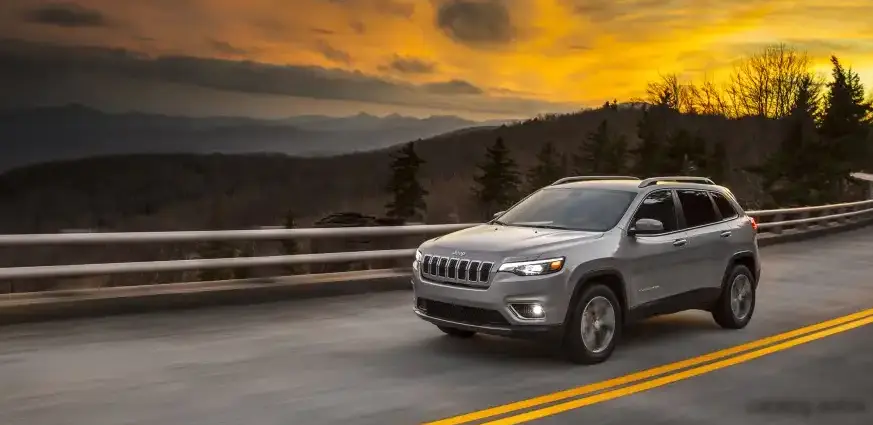
The Jeep Cherokee V (KL) facelift, specifically the 2.0-liter (272 hp) Automatic variant, represents a significant evolution in the Cherokee lineup. Introduced in April 2019 and continuing through March 2023, this model aimed to balance fuel efficiency with respectable performance within the compact SUV segment. Positioned as a mid-range offering, it slotted between the base engine options and the more powerful Trailhawk trims. This version was primarily marketed towards North American consumers seeking a comfortable, technologically equipped SUV with all-weather capability.
Technical Specifications
| Brand | Jeep |
| Model | Cherokee |
| Generation | Cherokee V (KL, facelift 2018) |
| Type (Engine) | 2.0 (272 Hp) Automatic |
| Start of production | April, 2019 |
| End of production | March, 2023 |
| Powertrain Architecture | Internal Combustion engine |
| Body type | SUV |
| Seats | 5 |
| Doors | 5 |
| Fuel consumption (urban) | 10.2 l/100 km (23.1 US mpg) |
| Fuel consumption (extra urban) | 7.6 l/100 km (30.9 US mpg) |
| Fuel consumption (combined) | 9 l/100 km (26.1 US mpg) |
| Fuel Type | Petrol (Gasoline) |
| Power | 272 Hp @ 5250 rpm |
| Torque | 400 Nm @ 3000-4500 rpm (295.02 lb.-ft. @ 3000-4500 rpm) |
| Maximum engine speed | 5800 rpm |
| Engine layout | Front, Transverse |
| Engine Model/Code | EC1 |
| Engine displacement | 1994 cm3 (121.68 cu. in.) |
| Number of cylinders | 4 |
| Engine configuration | Inline |
| Cylinder Bore | 84.1 mm (3.31 in.) |
| Piston Stroke | 89.9 mm (3.54 in.) |
| Compression ratio | 10:1 |
| Number of valves per cylinder | 4 |
| Fuel injection system | Direct injection |
| Engine aspiration | Turbocharger, Intercooler |
| Valvetrain | DOHC-VVT |
| Engine oil capacity | 4.7 l (4.97 US qt | 4.14 UK qt) |
| Coolant | 8.6 l (9.09 US qt | 7.57 UK qt) |
| Trunk (boot) space – minimum | 448 l (15.82 cu. ft.) |
| Trunk (boot) space – maximum | 1555 l (54.91 cu. ft.) |
| Fuel tank capacity | 60 l (15.85 US gal | 13.2 UK gal) |
| Permitted trailer load with brakes (12%) | 1814 kg (3999.19 lbs.) |
| Length | 4623 mm (182.01 in.) |
| Width | 1859 mm (73.19 in.) |
| Height | 1669 mm (65.71 in.) |
| Wheelbase | 2705 mm (106.5 in.) |
| Front track | 1593 mm (62.72 in.) |
| Rear (Back) track | 1603 mm (63.11 in.) |
| Minimum turning circle (turning diameter) | 11.5 m (37.73 ft.) |
| Approach angle | 16.7° |
| Departure angle | 24.6° |
| Drivetrain Architecture | The Internal combustion engine (ICE) drives the front wheels of the vehicle. |
| Drive wheel | Front wheel drive |
| Number of gears and type of gearbox | 9 gears, automatic transmission |
| Front suspension | Independent, type McPherson with coil spring and anti-roll bar |
| Rear suspension | Independent multi-link spring suspension with stabilizer |
| Front brakes | Ventilated discs |
| Rear brakes | Disc |
| Assisting systems | ABS (Anti-lock braking system) |
| Steering type | Steering rack and pinion |
| Power steering | Electric Steering |
| Tires size | 225/60 R17; 225/55 R18 |
| Wheel rims size | 7J x 17; 7J x 18 |
INTRODUCTION
The 2019-2023 Jeep Cherokee KL facelift with the 2.0-liter turbocharged engine and nine-speed automatic transmission represented a key offering in Jeep’s compact SUV range. Building upon the KL platform introduced in 2013, the facelift brought updated styling, improved technology, and this efficient engine option. The KL Cherokee aimed to appeal to a broader audience than previous Cherokee generations, moving away from the hardcore off-road focus towards a more comfortable and refined daily driver. This 2.0L Automatic trim was designed to provide a balance of fuel economy and adequate power for most driving situations.
Powertrain & Engine Architecture
At the heart of this Cherokee variant lies the EC1 engine, a 1.994-liter (121.68 cubic inches) inline-four cylinder gasoline engine. This engine utilizes direct fuel injection and is coupled with a single twin-scroll turbocharger and intercooler to boost power output. The engine employs a Double Overhead Camshaft (DOHC) valvetrain with Variable Valve Timing (VVT) on both intake and exhaust valves, optimizing performance and efficiency across the rev range. The engine produces 272 horsepower at 5250 rpm and 400 Nm (295 lb-ft) of torque between 3000 and 4500 rpm. This power is then channeled through a ZF-sourced nine-speed automatic transmission. This transmission is known for its wide gear ratio spread, contributing to both fuel efficiency and improved acceleration. The transmission features a sophisticated control system designed to provide smooth and responsive shifts.
Driving Characteristics
The 2.0-liter Cherokee Automatic delivers a noticeably different driving experience compared to the V6 options available in the lineup. While lacking the immediate punch of the V6, the turbocharged four-cylinder provides adequate acceleration for everyday driving. The nine-speed automatic transmission plays a crucial role in keeping the engine in its optimal power band. However, some drivers reported occasional hesitation or hunting for the right gear, particularly during quick acceleration maneuvers. The wide gear ratios contribute to good highway cruising, with the engine operating at relatively low rpm. Compared to manual transmission versions (which were less common with this engine), the automatic prioritizes convenience and ease of use over outright driver engagement. The front-wheel-drive configuration of this specific trim contributes to slightly better fuel economy but reduces off-road capability compared to the 4×4 models.
Equipment & Trim Levels
The 2.0-liter Automatic Cherokee typically came standard with features like a 7-inch touchscreen infotainment system with Apple CarPlay and Android Auto compatibility, a rearview camera, keyless entry, and automatic climate control. Higher trim levels added features such as a larger 8.4-inch touchscreen, navigation, leather upholstery, heated front seats, a power liftgate, and advanced safety features like blind-spot monitoring and rear cross-traffic alert. Interior upholstery generally consisted of cloth in the base trims, with leather options available on higher-spec models. Dashboard configurations were consistent across the 2.0L trims, featuring a modern design with integrated infotainment display and user-friendly controls.
Chassis & Braking
The Cherokee KL utilizes a unibody construction. The front suspension features an independent McPherson strut setup with coil springs and an anti-roll bar, while the rear suspension employs an independent multi-link design, also with coil springs and a stabilizer bar. This suspension setup provides a comfortable ride quality, suitable for both on-road and light off-road conditions. Front brakes are ventilated discs, providing ample stopping power, while rear brakes are solid discs. All trims included standard ABS (Anti-lock Braking System) and electronic stability control. The front-wheel-drive configuration of this variant results in a slightly lower curb weight compared to the 4×4 models, which can contribute to marginally improved fuel economy and handling.
Market Reception & Comparison
Critics generally praised the 2.0-liter Cherokee for its fuel efficiency and comfortable ride. However, some reviewers noted that the engine could feel strained under heavy acceleration, and the nine-speed automatic transmission occasionally exhibited hesitant behavior. Compared to the V6 models, the 2.0-liter offered a more economical option, but at the expense of some performance. Against competitors like the Honda CR-V, Toyota RAV4, and Nissan Rogue, the Cherokee 2.0L Automatic offered a unique blend of Jeep’s brand image and a more fuel-efficient powertrain. Fuel economy figures of around 26.1 US mpg combined were competitive within the segment, but not class-leading.
Legacy
The 2.0-liter turbocharged engine proved to be a relatively reliable powertrain in the Cherokee KL. While some owners reported minor issues with the turbocharger or fuel injectors, these were not widespread. The nine-speed automatic transmission, while sometimes criticized for its shifting behavior, generally proved durable. On the used car market, the 2.0-liter Cherokee Automatic represents a good value proposition for buyers seeking a comfortable and fuel-efficient SUV with the Jeep brand’s reputation for durability. Its availability and relatively lower price point compared to the V6 models make it an attractive option for budget-conscious consumers.