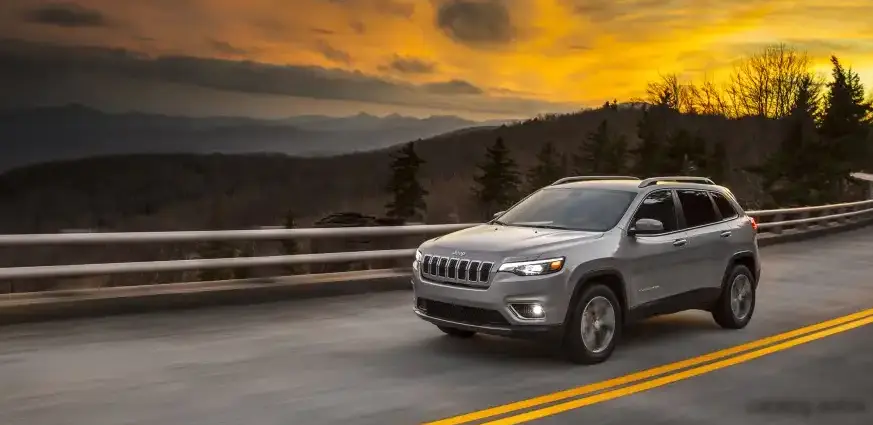
The Jeep Cherokee V (KL), specifically the facelifted version introduced in September 2018 and continuing through December 2021, represented a significant evolution of the Cherokee mid-size SUV. This iteration, powered by the 2.2 MultiJet II turbodiesel engine producing 195 horsepower and paired with a nine-speed automatic transmission and all-wheel drive (AWD), was primarily aimed at the European and international markets where diesel engines remained popular. Within the Cherokee V lineup, this variant occupied a middle ground, offering a balance between fuel efficiency, reasonable performance, and a more accessible price point compared to the higher-output gasoline engines and more luxurious trim levels.
Technical Specifications
| Brand | Jeep |
| Model | Cherokee |
| Generation | Cherokee V (KL, facelift 2018) |
| Type (Engine) | 2.2 MultiJet II (195 Hp) AWD Automatic |
| Start of production | September, 2018 |
| End of production | December, 2021 |
| Powertrain Architecture | Internal Combustion engine |
| Body type | SUV |
| Seats | 5 |
| Doors | 5 |
| Fuel consumption (urban) | 7.7 l/100 km (30.5 US mpg) |
| Fuel consumption (extra urban) | 6 l/100 km (39.2 US mpg) |
| Fuel consumption (combined) | 6.6 l/100 km (35.6 US mpg) |
| CO2 emissions | 175 g/km |
| Fuel Type | Diesel |
| Acceleration 0 – 100 km/h | 8.8 sec |
| Acceleration 0 – 62 mph | 8.8 sec |
| Acceleration 0 – 60 mph | 8.4 sec |
| Maximum speed | 202 km/h (125.52 mph) |
| Emission standard | Euro 6d |
| Power | 195 Hp @ 3500 rpm |
| Torque | 450 Nm @ 2000 rpm (331.9 lb.-ft. @ 2000 rpm) |
| Engine layout | Front, Longitudinal |
| Engine Model/Code | EBV |
| Engine displacement | 2174 cm3 (132.67 cu. in.) |
| Number of cylinders | 4 |
| Engine configuration | Inline |
| Compression ratio | 15.5:1 |
| Number of valves per cylinder | 4 |
| Fuel injection system | Diesel Commonrail |
| Engine aspiration | Turbocharger, Intercooler |
| Engine oil capacity | 4.1 l (4.33 US qt | 3.61 UK qt) |
| Coolant capacity | 6.8 l (7.19 US qt | 5.98 UK qt) |
| Max. weight | 2494 kg (5498.33 lbs.) |
| Trunk (boot) space – minimum | 448 l (15.82 cu. ft.) |
| Trunk (boot) space – maximum | 1555 l (54.91 cu. ft.) |
| Fuel tank capacity | 60 l (15.85 US gal | 13.2 UK gal) |
| AdBlue tank capacity | 15.7 l (4.15 US gal | 3.45 UK gal) |
| Permitted trailer load with brakes (12%) | 2370 kg (5224.96 lbs.) |
| Length | 4623 mm (182.01 in.) |
| Width | 1859 mm (73.19 in.) |
| Height | 1681 mm (66.18 in.) |
| Wheelbase | 2708 mm (106.61 in.) |
| Front track | 1593 mm (62.72 in.) |
| Rear track | 1603 mm (63.11 in.) |
| Ride height (ground clearance) | 201 mm (7.91 in.) |
| Minimum turning circle | 11.6 m (38.06 ft.) |
| Drive wheel | All wheel drive (4×4) |
| Number of gears and type of gearbox | 9 gears, automatic transmission |
| Front suspension | Independent, type McPherson with coil spring and anti-roll bar |
| Rear suspension | Independent multi-link spring suspension with stabilizer |
| Front brakes | Ventilated discs |
| Rear brakes | Disc |
Powertrain & Engine Architecture
The heart of this Cherokee variant is the 2.2-liter MultiJet II turbodiesel engine, designated with the engine code EBV. This engine belongs to the Fiat-sourced family of diesel engines utilized by various Stellantis brands. It features a common-rail direct injection system, delivering fuel at extremely high pressures for optimized combustion. The MultiJet II technology employs multiple injection events per combustion cycle, enhancing efficiency and reducing noise. The engine utilizes a single turbocharger with an intercooler to boost power and torque. The 15.5:1 compression ratio is typical for modern diesel engines, contributing to thermal efficiency. Paired with this engine is a ZF-sourced nine-speed automatic transmission (9HP48). This transmission is known for its wide gear ratio spread, aiding both fuel economy and performance. The AWD system is typically an active system, automatically distributing torque between the front and rear axles based on traction conditions.
Driving Characteristics
The 195 horsepower and 331.9 lb.-ft. of torque provided by the 2.2 MultiJet II engine, coupled with the nine-speed automatic, resulted in a driving experience focused on usability and efficiency rather than outright speed. Acceleration from 0-60 mph in around 8.4 seconds is respectable for a mid-size SUV, but noticeably slower than versions equipped with the 2.4-liter gasoline engine. The nine-speed transmission, while offering a wide range, could sometimes exhibit hesitant shifts, particularly at lower speeds. However, in highway cruising, the transmission excels at keeping the engine in its optimal power band, contributing to relaxed and fuel-efficient long-distance travel. The AWD system provides enhanced traction in inclement weather and on loose surfaces, making it a capable all-weather vehicle.
Equipment & Trim Levels
The 2.2 MultiJet II Automatic trim typically fell into the mid-range of the Cherokee V lineup. Standard equipment generally included features such as air conditioning, a touchscreen infotainment system with Apple CarPlay and Android Auto compatibility, keyless entry, and a suite of safety features including automatic emergency braking and lane departure warning. Interior upholstery was typically cloth, with options for leather available as upgrades. Higher trim levels added features like heated seats, a panoramic sunroof, and a premium audio system. Optional extras often included a navigation system, adaptive cruise control, and parking assist features.
Chassis & Braking
The Cherokee V utilizes a McPherson strut front suspension and an independent multi-link rear suspension. This setup provides a comfortable ride quality, although it’s not particularly sporty. Stabilizer bars are fitted to both axles to reduce body roll during cornering. Braking duties are handled by ventilated discs at the front and solid discs at the rear. The braking system is assisted by ABS (Anti-lock Braking System) and electronic brake-force distribution. The suspension tuning was generally geared towards comfort and everyday usability, rather than aggressive handling.
Market Reception & Comparison
The 2.2 MultiJet II Automatic Cherokee was generally well-received in markets where diesel SUVs were popular. Critics praised its fuel economy and comfortable ride. However, some noted the transmission’s occasional hesitation and the engine’s lack of outright power compared to gasoline alternatives. Compared to the 2.4-liter gasoline engine, the diesel offered significantly better fuel economy but less acceleration. The diesel also tended to be more expensive to maintain due to the complexity of the emissions control systems, including the diesel particulate filter (DPF) and AdBlue system. Reliability was generally good, but issues with the DPF and fuel injectors were occasionally reported.
Legacy
The 2.2 MultiJet II engine proved to be a relatively durable and reliable powertrain when properly maintained. However, the increasing scrutiny of diesel emissions and the growing popularity of gasoline and hybrid SUVs have led to a decline in demand for diesel-powered Cherokees on the used car market. Models with well-documented service histories and evidence of regular DPF maintenance tend to command higher prices. While not as sought-after as some of the higher-performance gasoline variants, the 2.2 MultiJet II Cherokee remains a practical and fuel-efficient option for those seeking a capable and comfortable mid-size SUV.