
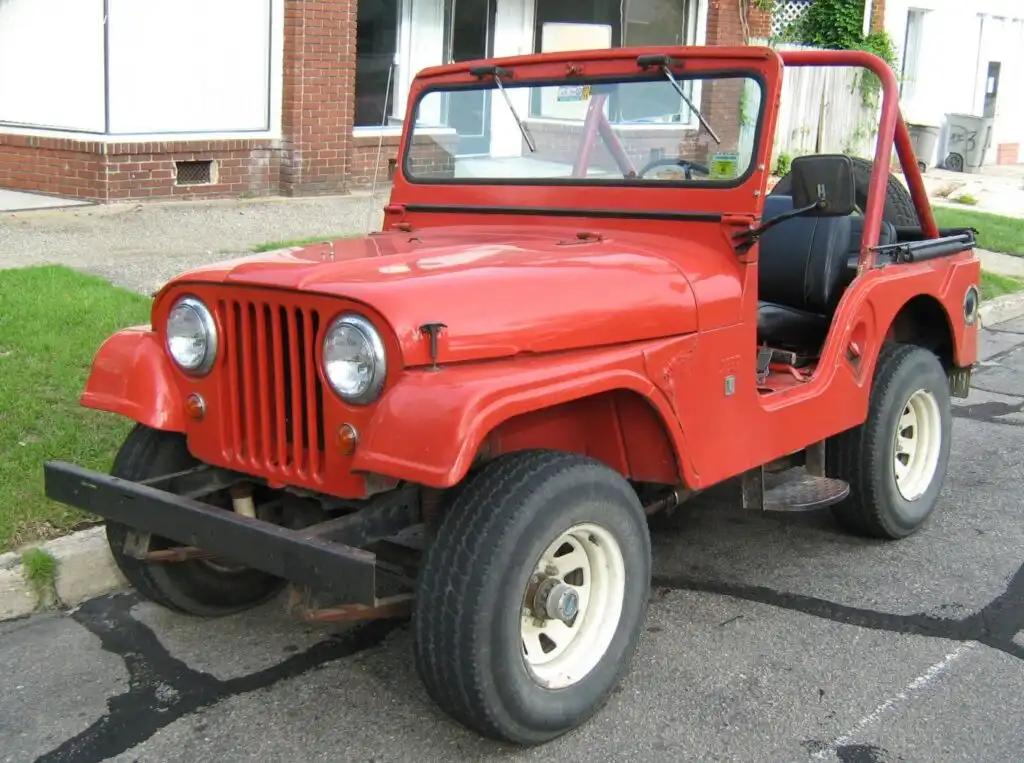
The Jeep CJ-5 2.1 D, produced between 1983 and 1987, represents a unique and often overlooked variant within the iconic CJ-5 lineage. Introduced primarily for markets outside of North America where diesel fuel was more readily available and economically advantageous, this model offered a utilitarian alternative to the gasoline-powered CJ-5s. It occupied the entry-level position in the CJ-5 range during its production run, appealing to buyers prioritizing fuel efficiency and durability over outright performance. The CJ-5 itself, a cornerstone of Jeep’s history, was a civilian version of the military Jeep, evolving through several iterations to become a popular recreational and work vehicle.
Technical Specifications
| Brand | Jeep |
| Model | CJ-5 |
| Generation | CJ-5 |
| Engine Type | 2.1 D (60 Hp) |
| Production Years | 1983 – 1987 |
| Powertrain Architecture | Internal Combustion Engine |
| Body Type | Off-road Vehicle |
| Fuel Type | Diesel |
| Power Output | 60 Hp |
| Engine Aspiration | Naturally Aspirated |
| Length | 3424 mm (134.8 in) |
| Width | 1521 mm (59.88 in) |
| Width (including mirrors) | 1742 mm (68.58 in) |
| Height | 1717 mm (67.6 in) |
| Front Overhang | 567 mm (22.32 in) |
| Rear Overhang | 706 mm (27.8 in) |
Powertrain & Engine Architecture
The heart of the CJ-5 2.1 D is a 2.1-liter inline-four diesel engine. While the exact origins of this engine vary depending on the export market, it was often sourced from Peugeot or similar European manufacturers. This engine was chosen for its inherent fuel efficiency and robust construction, qualities highly valued in regions where gasoline was expensive or difficult to obtain. The engine utilizes a naturally aspirated configuration, relying on atmospheric pressure for air intake, and features indirect injection. Details regarding the specific fuel injection pump used are often market-dependent, but typically involved a mechanical inline pump. The engine’s valvetrain consists of a single overhead camshaft operating two valves per cylinder. The 60 horsepower output is relatively modest, but sufficient for the CJ-5’s intended purpose of slow-speed off-road work and utility tasks. The transmission paired with this engine was typically a three or four-speed manual, though some markets also received a three-speed automatic option. The automatic transmission, when equipped, was generally a TorqueFlite A727 variant, known for its durability but not its efficiency.
Driving Characteristics
The driving experience in a CJ-5 2.1 D is markedly different from its gasoline-powered counterparts. The low horsepower and torque figures necessitate a deliberate driving style. Acceleration is slow, and hill climbs require careful gear selection and maintaining momentum. The diesel engine produces peak torque at relatively low RPMs, making it well-suited for crawling over obstacles, but it lacks the responsiveness of a gasoline engine. The manual transmission versions offer more control in off-road situations, allowing the driver to precisely manage engine speed and torque. The automatic transmission, while providing convenience, can feel sluggish and prone to hunting for the correct gear, especially when navigating challenging terrain. The overall gearing is optimized for low-speed torque, rather than highway cruising. Top speed is limited, and extended highway driving is not this variant’s forte.
Equipment & Trim Levels
The CJ-5 2.1 D typically featured a spartan equipment level, reflecting its utilitarian focus and position as the entry-level model. Standard features generally included basic steel wheels, vinyl or cloth upholstery, a simple dashboard with minimal instrumentation, and a folding windshield. Power steering and air conditioning were rarely standard, often offered as optional extras. Interior trim was typically functional rather than luxurious, with rubber floor mats and durable plastic components. Optional extras could include a winch, upgraded suspension components, and various off-road accessories such as roll bars and brush guards. The exterior paint options were usually limited to a selection of solid colors, prioritizing practicality over aesthetics.
Chassis & Braking
The CJ-5 chassis remained largely consistent across all variants, featuring a ladder frame construction and a solid front and rear axle. However, the 2.1 D model often received slightly heavier-duty suspension components to cope with the engine’s weight and the demands of off-road use. The front suspension utilized leaf springs, while the rear suspension also employed leaf springs. Braking systems varied depending on the market. Earlier models often featured drum brakes on all four wheels, while later models may have incorporated front disc brakes for improved stopping power. Power brakes were not typically standard, requiring a significant amount of pedal effort. Stabilizer bars were often omitted to maximize suspension articulation for off-road performance.
Market Reception & Comparison
The CJ-5 2.1 D was not widely available in the United States, and its reception was primarily focused in export markets, particularly in Europe, South America, and Africa. Critics generally acknowledged the engine’s fuel efficiency and durability but often lamented its lack of power. Compared to the gasoline-powered CJ-5s, the 2.1 D offered significantly lower performance but superior fuel economy. The 4.2-liter inline-six gasoline engine, the most common engine in North American CJ-5s, provided considerably more horsepower and torque, making it better suited for on-road driving and towing. The 2.5-liter four-cylinder gasoline engine offered a compromise between performance and fuel economy, but still outperformed the 2.1 D in terms of outright power. The diesel variant appealed to buyers who prioritized fuel cost savings and reliability over speed and comfort.
Legacy
The CJ-5 2.1 D, while a relatively rare variant, holds a unique place in Jeep history. Its robust diesel engine and simple mechanical design contribute to its enduring reliability. Today, these vehicles are sought after by enthusiasts who appreciate their ruggedness and fuel efficiency. Parts availability can be a challenge, as many components are specific to the diesel engine and may be difficult to source. However, the CJ-5’s overall simplicity and widespread popularity mean that many parts are still available through aftermarket suppliers. The CJ-5 2.1 D represents a practical and durable alternative within the CJ-5 family, offering a distinctive driving experience and a testament to Jeep’s versatility.
