
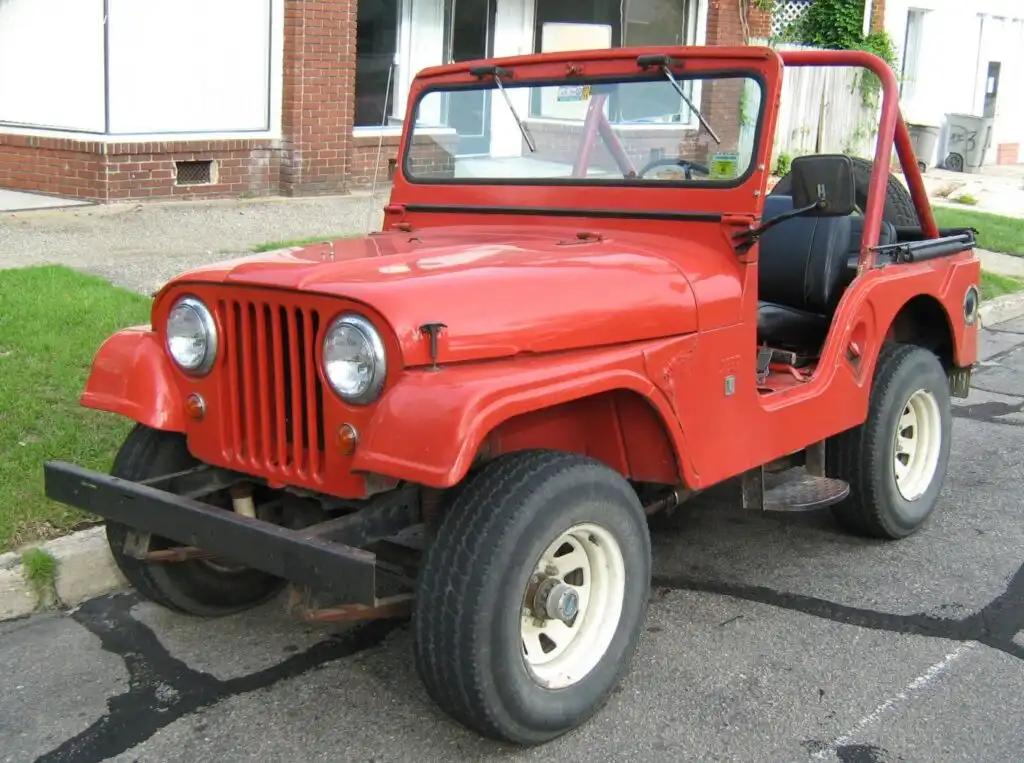
The Jeep CJ-5 2.4 D, produced between 1983 and 1987, represents a unique and often overlooked variant within the iconic CJ-5 lineage. Introduced as a fuel-conscious alternative, particularly in markets experiencing rising gasoline prices, this diesel-powered CJ-5 aimed to provide the legendary Jeep capability with improved economy. It occupied a specific niche in the CJ-5 lineup, positioned as a more utilitarian and budget-friendly option compared to the gasoline-powered models. While not known for blistering performance, the 2.4 D offered a durable and torquey powerplant suited for off-road work and general transportation.
Technical Specifications
| Brand | Jeep |
| Model | CJ-5 |
| Generation | CJ-5 |
| Type (Engine) | 2.4 D (60 Hp) |
| Start of Production | 1983 |
| End of Production | 1987 |
| Powertrain Architecture | Internal Combustion Engine |
| Body Type | Off-Road Vehicle |
| Fuel Type | Diesel |
| Power | 60 Hp |
| Engine Aspiration | Naturally Aspirated |
| Length | 3424 mm (134.8 in) |
| Width | 1521 mm (59.88 in) |
| Width including Mirrors | 1742 mm (68.58 in) |
| Height | 1717 mm (67.6 in) |
| Front Overhang | 567 mm (22.32 in) |
| Rear Overhang | 706 mm (27.8 in) |
Powertrain & Engine Architecture
The heart of the CJ-5 2.4 D is the Mercedes-Benz OM616 diesel engine, a 2.4-liter inline-four cylinder powerplant. This engine was licensed and built by Jeep, and was a common sight in various Chrysler/Jeep products of the era. The OM616 is known for its robust construction and longevity, featuring a cast iron block and head. It utilizes a naturally aspirated configuration, relying on mechanical fuel injection – typically a Bosch inline plunger pump – to deliver fuel directly into the cylinders. The engine employs a simple, yet effective, single overhead camshaft (SOHC) valvetrain operating two valves per cylinder. The 60 horsepower output at around 3,600 rpm, and approximately 95 lb-ft of torque, were modest by contemporary standards, but the diesel engine’s torque curve provided usable power at low engine speeds, making it well-suited for off-road applications. The transmission paired with the 2.4 D was typically a three-speed automatic, chosen to enhance ease of use for a broader range of drivers. Manual transmission options were available, but the automatic was more common in this configuration.
Driving Characteristics
The CJ-5 2.4 D with the automatic transmission offered a distinctly different driving experience compared to its gasoline-powered siblings. Acceleration was slow, and highway merging required careful planning. The three-speed automatic, while providing convenience, wasn’t optimized for performance. Gear ratios were geared towards maximizing torque at lower speeds, prioritizing crawling ability over outright speed. The diesel engine’s torque, however, provided ample power for navigating challenging terrain. The low-end grunt allowed for precise control during rock crawling and traversing obstacles. Compared to the more powerful V6 and V8 gasoline engines available in the CJ-5, the 2.4 D felt significantly underpowered on paved roads. The manual transmission versions, while offering more control, still suffered from the engine’s limited horsepower. The overall driving experience was best described as deliberate and utilitarian, rather than sporty or exhilarating.
Equipment & Trim Levels
The CJ-5 2.4 D typically represented a base or near-base trim level. Standard equipment generally included basic steel wheels, vinyl upholstery, a simple dashboard layout, and minimal creature comforts. Power steering and air conditioning were often optional extras, adding to the vehicle’s cost. Interior appointments were functional and durable, prioritizing practicality over luxury. The dashboard typically featured a basic instrument cluster with speedometer, fuel gauge, and temperature gauge. Optional extras could include upgraded seating, a roll bar, and various off-road accessories such as winches and upgraded suspension components. The focus was on providing a capable and affordable off-road vehicle, rather than a lavishly equipped one.
Chassis & Braking
The CJ-5 chassis remained largely consistent across all variants, featuring a body-on-frame construction with a solid front and rear axle. The 2.4 D models typically utilized a leaf spring suspension system, providing a relatively comfortable ride on and off-road. Braking systems varied depending on the year and specific configuration. Earlier models often featured drum brakes on all four wheels, while later models may have incorporated front disc brakes for improved stopping power. The rear axle typically featured a standard differential, although optional locking differentials were available for enhanced off-road capability. Stabilizer bars were often omitted or relatively small in diameter to maximize suspension articulation. The overall chassis setup was designed to prioritize off-road performance and durability over on-road handling refinement.
Market Reception & Comparison
The CJ-5 2.4 D received mixed reviews. While praised for its fuel economy and durability, it was often criticized for its lack of power. Critics noted that the diesel engine struggled to keep pace with traffic on highways and lacked the responsiveness of the gasoline-powered models. However, the diesel’s fuel efficiency was a significant selling point, particularly during the energy crises of the 1980s. Compared to the CJ-5 with the 258 cubic inch (4.2L) inline-six or the 304/360 V8 engines, the 2.4 D offered significantly better fuel economy but considerably less performance. The 2.4 D appealed to buyers who prioritized fuel efficiency and off-road capability over speed and comfort. It was often favored by those who used their CJ-5s for work or recreational activities where low-speed torque and durability were paramount.
Legacy
The Jeep CJ-5 2.4 D, while not the most popular variant, holds a unique place in Jeep history. The OM616 diesel engine proved to be exceptionally reliable, and many examples remain on the road today. The 2.4 D CJ-5s are now sought after by enthusiasts who appreciate their simplicity, durability, and fuel efficiency. Parts availability for the OM616 engine is generally good, thanks to its widespread use in other vehicles. In the used car market, these models typically command lower prices than their gasoline-powered counterparts, but their value is steadily increasing as collectors recognize their historical significance and unique character. The 2.4 D CJ-5 represents a chapter in Jeep’s history where fuel economy and practicality were given equal consideration alongside the brand’s legendary off-road prowess.
