
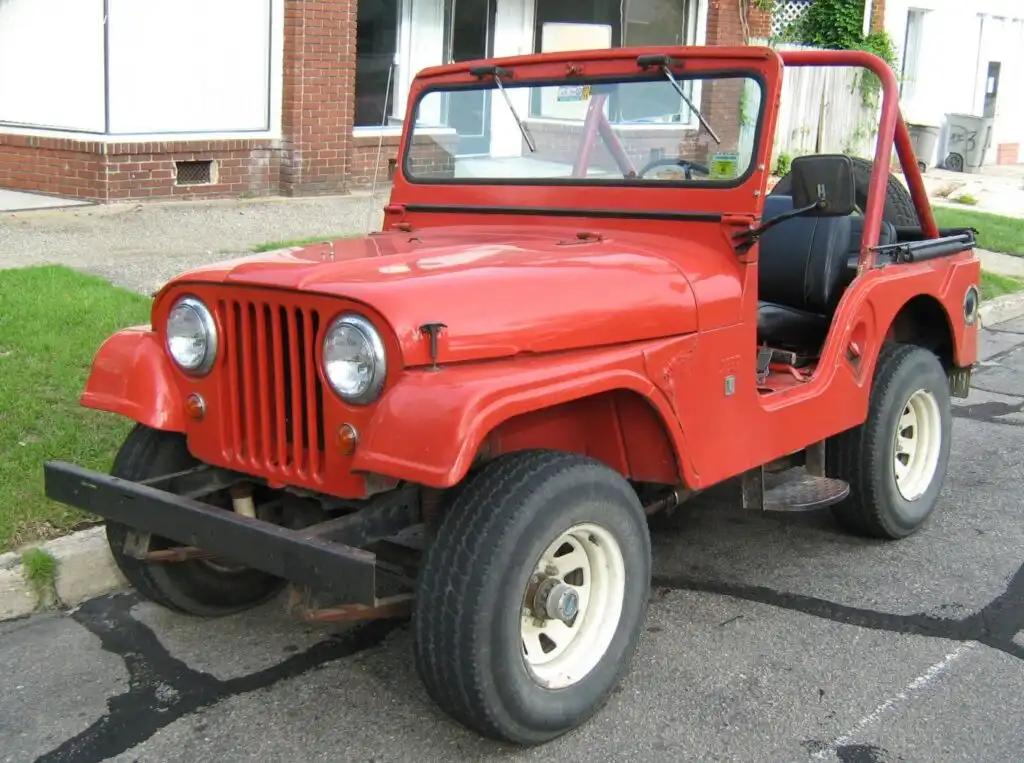
The Jeep CJ-5 2.5, produced between 1984 and 1987, represented a continuation of the iconic CJ (Civilian Jeep) line, offering a blend of rugged capability and increasingly modern amenities. This variant, powered by a 2.5-liter inline-four engine producing 106 horsepower, occupied a crucial position in the CJ-5 lineup as the base model, appealing to buyers seeking a no-frills, affordable off-road vehicle. It was part of the final years of the CJ-5, bridging the gap between the original wartime Jeep design and the more refined Jeep Wrangler that would follow.
Technical Specifications
| Brand | Jeep |
| Model | CJ-5 |
| Generation | CJ-5 |
| Engine Type | 2.5L Inline-Four |
| Start of Production | 1984 |
| End of Production | 1987 |
| Powertrain Architecture | Internal Combustion Engine |
| Body Type | Off-Road Vehicle |
| Fuel Type | Petrol (Gasoline) |
| Power | 106 hp |
| Engine Aspiration | Naturally Aspirated |
| Length | 3424 mm (134.8 in) |
| Width | 1521 mm (59.88 in) |
| Width including mirrors | 1742 mm (68.58 in) |
| Height | 1717 mm (67.6 in) |
| Front Overhang | 567 mm (22.32 in) |
| Rear Overhang | 706 mm (27.8 in) |
Powertrain & Engine Architecture
The heart of the CJ-5 2.5 was the AMC 2.5-liter (151 cubic inch) inline-four engine. This engine, designated as the 4-258, was a relatively simple and robust design, featuring a cast iron block and cylinder head. It utilized a single overhead camshaft (SOHC) design and two valves per cylinder. Fuel delivery was managed by a Motorcraft variable venturi carburetor, a common setup for the time, though not known for its precision or fuel efficiency compared to later fuel injection systems. The engine produced 106 horsepower at approximately 4,250 rpm and 140 lb-ft of torque at 3,000 rpm. The automatic transmission offered with this variant was typically a three-speed TorqueFlite A727, a durable and widely used automatic transmission known for its simplicity and reliability. While not offering the most advanced gear ratios, it provided adequate performance for off-road driving and general use.
Driving Characteristics
The CJ-5 2.5 with the automatic transmission delivered a driving experience focused on usability and low-speed torque. Acceleration was modest, with 0-60 mph times estimated around 15-17 seconds. The three-speed automatic, while reliable, lacked the responsiveness of a manual transmission or a more modern automatic with additional gears. The gear ratios were geared towards climbing obstacles and providing sufficient power at low speeds, rather than highway cruising. Compared to the available six-cylinder engines in the CJ-5 lineup, the 2.5L felt noticeably underpowered, especially when fully loaded or tackling steep inclines. However, the lower weight of the four-cylinder engine compared to the inline-six did contribute to slightly improved fuel economy and a more nimble feel on tighter trails. The automatic transmission made it easier for novice off-road drivers to control the vehicle, eliminating the need for clutch control on challenging terrain.
Equipment & Trim Levels
The CJ-5 2.5 served as the entry-level model, and as such, came with a relatively basic set of standard features. Typically, it included features like a vinyl interior, a basic instrument cluster, and standard road tires. Optional extras included features like a hardtop or soft top, upgraded tires (including larger off-road tires), a roll bar, and a winch. Interior upholstery was generally vinyl, designed for durability and ease of cleaning. Dashboard configuration was simple, with essential gauges for speed, fuel level, temperature, and oil pressure. The trim level was largely defined by the options selected by the buyer, allowing for some customization within the constraints of the base model.
Chassis & Braking
The CJ-5 chassis was a body-on-frame design, utilizing a ladder frame construction for strength and durability. The suspension consisted of leaf springs in both the front and rear, providing a relatively soft and compliant ride, particularly suited for off-road conditions. The front axle was typically a Dana 30, while the rear axle was a Dana 35 or Dana 44 depending on the specific configuration. Braking systems varied, with earlier models often equipped with drum brakes on all four wheels. Later models, and those equipped with certain options, received front disc brakes, offering improved stopping power. Power steering was often an optional extra, making the vehicle easier to maneuver, especially in off-road situations. Stabilizer bars were not typically standard on the base 2.5L model, contributing to a more flexible suspension setup ideal for articulation on uneven terrain.
Market Reception & Comparison
The CJ-5 2.5 Automatic was generally viewed as a practical and affordable entry point into the Jeep world. Critics acknowledged its off-road capability, but often noted its lack of power compared to the six-cylinder options. Fuel economy, while better than the larger engines, was still relatively poor by modern standards, averaging around 15-18 mpg. Compared to the CJ-5 with the 258 cubic inch inline-six, the 2.5L offered a lower purchase price but sacrificed significant performance. The 2.5L appealed to buyers who prioritized affordability and simplicity over outright power and speed. It was a popular choice for those who primarily used their CJ-5 for light off-roading, farm work, or as a general-purpose vehicle.
Legacy
The AMC 2.5-liter engine, despite its limitations, proved to be a remarkably durable and long-lasting powertrain. Many CJ-5 2.5 models remain on the road today, a testament to its robust construction. The automatic transmission, while not particularly efficient, also demonstrated good reliability. In the used car market, the CJ-5 2.5 is often considered a good value for those seeking a classic Jeep experience without the higher price tag of the more powerful models. However, potential buyers should be aware of the potential for rust, particularly in areas with harsh winters, and the need for regular maintenance to keep the carburetor and aging components functioning properly. The CJ-5 2.5 represents a significant chapter in Jeep’s history, embodying the brand’s commitment to ruggedness, simplicity, and off-road capability.
