
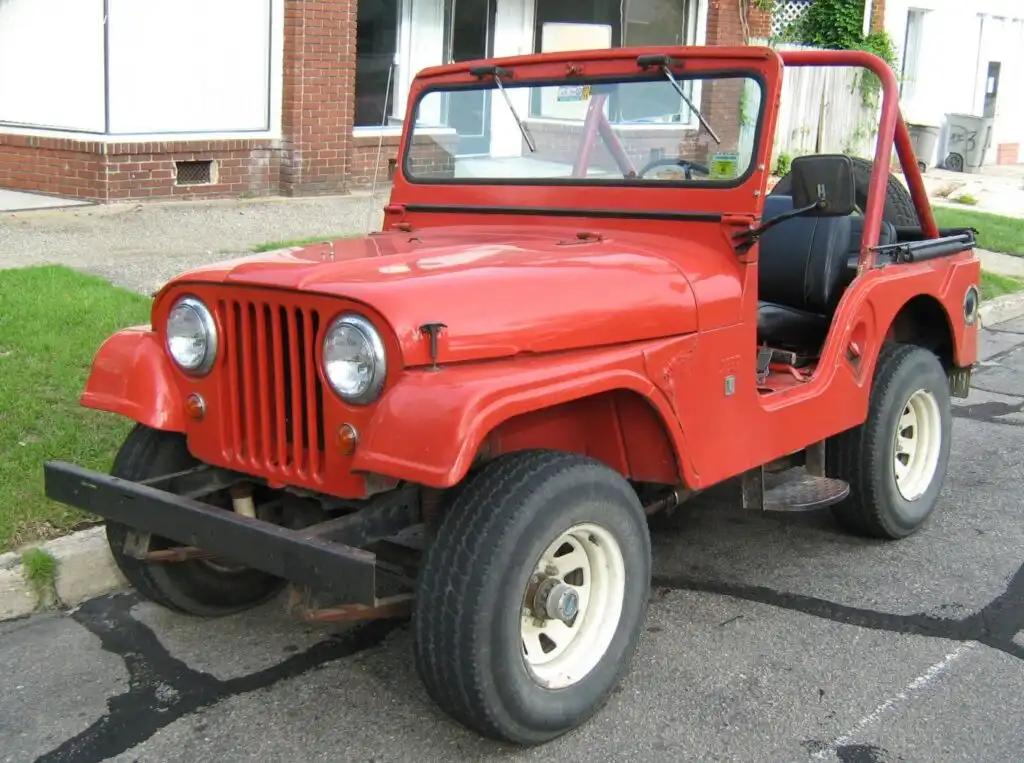
The Jeep CJ-5 2.5, produced between 1980 and 1983, represented a continuation of the iconic CJ (Civilian Jeep) line, offering a more comfortable and refined experience compared to earlier, more spartan models. This variant, equipped with the 2.5-liter inline-four engine producing 88 horsepower, served as a relatively affordable entry point into the CJ-5 range, appealing to buyers seeking a capable off-road vehicle for recreational use rather than heavy-duty work. It was part of the broader CJ-5 generation (built from 1957-1983), which itself was a significant evolution of the original Willys Jeep, offering improved features and a more modern design while retaining the core off-road capability that defined the brand.
Technical Specifications
| Brand | Jeep |
| Model | CJ-5 |
| Generation | CJ-5 |
| Type (Engine) | 2.5 (88 Hp) |
| Start of production | 1980 |
| End of production | 1983 |
| Powertrain Architecture | Internal Combustion engine |
| Body type | Off-road vehicle |
| Fuel Type | Petrol (Gasoline) |
| Power | 88 Hp |
| Engine aspiration | Naturally aspirated engine |
| Length | 3424 mm / 134.8 in. |
| Width | 1521 mm / 59.88 in. |
| Width including mirrors | 1742 mm / 68.58 in. |
| Height | 1717 mm / 67.6 in. |
| Front overhang | 567 mm / 22.32 in. |
| Rear overhang | 706 mm / 27.8 in. |
Powertrain & Engine Architecture
The heart of the CJ-5 2.5 was the AMC 2.5-liter (151 cubic inch) inline-four cylinder engine. This engine, designated as the 4.2L in some literature due to marketing reasons, was a relatively simple and robust design. It featured a cast iron block and cylinder head, a two-barrel carburetor, and a single overhead camshaft. While not known for its high performance, the 2.5L engine provided adequate torque for off-road driving and was relatively fuel-efficient for its time. The 88 horsepower output was achieved at approximately 4,200 rpm, with peak torque of around 135 lb-ft at 3,000 rpm. The engine utilized a conventional ignition system and a basic emissions control setup, reflecting the technology available during the early 1980s.
The CJ-5 2.5 was typically paired with a three-speed automatic transmission (TorqueFlite A904). This transmission was chosen for its simplicity and durability, making it well-suited for the demands of off-road driving. The automatic transmission offered ease of use, particularly for drivers less experienced with manual transmissions, and contributed to the CJ-5’s appeal as a recreational vehicle. The gear ratios were optimized for low-speed torque, aiding in rock crawling and navigating challenging terrain. While not offering the direct control of a manual transmission, the automatic provided a comfortable and convenient driving experience.
Driving Characteristics
The 2.5-liter engine and automatic transmission combination in the CJ-5 resulted in a driving experience focused on usability and moderate off-road capability. Acceleration was modest, and highway speeds required the engine to work relatively hard. The automatic transmission, while convenient, did rob some power from the engine compared to a manual transmission equipped model. The three-speed automatic’s gear ratios were spaced to prioritize low-end torque, making it capable of tackling steep inclines and obstacles. However, passing maneuvers on the highway required careful planning. The CJ-5’s short wheelbase and solid axles provided excellent articulation for off-road driving, allowing it to maintain traction on uneven surfaces. The overall driving experience was characterized by a rugged, utilitarian feel, typical of Jeeps of this era.
Equipment & Trim Levels
The CJ-5 2.5 typically represented the base trim level within the CJ-5 lineup. Standard equipment generally included basic steel wheels, vinyl upholstery, a simple dashboard with minimal instrumentation, and a folding windshield. Optional extras included features like a roll bar, upgraded tires, a winch, and a more comprehensive instrument cluster. Interior options often included different colors of vinyl upholstery and the addition of a heater. The CJ-5 2.5 was designed to be a relatively affordable and customizable vehicle, allowing buyers to add features based on their individual needs and preferences. It lacked the more luxurious appointments found in higher trim levels like the CJ-5 Laredo.
Chassis & Braking
The CJ-5 utilized a traditional body-on-frame construction, with a ladder frame chassis providing a solid foundation. The suspension consisted of leaf springs at all four corners, offering a robust and durable setup suitable for off-road use. The front axle was a solid Dana 30, while the rear axle was typically a Dana 35 or Dana 44, depending on the specific configuration. Braking was typically accomplished with drum brakes on all four wheels, although some later models may have featured front disc brakes. Steering was a recirculating ball system, providing a direct but somewhat heavy feel. The CJ-5’s relatively simple chassis and braking system were designed for durability and ease of maintenance, rather than high performance.
Market Reception & Comparison
The CJ-5 2.5 was generally well-received as an affordable and capable entry-level off-road vehicle. Critics acknowledged its limitations in terms of power and refinement, but praised its ruggedness and off-road prowess. Compared to the CJ-5 models equipped with the larger 6-cylinder engines (like the 4.2L or the AMC 304 V8), the 2.5-liter version offered lower fuel consumption but significantly less power. The 2.5L was also often compared to similar off-road vehicles from other manufacturers, such as the Chevrolet Blazer and Ford Bronco, often being seen as a more basic and utilitarian option. Its fuel economy was considered reasonable for the time, averaging around 15-20 mpg in mixed driving conditions.
Legacy
The AMC 2.5-liter engine, used in the CJ-5 2.5, proved to be a remarkably durable and reliable powertrain. Many examples of these vehicles are still on the road today, often having been modified and upgraded for more serious off-road use. The CJ-5 2.5 remains a popular choice among Jeep enthusiasts and collectors, particularly those seeking a relatively affordable and easily maintained classic off-road vehicle. While not the most powerful or luxurious CJ-5 variant, the 2.5-liter model represents a significant piece of Jeep history and continues to be appreciated for its simplicity, ruggedness, and iconic design. The used market values for well-maintained CJ-5 2.5 models have been steadily increasing in recent years, reflecting their growing popularity and collectibility.
