
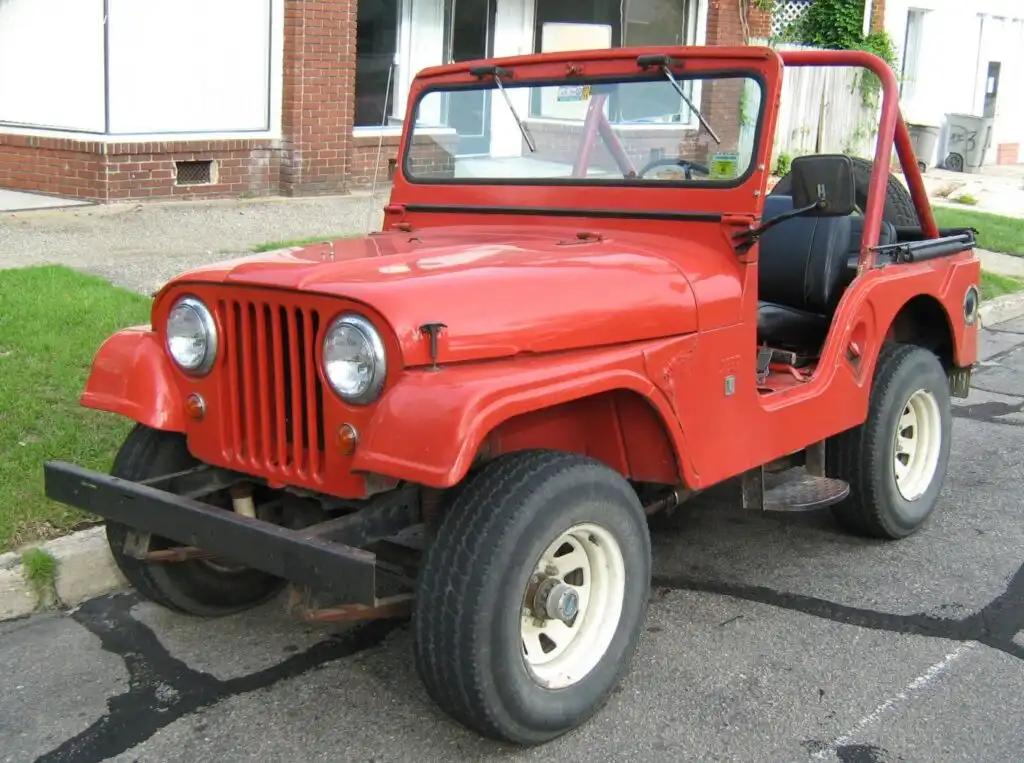
The Jeep CJ-5 3.7, produced between 1966 and 1971, represents a pivotal iteration in the long and storied history of the Jeep CJ (Civilian Jeep) line. Falling within the CJ-5 generation, which ran from 1957 to 1983, this variant offered a balance of rugged capability and emerging comfort features, solidifying the CJ’s position as America’s go-to off-road vehicle. The 3.7-liter engine option, delivering 150 horsepower, positioned it as a step up in power from the base models, appealing to buyers who desired more performance without sacrificing the CJ’s inherent simplicity and durability. It was a key model during a period where Jeep was transitioning from purely utilitarian vehicles to those with broader appeal.
Technical Specifications
| Brand | Jeep |
| Model | CJ |
| Generation | CJ-5 |
| Type (Engine) | 3.7 (150 Hp) |
| Start of production | 1966 |
| End of production | 1971 |
| Powertrain Architecture | Internal Combustion engine |
| Body type | Off-road vehicle |
| Fuel Type | Petrol (Gasoline) |
| Power | 150 Hp |
| Engine aspiration | Naturally aspirated engine |
| Length | 3424 mm / 134.8 in. |
| Width | 1521 mm / 59.88 in. |
| Width including mirrors | 1742 mm / 68.58 in. |
| Height | 1717 mm / 67.6 in. |
| Front overhang | 567 mm / 22.32 in. |
| Rear overhang | 706 mm / 27.8 in. |
Powertrain & Engine Architecture
The heart of the CJ-5 3.7 was the 3.7-liter (225 cubic inch) inline-six cylinder engine. This engine, a member of the Buick-derived “Dauntless” V6 family adapted for inline-six configuration by Jeep, was a significant upgrade over the earlier four-cylinder offerings. While often referred to as a 3.7, its actual displacement was 3.8 liters (230 cubic inches) in later years of production. The engine featured a cast iron block and cylinder head, a relatively simple overhead valve (OHV) valvetrain, and a single two-barrel carburetor. This configuration prioritized reliability and low-end torque, crucial for off-road driving. The 150 horsepower output was respectable for the time, but the engine’s real strength lay in its 230 lb-ft of torque. The CJ-5 3.7 typically came equipped with a three-speed manual transmission or, more commonly, a TorqueFlite A727 three-speed automatic transmission. The automatic transmission provided ease of use, particularly appealing to recreational drivers who weren’t necessarily experienced with manual transmissions. The automatic’s gear ratios were geared towards low-speed crawling and maximizing torque for off-road obstacles.
Driving Characteristics
The CJ-5 3.7 with the automatic transmission offered a distinctly different driving experience compared to the manual transmission versions or the later, more powerful V8-equipped models. The automatic transmission smoothed out power delivery, making it easier to control the vehicle in challenging terrain. However, it also resulted in some power loss compared to the manual, and the lack of a fourth gear meant higher engine speeds at highway cruising speeds. The 3.7-liter engine provided adequate power for most off-road situations, allowing for confident climbing and maneuvering over obstacles. On the road, the CJ-5 3.7 was capable of maintaining highway speeds, but it wasn’t particularly refined. The leaf spring suspension, while robust, provided a somewhat bumpy ride, and the steering lacked precision compared to modern vehicles. The overall driving experience was characterized by its ruggedness and simplicity, emphasizing capability over comfort.
Equipment & Trim Levels
The CJ-5 3.7 was generally offered with a fairly basic level of equipment, reflecting its utilitarian origins. Standard features typically included a basic vinyl interior, a simple dashboard with minimal instrumentation, and a folding windshield. Optional extras included features like a heater and defroster, a radio, and upgraded upholstery. The CJ-5 3.7 didn’t have distinct “trim levels” in the modern sense; rather, buyers could add options to customize their vehicle. The emphasis was on functionality and durability, with little attention paid to luxury or aesthetics. The interior was designed to be easily cleaned and maintained, reflecting the vehicle’s intended use as a workhorse and recreational vehicle.
Chassis & Braking
The CJ-5 chassis was a body-on-frame design, utilizing a ladder frame for strength and durability. The suspension consisted of leaf springs at all four corners, providing a robust and simple setup capable of handling rough terrain. The front axle was typically a Dana 27, while the rear axle was a Dana 44. Braking systems varied, with earlier models often equipped with drum brakes on all four wheels. Later models sometimes featured front disc brakes, offering improved stopping power. Steering was typically a recirculating ball system, providing a direct but somewhat imprecise feel. The CJ-5’s relatively short wheelbase and high ground clearance contributed to its exceptional off-road capability. Stabilizer bars were not typically fitted to the CJ-5 3.7, prioritizing articulation over on-road handling.
Market Reception & Comparison
The CJ-5 3.7 was generally well-received by buyers seeking a capable and affordable off-road vehicle. Critics praised its durability, simplicity, and off-road performance. However, some noted its lack of refinement and relatively slow on-road performance compared to other vehicles in its class. Compared to the base CJ-5 models with smaller engines, the 3.7 offered a significant performance boost, making it more suitable for towing and tackling challenging terrain. Compared to the later V8-equipped CJ-5s, the 3.7 was less powerful but also more fuel-efficient and less expensive to maintain. The automatic transmission option was particularly popular with recreational buyers who valued ease of use over outright performance.
Legacy
The CJ-5 3.7 holds a significant place in Jeep history as a transitional model that helped bridge the gap between the utilitarian Jeeps of the past and the more comfortable and refined SUVs of the future. The 3.7-liter engine proved to be a reliable and durable powerplant, and many examples are still on the road today. In the used car market, CJ-5 3.7s are sought after by enthusiasts and collectors, particularly those who appreciate their simplicity and classic Jeep styling. While not the most powerful or luxurious CJ-5 variant, the 3.7 offers a unique blend of capability, affordability, and historical significance, making it a desirable vehicle for those seeking a genuine off-road experience.
