
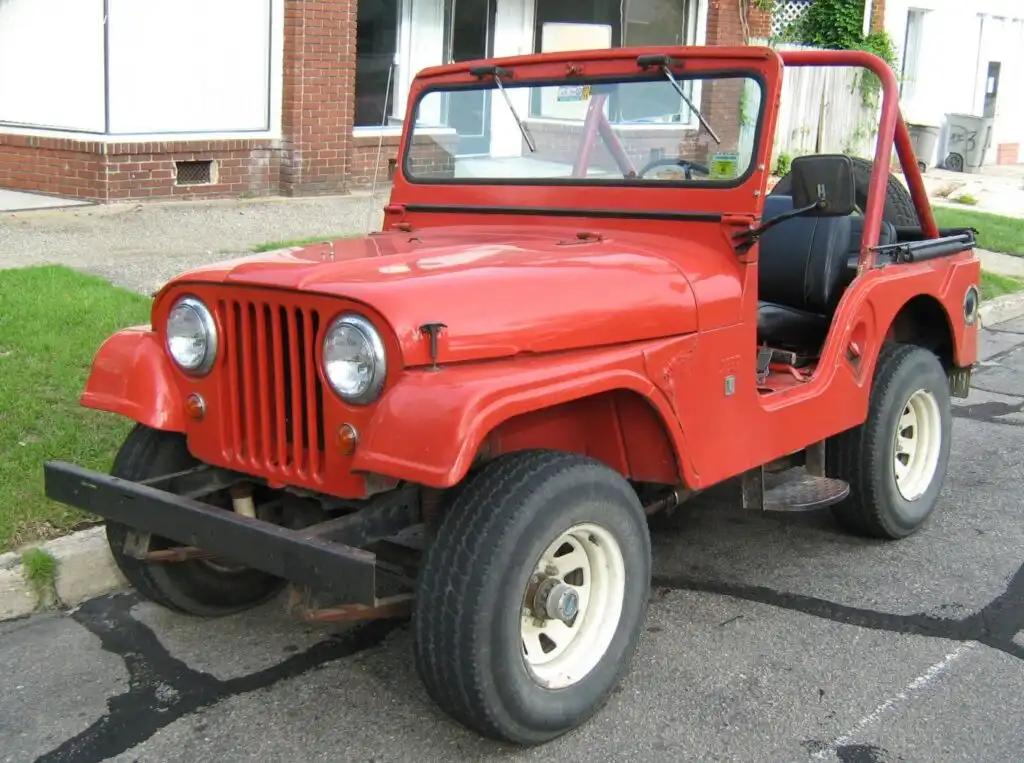
The Jeep CJ-5 3.8, produced between 1972 and 1978, represents a significant iteration of the iconic CJ (Civilian Jeep) line. Positioned as a versatile and accessible off-road vehicle, the 3.8-liter (100 horsepower) variant offered a balance between capability and affordability within the CJ-5 range. This model occupied a middle ground, offering more power than the base four-cylinder options but remaining less expensive and complex than the larger V8-equipped versions. It was a popular choice for recreational drivers and those needing a rugged utility vehicle.
Technical Specifications
| Brand | Jeep |
| Model | CJ |
| Generation | CJ-5 |
| Type (Engine) | 3.8 (100 Hp) |
| Start of production | 1972 |
| End of production | 1978 |
| Powertrain Architecture | Internal Combustion engine |
| Body type | Off-road vehicle |
| Fuel Type | Petrol (Gasoline) |
| Power | 100 Hp |
| Engine Model/Code | AMC 232 |
| Engine aspiration | Naturally aspirated engine |
| Engine oil capacity | 5.7 l (6.02 US qt | 5.02 UK qt) |
| Coolant capacity | 10 l (10.57 US qt | 8.8 UK qt) |
| Length | 3424 mm (134.8 in.) |
| Width | 1521 mm (59.88 in.) |
| Width including mirrors | 1742 mm (68.58 in.) |
| Height | 1717 mm (67.6 in.) |
| Front overhang | 567 mm (22.32 in.) |
| Rear overhang | 706 mm (27.8 in.) |
Powertrain & Engine Architecture
The CJ-5 3.8 was powered by the AMC 232 cubic inch (3.8L) inline-six cylinder engine. This engine, a mainstay of AMC vehicles during the period, was known for its durability and relatively simple design. It featured a cast iron block and cylinder head, with a two-barrel carburetor handling fuel delivery. The engine utilized a traditional pushrod valvetrain, contributing to its robust nature and ease of maintenance. While not a high-performance engine, the AMC 232 provided adequate torque for off-road use and general driving. The 100 horsepower output was achieved at approximately 4,000 rpm, and peak torque was around 180 lb-ft. The engine was typically paired with a three-speed automatic transmission, although a three-speed manual transmission was also available. The automatic transmission, a Torque-Flight A904, was chosen by many buyers for its ease of use, particularly in challenging off-road conditions.
Driving Characteristics
The CJ-5 3.8 with the automatic transmission offered a comfortable, if not particularly quick, driving experience. The automatic transmission’s gear ratios were optimized for low-speed torque, making it well-suited for crawling over obstacles. Acceleration was modest, with 0-60 mph times estimated to be in the 15-18 second range. Compared to the four-cylinder CJ-5s, the 3.8 provided a noticeable improvement in power and responsiveness. However, it lacked the outright acceleration and towing capacity of the V8-equipped models. The automatic transmission, while convenient, did result in some power loss compared to the manual transmission versions. The CJ-5’s short wheelbase and solid axles provided excellent off-road capability, but also contributed to a somewhat bumpy ride on paved roads. Steering was typically manual, requiring some effort, especially at low speeds.
Equipment & Trim Levels
The CJ-5 3.8 typically came with a fairly basic level of equipment, reflecting its utilitarian nature. Standard features generally included a vinyl interior, a basic instrument cluster, and a folding windshield. Optional extras included features like a hardtop, full doors, a heater, and upgraded upholstery. Trim levels were relatively limited; the 3.8 engine was often offered as a step up from the base models, with options packages available to add comfort and convenience features. The interior was functional and durable, designed to withstand the rigors of off-road use. Dashboard configurations were simple, with essential gauges for speed, fuel level, and engine temperature.
Chassis & Braking
The CJ-5 utilized a traditional body-on-frame construction, with a rugged ladder frame chassis. The suspension consisted of leaf springs at all four corners, providing a robust and durable setup capable of handling rough terrain. Front and rear axles were solid, further enhancing off-road capability. Braking systems varied depending on the year and specific configuration. Early models often featured drum brakes on all four wheels, while later models typically had front disc brakes and rear drum brakes. Power steering and power brakes were optional extras. The CJ-5’s relatively high ground clearance and short wheelbase contributed to its excellent approach, departure, and breakover angles, making it a capable off-road performer. Stabilizer bars were not typically fitted to the CJ-5, prioritizing articulation over on-road handling.
Market Reception & Comparison
The Jeep CJ-5 3.8 was generally well-received by buyers seeking a versatile and affordable off-road vehicle. Critics praised its durability, simplicity, and off-road capability. However, some noted its relatively slow acceleration and somewhat rough ride quality. Compared to the four-cylinder CJ-5s, the 3.8 offered a significant improvement in performance, making it a more enjoyable vehicle for everyday driving and towing. Compared to the V8-equipped models, the 3.8 was more fuel-efficient and less expensive to maintain. Fuel economy was typically in the range of 14-18 mpg, depending on driving conditions. Reliability was generally good, with the AMC 232 engine proving to be a durable and long-lasting powerplant.
Legacy
The CJ-5 3.8 remains a popular choice among Jeep enthusiasts and collectors today. Its simple design and readily available parts make it relatively easy to maintain and repair. The AMC 232 engine, while not a powerhouse, is known for its reliability and longevity. Well-maintained examples of the CJ-5 3.8 can command respectable prices in the used car market, particularly those with original features and low mileage. The CJ-5, in general, is considered a cornerstone of Jeep’s heritage, and the 3.8 variant represents a sweet spot in the lineup, offering a balance of capability, affordability, and durability. It continues to be a popular platform for restoration and modification, ensuring its continued presence on and off the trails for years to come.
