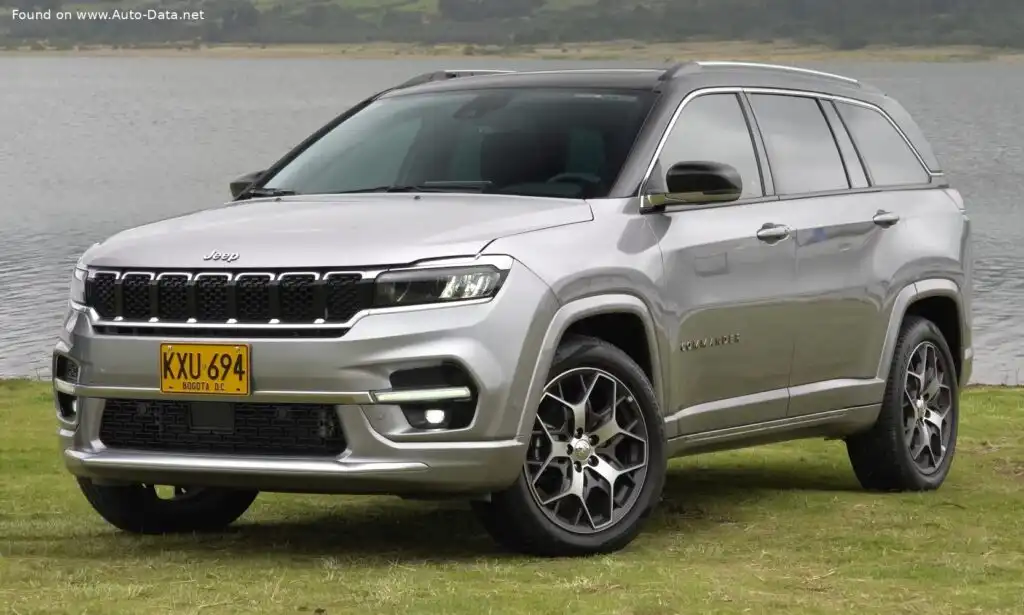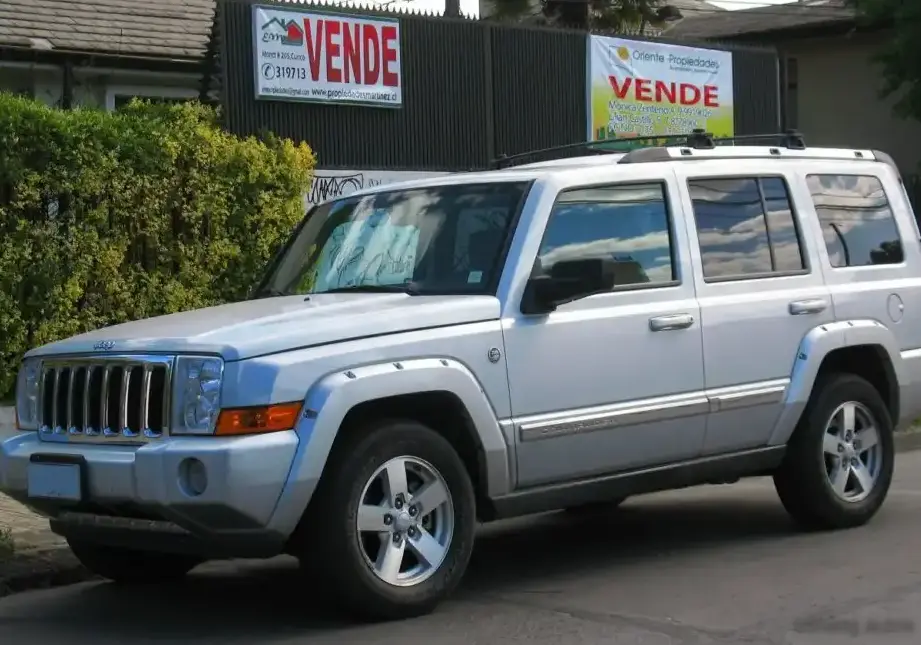
The Jeep Commander (XK) 3.0 V6 CRD 4WD Automatic, produced from 2006 to 2010, represented Jeep’s entry into the mid-size SUV segment with three-row seating. Positioned as a larger alternative to the Cherokee, the Commander aimed to offer a blend of Jeep’s renowned off-road capability with family-friendly practicality. This particular variant, powered by the 3.0-liter CRD diesel engine paired with a five-speed automatic transmission, was primarily sold in European and other international markets where diesel engines were more prevalent. It occupied a mid-range position within the Commander lineup, offering a balance between performance, fuel economy, and price.
Technical Specifications
| Brand | Jeep |
| Model | Commander |
| Generation | Commander (XK) |
| Type (Engine) | 3.0 V6 CRD (218 Hp) 4WD Automatic |
| Start of production | 2006 |
| End of production | 2010 |
| Powertrain Architecture | Internal Combustion engine |
| Body type | SUV |
| Seats | 7 |
| Doors | 5 |
| Fuel consumption (economy) – urban (NEDC) | 13.5 l/100 km (17.4 US mpg, 20.9 UK mpg, 7.4 km/l) |
| Fuel consumption (economy) – extra urban (NEDC) | 9.2 l/100 km (25.6 US mpg, 30.7 UK mpg, 10.9 km/l) |
| Fuel consumption (economy) – combined (NEDC) | 10.8 l/100 km (21.8 US mpg, 26.2 UK mpg, 9.3 km/l) |
| CO2 emissions (NEDC) | 284 g/km |
| Fuel Type | Diesel |
| Acceleration 0 – 100 km/h | 9 sec |
| Acceleration 0 – 62 mph | 9 sec |
| Acceleration 0 – 60 mph | 8.6 sec |
| Maximum speed | 191 km/h (118.68 mph) |
| Emission standard | Euro 4 |
| Weight-to-power ratio | 10.3 kg/Hp, 97.1 Hp/tonne |
| Weight-to-torque ratio | 4.4 kg/Nm, 227.2 Nm/tonne |
| Power | 218 Hp @ 4000 rpm |
| Power per litre | 73 Hp/l |
| Torque | 510 Nm @ 1600-2800 rpm (376.16 lb.-ft. @ 1600-2800 rpm) |
| Engine layout | Front, Longitudinal |
| Engine Model/Code | EXL |
| Engine displacement | 2987 cm3 (182.28 cu. in.) |
| Number of cylinders | 6 |
| Engine configuration | V-engine |
| Cylinder Bore | 83 mm (3.27 in.) |
| Piston Stroke | 92 mm (3.62 in.) |
| Compression ratio | 17.7:1 |
| Number of valves per cylinder | 4 |
| Fuel injection system | Diesel Commonrail |
| Engine aspiration | Turbocharger, Intercooler |
| Valvetrain | DOHC |
| Engine oil capacity | 9.5 l (10.04 US qt | 8.36 UK qt) |
| Coolant | 13.2 l (13.95 US qt | 11.61 UK qt) |
| Kerb Weight | 2245 kg (4949.38 lbs.) |
| Max. weight | 2900 kg (6393.41 lbs.) |
| Max load | 655 kg (1444.03 lbs.) |
| Trunk (boot) space – minimum | 212 l (7.49 cu. ft.) |
| Trunk (boot) space – maximum | 1940 l (68.51 cu. ft.) |
| Fuel tank capacity | 77 l (20.34 US gal | 16.94 UK gal) |
| Permitted trailer load with brakes (12%) | 3500 kg (7716.18 lbs.) |
| Permitted trailer load without brakes | 750 kg (1653.47 lbs.) |
| Permitted towbar download | 140 kg (308.65 lbs.) |
| Length | 4787 mm (188.46 in.) |
| Width | 1899 mm (74.76 in.) |
| Height | 1826 mm (71.89 in.) |
| Wheelbase | 2780 mm (109.45 in.) |
| Front track | 1590 mm (62.6 in.) |
| Rear (Back) track | 1590 mm (62.6 in.) |
| Ride height (ground clearance) | 214 mm (8.43 in.) |
| Minimum turning circle (turning diameter) | 11.8 m (38.71 ft.) |
| Approach angle | 34° |
| Departure angle | 27° |
| Ramp-over (brakeover) angle | 21.2° |
| Wading depth | 508 mm (20 in.) |
| Drivetrain Architecture | The Internal combustion engine (ICE) drives permanently the four wheels of the vehicle. |
| Drive wheel | All wheel drive (4×4) |
| Number of gears and type of gearbox | 5 gears, automatic transmission |
| Front suspension | Coil spring, Double wishbone, Transverse stabilizer |
| Rear suspension | Rigid axle suspension, Transverse stabilizer, Trailing arm, Coil spring |
| Front brakes | Ventilated discs |
| Rear brakes | Disc |
| Assisting systems | ABS (Anti-lock braking system) |
| Steering type | Steering rack and pinion |
| Power steering | Hydraulic Steering |
| Tires size | 245/65 R17; 245/60 R18 |
| Wheel rims size | 7.5J x 17; 7.5J x 18 |
INTRODUCTION
The Jeep Commander, launched in 2006, was Jeep’s attempt to capitalize on the growing SUV market, specifically targeting families needing three-row seating. Built on a modified version of the Jeep Grand Cherokee (WK) platform, the Commander distinguished itself with its boxy, retro-inspired styling reminiscent of the classic Jeep Wagoneer. The 3.0 V6 CRD variant, equipped with a common-rail direct injection diesel engine and a five-speed automatic transmission, was primarily aimed at European markets where diesel fuel was more affordable and readily available. This configuration offered a compelling combination of torque, fuel efficiency, and all-wheel-drive capability.
Powertrain & Engine Architecture
The heart of this Commander variant is the EXL engine, a 3.0-liter V6 diesel producing 218 horsepower at 4000 rpm and a substantial 510 Nm (376 lb-ft) of torque between 1600 and 2800 rpm. This engine utilizes a common-rail direct injection system, delivering fuel directly into the cylinders at extremely high pressure for improved combustion efficiency and reduced emissions. The engine features a single turbocharger with an intercooler to increase air density and boost power output. The valvetrain employs double overhead camshafts (DOHC) with four valves per cylinder, optimizing airflow for enhanced performance. The five-speed automatic transmission, sourced from Chrysler, was chosen for its smooth operation and ability to handle the engine’s torque. While not known for being the most technologically advanced automatic, it provided adequate performance for everyday driving.
Driving Characteristics
The 3.0 V6 CRD Automatic Commander offered a comfortable and capable driving experience. The abundant low-end torque made it well-suited for towing and navigating challenging terrain. Acceleration to 60 mph took around 8.6 seconds, which was respectable for a large SUV of its time. However, it wasn’t a particularly sporty vehicle; the automatic transmission sometimes felt hesitant during quick acceleration, and the overall driving experience prioritized comfort over agility. The gear ratios were tuned for fuel efficiency and relaxed cruising, rather than outright performance. Compared to the gasoline-powered V6 or V8 Commanders, the diesel variant offered significantly better fuel economy, but lacked the immediate responsiveness of the higher-output engines. The manual transmission versions, when available, provided a more engaging driving experience, but the automatic was favored by many for its convenience.
Equipment & Trim Levels
The 3.0 V6 CRD Automatic Commander typically came equipped with a reasonable level of standard features. These included air conditioning, power windows and locks, a basic audio system, and cloth upholstery. Higher trim levels added features such as leather seats, a premium sound system, a sunroof, and automatic climate control. Optional extras included a navigation system, rear-seat entertainment, and various off-road packages with features like skid plates and a locking rear differential. Interior design was functional and relatively straightforward, with a focus on durability and practicality. The third-row seats were best suited for children or shorter adults, and access to the rear was somewhat limited.
Chassis & Braking
The Commander’s chassis was based on the Jeep Grand Cherokee (WK) platform, featuring a robust body-on-frame construction. The front suspension utilized a coil spring, double wishbone setup with a transverse stabilizer bar, while the rear suspension employed a rigid axle configuration with coil springs and a transverse stabilizer bar. This setup provided a comfortable ride and decent off-road capability. Braking duties were handled by ventilated discs at the front and solid discs at the rear. Anti-lock brakes (ABS) were standard. The Commander’s weight (approximately 2245 kg or 4949 lbs) contributed to its stable handling, but also limited its agility.
Market Reception & Comparison
The Jeep Commander 3.0 V6 CRD Automatic received mixed reviews. Critics praised its spacious interior, comfortable ride, and strong diesel engine. However, some criticized its dated styling, cumbersome handling, and relatively poor fuel economy compared to more modern SUVs. Compared to the gasoline-powered Commanders, the diesel variant offered superior fuel efficiency, making it a more attractive option for drivers covering long distances. The 3.0 CRD was often compared to similar diesel-powered SUVs from European manufacturers, such as the BMW X5 and Mercedes-Benz ML-Class, but typically offered a lower price point.
Legacy
The Jeep Commander was discontinued in 2010, replaced by more modern SUV offerings. The 3.0 V6 CRD powertrain, while generally reliable, can be prone to issues with the fuel injection system and turbocharger over time. Proper maintenance, including regular oil changes and fuel filter replacements, is crucial for ensuring long-term reliability. Today, the Commander 3.0 V6 CRD can be found on the used car market at relatively affordable prices. It remains a viable option for those seeking a spacious, capable, and fuel-efficient SUV, particularly in regions where diesel fuel is readily available. However, potential buyers should be aware of the potential maintenance costs associated with a diesel engine and ensure a thorough inspection before purchasing.