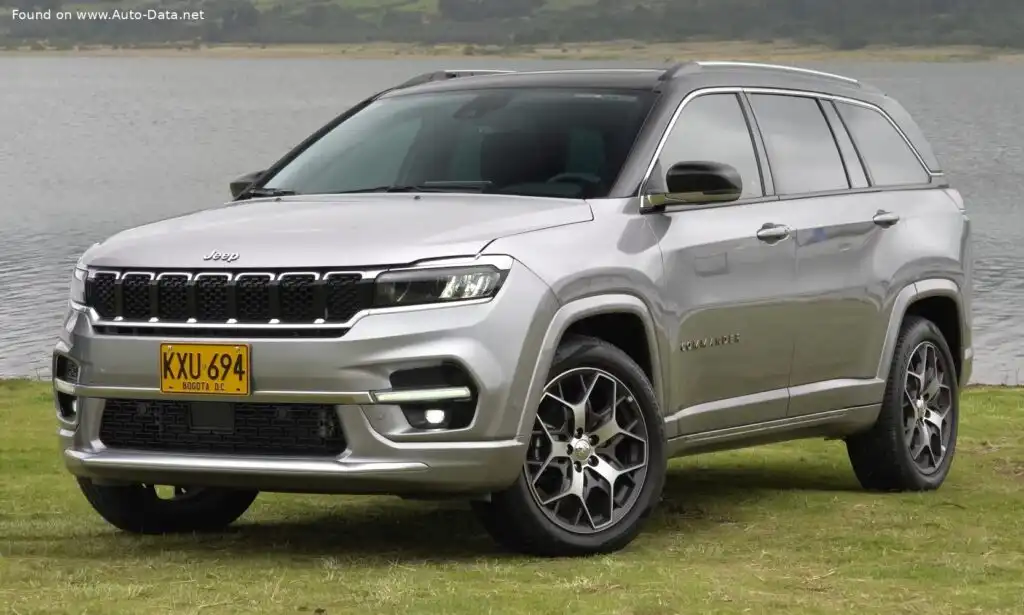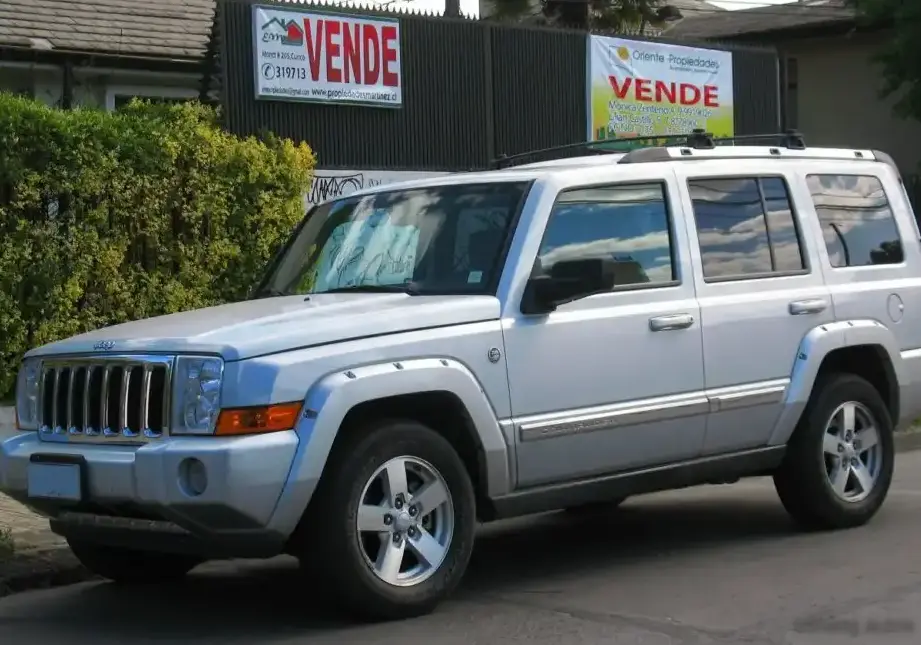
The Jeep Commander (XK) 3.7L V6 with an automatic transmission, produced from 2006 to 2010, represented the entry-level powertrain option for Jeep’s largest SUV at the time. Positioned below the 4.7L V8 and the later 5.7L Hemi V8 models, the 3.7L Commander aimed to provide a more affordable and fuel-efficient alternative within the Commander lineup, appealing to buyers prioritizing space and capability over outright performance. It was built on the Jeep WK platform, shared with the Grand Cherokee, and offered three-row seating for up to seven passengers. This variant was primarily sold in North America, where large SUVs remained popular, and offered a blend of Jeep’s off-road heritage with family-oriented practicality.
Technical Specifications
| Brand | Jeep |
| Model | Commander |
| Generation | Commander (XK) |
| Type (Engine) | 3.7 i V6 (213 Hp) Automatic |
| Start of production | 2006 |
| End of production | 2010 |
| Powertrain Architecture | Internal Combustion engine |
| Body type | SUV |
| Seats | 7 |
| Doors | 5 |
| Fuel consumption (urban) | 14.7 l/100 km (16 US mpg, 19.2 UK mpg) |
| Fuel consumption (extra urban) | 12.4 l/100 km (19 US mpg, 22.8 UK mpg) |
| Fuel Type | Petrol (Gasoline) |
| Maximum speed | 180 km/h (111.85 mph) |
| Weight-to-power ratio | 9.8 kg/Hp, 102.4 Hp/tonne |
| Weight-to-torque ratio | 6.5 kg/Nm, 153.4 Nm/tonne |
| Power | 213 Hp @ 5200 rpm |
| Power per litre | 57.6 Hp/l |
| Torque | 319 Nm @ 4000 rpm (235.28 lb.-ft. @ 4000 rpm) |
| Engine layout | Front, Longitudinal |
| Engine Model/Code | EKG |
| Engine displacement | 3701 cm3 (225.85 cu. in.) |
| Number of cylinders | 6 |
| Engine configuration | V-engine |
| Cylinder Bore | 93 mm (3.66 in.) |
| Piston Stroke | 90.8 mm (3.57 in.) |
| Compression ratio | 9.6:1 |
| Number of valves per cylinder | 2 |
| Fuel injection system | Multi-port manifold injection |
| Engine aspiration | Naturally aspirated engine |
| Valvetrain | OHC |
| Engine oil capacity | 4.7 l (4.97 US qt | 4.14 UK qt) |
| Coolant | 8.5 l (8.98 US qt | 7.48 UK qt) |
| Kerb Weight | 2080 kg (4585.62 lbs.) |
| Max. weight | 2812 kg (6199.4 lbs.) |
| Max load | 732 kg (1613.78 lbs.) |
| Trunk (boot) space – minimum | 170 l (6 cu. ft.) |
| Trunk (boot) space – maximum | 1950 l (68.86 cu. ft.) |
| Fuel tank capacity | 78 l (20.61 US gal | 17.16 UK gal) |
| Length | 4787 mm (188.46 in.) |
| Width | 1900 mm (74.8 in.) |
| Height | 1826 mm (71.89 in.) |
| Wheelbase | 2781 mm (109.49 in.) |
| Front track | 1590 mm (62.6 in.) |
| Rear (Back) track | 1590 mm (62.6 in.) |
| Drivetrain Architecture | The Internal combustion engine (ICE) drives the rear wheels of the vehicle. |
| Drive wheel | Rear wheel drive |
| Number of gears and type of gearbox | 5 gears, automatic transmission |
| Front suspension | Coil spring |
| Rear suspension | Coil spring |
| Front brakes | Ventilated discs |
| Rear brakes | Drum |
| Assisting systems | ABS (Anti-lock braking system) |
| Tires size | 245/65 R17 |
Powertrain & Engine Architecture
The heart of this Commander variant was the 3.7-liter EKG V6 engine. This engine, part of Chrysler’s “World Engine” family, was a 60-degree V6 featuring a cast iron block and aluminum cylinder heads. It utilized a multi-port fuel injection system and a single overhead camshaft (OHC) design with two valves per cylinder. The engine produced 213 horsepower at 5,200 rpm and 235 lb-ft of torque at 4,000 rpm. The automatic transmission paired with this engine was a 5-speed unit, designed to provide smooth shifts and adequate performance for everyday driving. While not a high-performance powertrain, the 3.7L V6 was known for its relative simplicity and reliability.
Driving Characteristics
The 3.7L Commander offered a comfortable, but not particularly sporty, driving experience. Acceleration was adequate for merging onto highways and passing slower traffic, but it lacked the punch of the larger V8 engines. The automatic transmission was tuned for smooth operation, prioritizing comfort over aggressive shifting. The gear ratios were optimized for cruising, resulting in a relaxed driving experience on the open road. However, when fully loaded with passengers and cargo, the 3.7L engine could feel strained, especially when climbing hills. Compared to the V8 models, the 3.7L Commander had noticeably slower acceleration and a lower towing capacity.
Equipment & Trim Levels
The 3.7L Commander typically came standard with features such as air conditioning, power windows and locks, a basic audio system, and cloth upholstery. Higher trim levels, such as the Limited, added features like leather upholstery, heated front seats, a premium audio system, and alloy wheels. Optional extras included a sunroof, navigation system, and rear-seat entertainment system. The interior design was functional and spacious, with a focus on practicality rather than luxury. The third-row seats were relatively easy to access and provided adequate space for children or smaller adults.
Chassis & Braking
The Commander’s chassis featured an independent front suspension with coil springs and a solid rear axle with coil springs. This setup provided a comfortable ride, but it wasn’t particularly refined in terms of handling. The front brakes were ventilated discs, while the rear brakes were drums. Anti-lock braking system (ABS) was standard. The Commander’s relatively heavy weight (around 4,586 lbs) contributed to its somewhat ponderous handling characteristics. The suspension was tuned to prioritize ride comfort over sporty handling, making it well-suited for long highway drives.
Market Reception & Comparison
The 3.7L Commander received mixed reviews from automotive critics. While it was praised for its spacious interior and relatively affordable price, it was often criticized for its lack of power and fuel economy. Compared to the V8 models, the 3.7L Commander offered significantly lower performance, but it also delivered better fuel economy – around 16 mpg city and 19 mpg highway. Reliability was generally considered average, with some reports of minor issues with the engine and transmission. The 3.7L Commander appealed to buyers who prioritized space and affordability over performance and were willing to sacrifice some driving enjoyment.
Legacy
Today, the Jeep Commander (XK) 3.7L V6 Automatic is a relatively affordable option in the used SUV market. While it may not offer the performance of the V8 models, it remains a capable and spacious vehicle for families. The 3.7L engine is generally considered reliable, but it’s important to check for signs of oil leaks or other maintenance issues. Parts availability is generally good, as the engine and transmission were used in a variety of Chrysler and Dodge vehicles. The Commander’s blend of Jeep’s off-road heritage and family-friendly practicality has made it a popular choice among used car buyers looking for a versatile and affordable SUV.