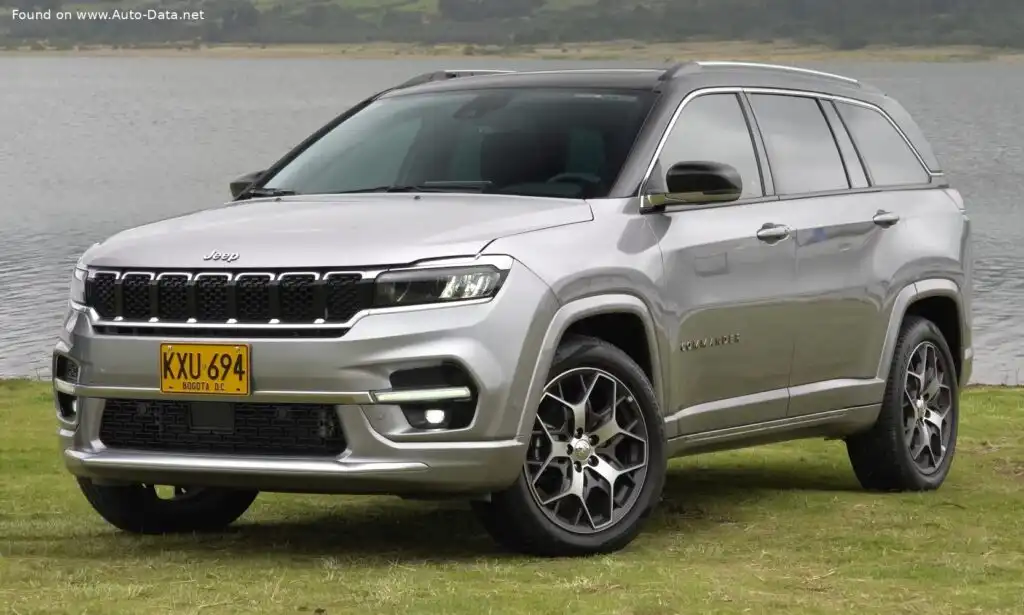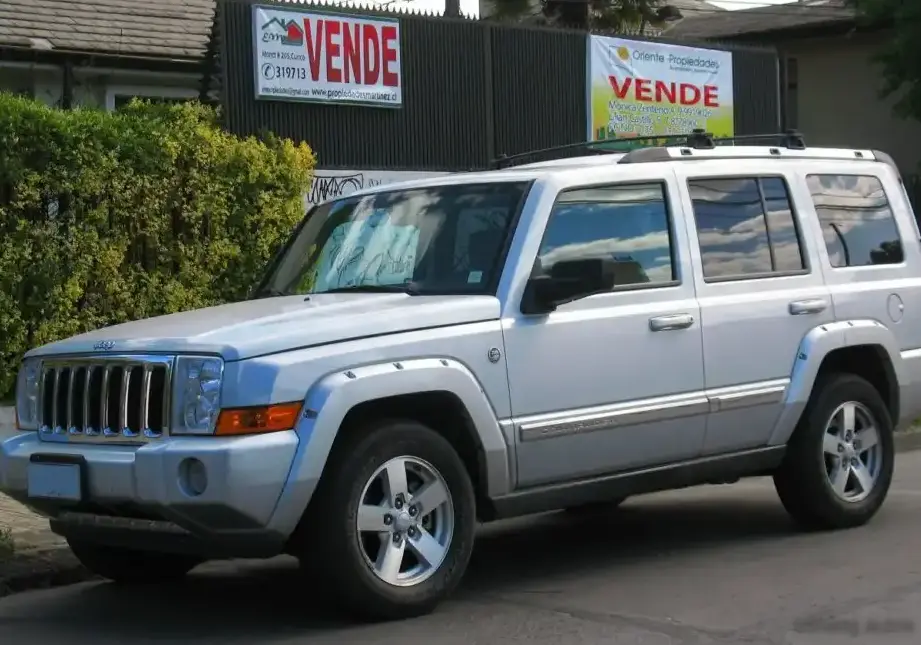
The Jeep Commander (XK), specifically the 4.7i V8 variant with a four-wheel drive (4WD) and automatic transmission, was a mid-size SUV produced by Jeep from 2006 to 2010. Positioned as a larger, three-row alternative to the Jeep Grand Cherokee, the Commander aimed to provide families with a more spacious and capable SUV option. This particular configuration, boasting 231 horsepower and 302 lb-ft of torque, represented a mid-range offering within the Commander lineup, slotting below the more powerful 5.7L Hemi V8 and above the base 3.7L V6 models. It was primarily sold in the North American market, capitalizing on the demand for large, body-on-frame SUVs.
Technical Specifications
| Brand | Jeep |
| Model | Commander |
| Generation | Commander (XK) |
| Type (Engine) | 4.7 i V8 (231 Hp) 4WD Automatic |
| Start of production | 2006 |
| End of production | 2010 |
| Powertrain Architecture | Internal Combustion engine |
| Body type | SUV |
| Seats | 7 |
| Doors | 5 |
| Fuel consumption (urban) | 19.2 l/100 km (12.3 US mpg) |
| Fuel consumption (extra urban) | 12.2 l/100 km (19.3 US mpg) |
| Fuel consumption (combined) | 14.8 l/100 km (15.9 US mpg) |
| Fuel Type | Petrol (Gasoline) |
| Acceleration 0 – 100 km/h | 9.5 sec |
| Acceleration 0 – 62 mph | 9.5 sec |
| Acceleration 0 – 60 mph | 9 sec |
| Maximum speed | 190 km/h (118.06 mph) |
| Weight-to-power ratio | 9.7 kg/Hp |
| Weight-to-torque ratio | 5.5 kg/Nm |
| Power | 231 Hp @ 4500 rpm |
| Torque | 410 Nm @ 3600 rpm (302.4 lb.-ft. @ 3600 rpm) |
| Engine layout | Front, Longitudinal |
| Engine Model/Code | EVA |
| Engine displacement | 4701 cm3 (286.87 cu. in.) |
| Number of cylinders | 8 |
| Engine configuration | V-engine |
| Cylinder Bore | 93 mm (3.66 in.) |
| Piston Stroke | 86.7 mm (3.41 in.) |
| Compression ratio | 9:1 |
| Number of valves per cylinder | 2 |
| Fuel injection system | Multi-port manifold injection |
| Engine aspiration | Naturally aspirated engine |
| Engine oil capacity | 5.7 l (6.02 US qt | 5.02 UK qt) |
| Coolant capacity | 13.7 l (14.48 US qt | 12.05 UK qt) |
| Kerb Weight | 2235 kg (4927.33 lbs.) |
| Max. weight | 2823 kg (6223.65 lbs.) |
| Max load | 588 kg (1296.32 lbs.) |
| Trunk (boot) space – minimum | 170 l (6 cu. ft.) |
| Trunk (boot) space – maximum | 1950 l (68.86 cu. ft.) |
| Fuel tank capacity | 78 l (20.61 US gal | 17.16 UK gal) |
| Length | 4787 mm (188.46 in.) |
| Width | 1900 mm (74.8 in.) |
| Height | 1826 mm (71.89 in.) |
| Wheelbase | 2781 mm (109.49 in.) |
| Front track | 1590 mm (62.6 in.) |
| Rear (Back) track | 1590 mm (62.6 in.) |
| Drive wheel | All wheel drive (4×4) |
| Number of gears and type of gearbox | 5 gears, automatic transmission |
| Front suspension | Coil spring |
| Rear suspension | Coil spring |
| Front brakes | Ventilated discs |
| Rear brakes | Drum |
| Assisting systems | ABS (Anti-lock braking system) |
| Tires size | 245/65 R17 |
Powertrain & Engine Architecture
The heart of the Commander 4.7i was the 4.7-liter (286.87 cubic inch) V8 engine, internally designated as the EVA engine code. This engine, a member of Chrysler’s third-generation small-block V8 family, featured a cast iron block with aluminum cylinder heads. It utilized a multi-port fuel injection system, delivering fuel directly into the intake ports, and a two-valve per cylinder configuration. The 4.7L V8 produced 231 horsepower at 4500 rpm and 302 lb-ft of torque at 3600 rpm. The engine’s longitudinal mounting and the standard four-wheel drive system contributed to its robust and capable nature. Paired with the engine was a five-speed automatic transmission, providing smooth shifts and adequate gear ratios for both on-road cruising and off-road capability. This transmission was chosen for its balance of efficiency and durability, catering to the SUV’s intended use.
Driving Characteristics
The 4.7L V8-powered Commander offered a comfortable, if not particularly sporty, driving experience. Acceleration from 0-60 mph took approximately 9 seconds, which was adequate for everyday driving but noticeably slower than the Commander equipped with the 5.7L Hemi V8. The automatic transmission, while smooth, sometimes felt hesitant during quick acceleration maneuvers. The four-wheel drive system provided enhanced traction in various conditions, making it a capable vehicle for inclement weather and light off-roading. The Commander’s substantial weight (approximately 4,927 lbs) was noticeable, particularly during cornering and braking. The gear ratios were tuned for torque delivery, prioritizing usability over outright performance.
Equipment & Trim Levels
The Commander 4.7i typically came standard with features such as air conditioning, power windows and locks, a CD player, and cloth upholstery. Higher trim levels, such as the Limited, added features like leather upholstery, heated front seats, a premium sound system, and automatic climate control. Optional extras included a navigation system, a sunroof, and rear-seat entertainment. The interior design was functional and spacious, with seating for up to seven passengers. The third-row seats were best suited for children or shorter adults. The overall interior ambiance was typical of Jeep – rugged and utilitarian, rather than luxurious.
Chassis & Braking
The Jeep Commander utilized a traditional body-on-frame construction, providing a robust and durable platform. The front suspension consisted of coil springs, while the rear suspension also employed coil springs. This setup offered a comfortable ride, but didn’t provide the refined handling of more modern unibody SUVs. The braking system featured ventilated discs at the front and drum brakes at the rear. Anti-lock brakes (ABS) were standard. The Commander’s relatively heavy weight necessitated a capable braking system, and while adequate, it didn’t inspire confidence during hard braking scenarios. Stabilizer bars were included to reduce body roll during cornering.
Market Reception & Comparison
The Jeep Commander 4.7i received mixed reviews from automotive critics. While praised for its spacious interior and off-road capability, it was often criticized for its fuel economy (averaging around 16 mpg combined) and somewhat dated interior design. Compared to the 3.7L V6 Commander, the 4.7L offered a significant performance boost, but at the cost of increased fuel consumption. The 5.7L Hemi V8 Commander provided even more power, but came with a higher price tag. The Commander competed with other mid-size SUVs such as the Ford Explorer, Chevrolet TrailBlazer, and Toyota 4Runner.
Legacy
The Jeep Commander, while not a runaway sales success, remains a popular choice among used car buyers seeking a spacious and capable SUV. The 4.7L V8 engine, while known for its reliability, can be prone to oil leaks and requires regular maintenance. The automatic transmission is generally durable, but proper fluid changes are essential. Today, Commanders are often found with relatively high mileage, and finding a well-maintained example is key. The Commander’s body-on-frame construction and four-wheel drive system continue to appeal to those who prioritize durability and off-road capability over fuel efficiency and refined handling.