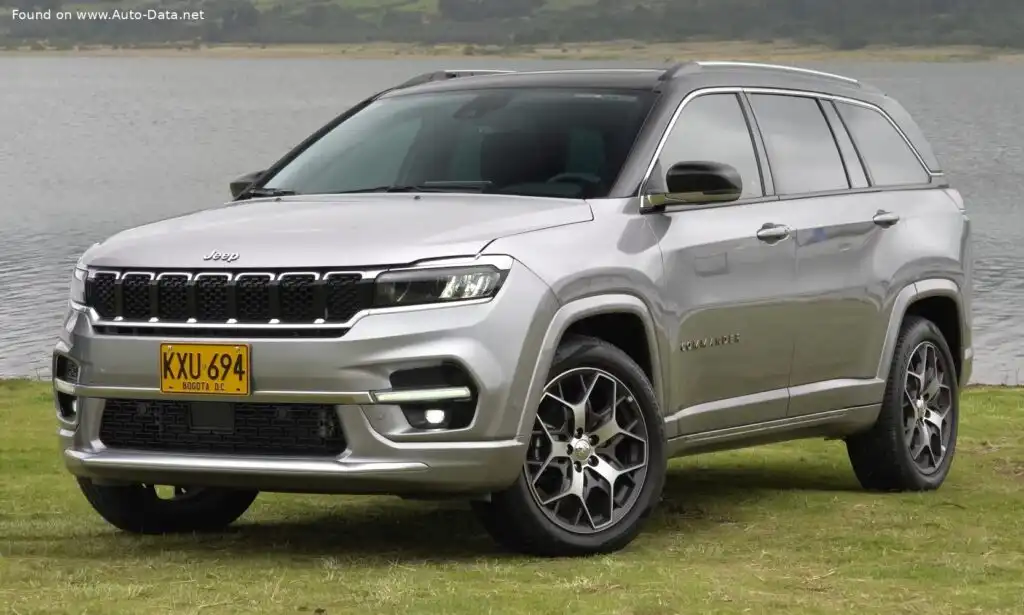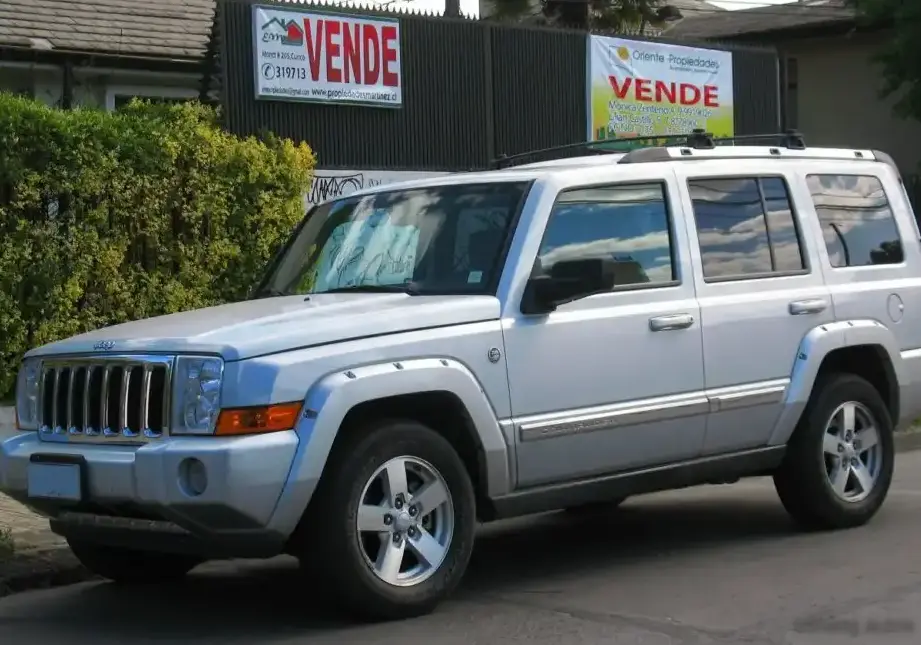
The Jeep Commander (XK) 5.7i V8 Limited 4WD Automatic, produced from 2006 to 2010, represented the largest SUV offering from the American manufacturer during that period. Positioned as a premium, three-row SUV, the Commander aimed to blend Jeep’s off-road capability with the comfort and space expected of a family vehicle. This particular variant, equipped with the 5.7-liter HEMI V8 engine and a five-speed automatic transmission, occupied the top end of the Commander lineup, offering substantial power and towing capacity. It was built on the Jeep WK platform, sharing many components with the Jeep Grand Cherokee of the same generation.
Technical Specifications
| Brand | Jeep |
| Model | Commander |
| Generation | Commander (XK) |
| Type | 5.7 i V8 Limited (334 Hp) 4WD Automatic |
| Start of production | 2006 |
| End of production | 2010 |
| Powertrain Architecture | Internal Combustion engine |
| Body type | SUV |
| Seats | 7 |
| Doors | 5 |
| Fuel consumption (urban) | 18.1 l/100 km (13 US mpg, 15.6 UK mpg, 5.5 km/l) |
| Fuel consumption (extra urban) | 13.1 l/100 km (18 US mpg, 21.6 UK mpg, 7.6 km/l) |
| Fuel Type | Petrol (Gasoline) |
| Maximum speed | 180 km/h (111.85 mph) |
| Weight-to-power ratio | 7 kg/Hp, 142.4 Hp/tonne |
| Weight-to-torque ratio | 4.6 kg/Nm, 217.1 Nm/tonne |
| Power | 334 Hp @ 5000 rpm |
| Power per litre | 59.1 Hp/l |
| Torque | 509 Nm @ 4000 rpm (375.42 lb.-ft. @ 4000 rpm) |
| Engine layout | Front, Longitudinal |
| Engine Model/Code | EZB |
| Engine displacement | 5654 cm3 (345.03 cu. in.) |
| Number of cylinders | 8 |
| Engine configuration | V-engine |
| Cylinder Bore | 99.5 mm (3.92 in.) |
| Piston Stroke | 90.9 mm (3.58 in.) |
| Compression ratio | 9.6:1 |
| Number of valves per cylinder | 2 |
| Fuel injection system | Multi-port manifold injection |
| Engine aspiration | Naturally aspirated engine |
| Engine oil capacity | 6.6 l (6.97 US qt | 5.81 UK qt) |
| Coolant capacity | 13.7 l (14.48 US qt | 12.05 UK qt) |
| Kerb Weight | 2345 kg (5169.84 lbs.) |
| Max. weight | 2905 kg (6404.43 lbs.) |
| Max load | 560 kg (1234.59 lbs.) |
| Trunk (boot) space – minimum | 170 l (6 cu. ft.) |
| Trunk (boot) space – maximum | 1950 l (68.86 cu. ft.) |
| Fuel tank capacity | 78 l (20.61 US gal | 17.16 UK gal) |
| Length | 4787 mm (188.46 in.) |
| Width | 1900 mm (74.8 in.) |
| Height | 1826 mm (71.89 in.) |
| Wheelbase | 2781 mm (109.49 in.) |
| Front track | 1590 mm (62.6 in.) |
| Rear (Back) track | 1590 mm (62.6 in.) |
| Drive wheel | All wheel drive (4×4) |
| Number of gears and type of gearbox | 5 gears, automatic transmission |
| Front suspension | Coil spring |
| Rear suspension | Coil spring |
| Front brakes | Ventilated discs |
| Rear brakes | Drum |
| Assisting systems | ABS (Anti-lock braking system) |
| Tires size | 245/65 R17 |
Powertrain & Engine Architecture
The heart of the Commander 5.7 Limited was the 5.7-liter (345 cubic inch) HEMI V8 engine, designated the EZB code. This engine featured a cast iron block with aluminum cylinder heads, and utilized Chrysler’s Multi-Displacement System (MDS). MDS allowed the engine to deactivate four cylinders under light load conditions, improving fuel economy. The engine employed multi-port fuel injection and a two-valve per cylinder configuration. The 5.7L HEMI produced 334 horsepower at 5000 rpm and 375 lb-ft of torque at 4000 rpm. This power was channeled through a five-speed automatic transmission (545RFE) known for its smooth shifting and durability. The transmission was electronically controlled and featured a tow/haul mode for improved performance when towing trailers.
Driving Characteristics
The 5.7L V8 provided ample power for the relatively heavy Commander. Acceleration was brisk, and the SUV felt capable both on the highway and during everyday driving. The automatic transmission was well-matched to the engine, providing smooth gear changes. However, the Commander’s size and weight were noticeable, particularly in cornering. The 4WD system offered good traction in various conditions, making it a capable vehicle for inclement weather or light off-road use. Compared to the 3.7L V6 Commander, the 5.7L offered a significant performance upgrade, while the 3.0L CRD diesel (available in Europe) provided better fuel economy but less outright power. The gear ratios were optimized for towing, with a lower first gear for quick starts and a higher overdrive gear for efficient highway cruising.
Equipment & Trim Levels
The Limited trim level, as the top-of-the-line offering, came standard with a generous array of features. These included leather upholstery, heated front seats, a premium sound system, automatic climate control, and power-adjustable pedals. Optional extras included a rear entertainment system, navigation system, sunroof, and upgraded wheels. The interior design was generally considered comfortable and well-appointed, although some materials felt less premium than those found in competing SUVs from European manufacturers. The third-row seats were relatively accessible, making the Commander a practical choice for families.
Chassis & Braking
The Commander utilized a body-on-frame construction, providing a robust and durable chassis. The front suspension consisted of an independent coil spring setup, while the rear featured a solid axle with coil springs. This configuration provided a comfortable ride, but also contributed to some body roll during cornering. The braking system featured ventilated discs at the front and drum brakes at the rear. Anti-lock brakes (ABS) were standard. The Commander’s weight necessitated a strong braking system, and while adequate, it wasn’t particularly sporty in feel. Stabilizer bars were fitted front and rear to help reduce body roll.
Market Reception & Comparison
The Jeep Commander received mixed reviews from automotive critics. While praised for its spacious interior, powerful engine, and off-road capability, it was often criticized for its fuel economy, handling, and somewhat dated interior design. Compared to rivals like the Chevrolet Traverse and Ford Explorer, the Commander offered a more rugged image and superior off-road performance, but lacked the refinement and fuel efficiency of some competitors. Fuel economy was a significant drawback, with the 5.7L V8 averaging around 13-18 mpg in real-world driving. Reliability was generally considered average, with some reports of issues with the MDS system and electrical components.
Legacy
The Jeep Commander, despite its relatively short production run, remains a popular choice among used car buyers seeking a spacious, capable SUV. The 5.7L V8 powertrain, while not the most fuel-efficient, is generally considered reliable when properly maintained. The MDS system, while intended to improve fuel economy, can be prone to issues if not serviced regularly. Today, Commanders are often found with higher mileage, and careful inspection of the engine, transmission, and 4WD system is crucial before purchase. The Commander’s blend of American ruggedness and family-friendly practicality continues to appeal to a niche market, ensuring its place in Jeep’s history.