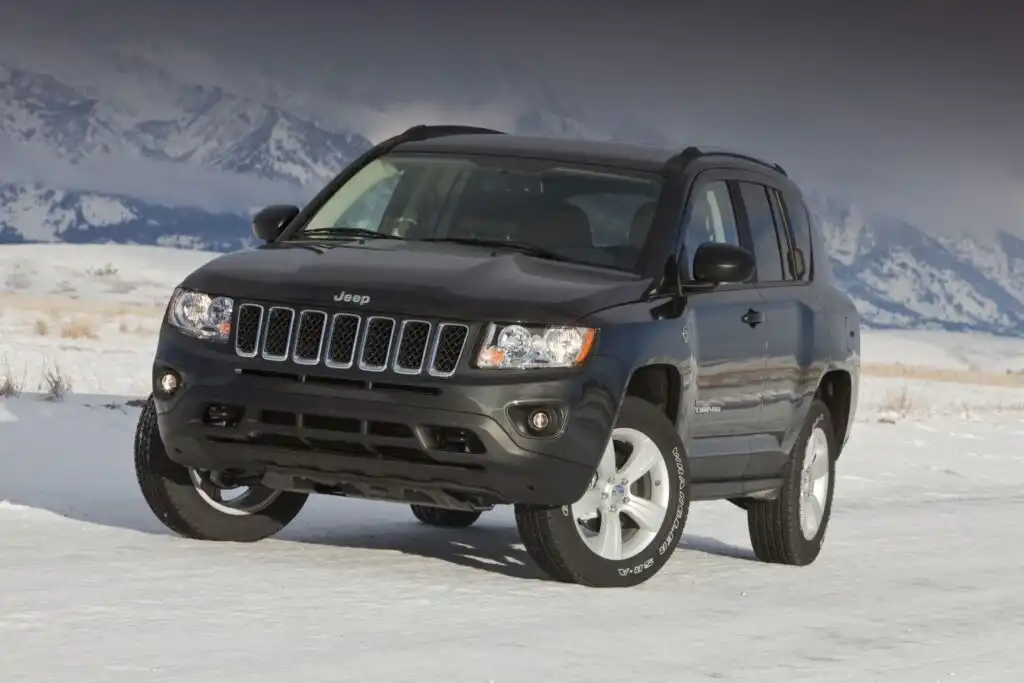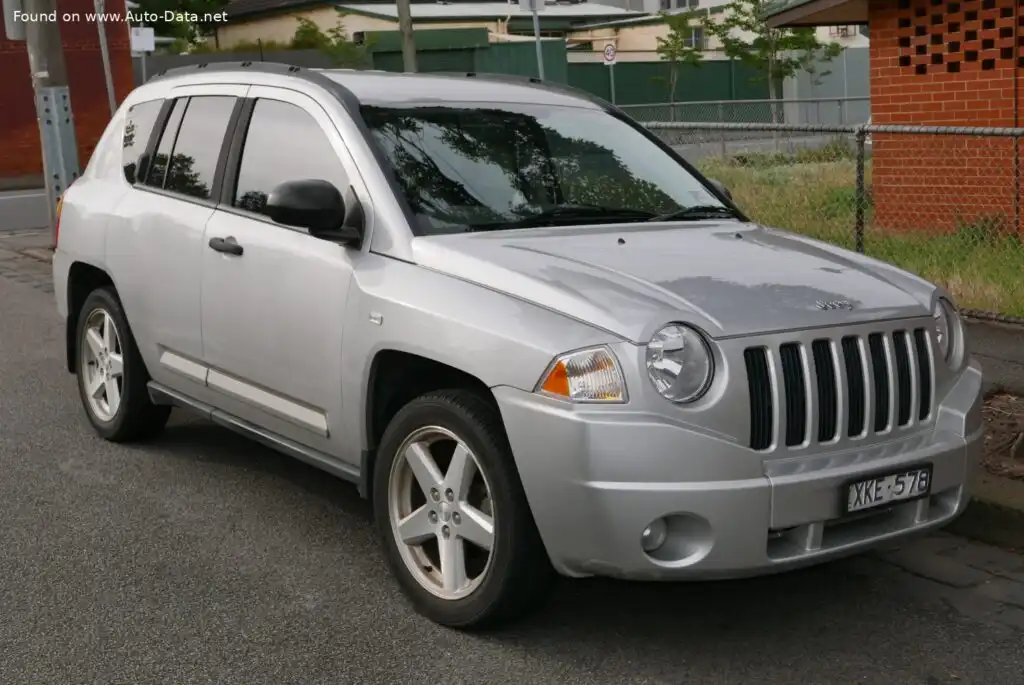
The Jeep Compass (MK) 2.4, produced from 2006 to 2010, represented Jeep’s entry into the compact crossover SUV segment. Positioned as a more affordable and fuel-efficient alternative to the larger Cherokee, the Compass aimed to attract a younger demographic and expand Jeep’s market reach. This particular variant, equipped with the 2.4-liter four-cylinder engine producing 170 horsepower and a four-wheel-drive system, was a significant offering within the Compass lineup, balancing capability with everyday usability. It was built on the DaimlerChrysler/Mitsubishi GS platform, shared with the Dodge Caliber.
Technical Specifications
| Brand | Jeep |
| Model | Compass |
| Generation | Compass I (MK) |
| Type (Engine) | 2.4 (170 Hp) 4×4 |
| Start of production | 2006 |
| End of production | 2010 |
| Powertrain Architecture | Internal Combustion engine |
| Body type | SUV, Crossover |
| Seats | 5 |
| Doors | 4 |
| Fuel consumption (urban) | 10.5 l/100 km (22.4 US mpg) |
| Fuel consumption (extra urban) | 7.6 l/100 km (30.9 US mpg) |
| Fuel consumption (combined) | 8.7 l/100 km (27 US mpg) |
| Fuel Type | Petrol (Gasoline) |
| Acceleration 0 – 100 km/h | 10.7 sec |
| Acceleration 0 – 62 mph | 10.7 sec |
| Acceleration 0 – 60 mph | 10.2 sec |
| Maximum speed | 183 km/h (113.71 mph) |
| Emission standard | Euro 4 |
| Weight-to-power ratio | 9 kg/Hp |
| Weight-to-torque ratio | 7 kg/Nm |
| Power | 170 Hp @ 6000 rpm |
| Torque | 220 Nm @ 4500 rpm (162.26 lb.-ft. @ 4500 rpm) |
| Engine layout | Front, Transverse |
| Engine Model/Code | ED3 |
| Engine displacement | 2359 cm3 (143.96 cu. in.) |
| Number of cylinders | 4 |
| Engine configuration | Inline |
| Cylinder Bore | 88 mm (3.46 in.) |
| Piston Stroke | 97 mm (3.82 in.) |
| Compression ratio | 11:1 |
| Number of valves per cylinder | 4 |
| Fuel injection system | Multi-port manifold injection |
| Engine aspiration | Naturally aspirated |
| Engine oil capacity | 4.26 l (4.5 US qt | 3.75 UK qt) |
| Coolant capacity | 6.8 l (7.19 US qt | 5.98 UK qt) |
| Kerb Weight | 1535 kg (3384.1 lbs.) |
| Max. weight | 1980 kg (4365.15 lbs.) |
| Max load | 445 kg (981.06 lbs.) |
| Trunk (boot) space – minimum | 334 l (11.8 cu. ft.) |
| Trunk (boot) space – maximum | 1277 l (45.1 cu. ft.) |
| Fuel tank capacity | 51 l (13.47 US gal | 11.22 UK gal) |
| Max. roof load | 68 kg (149.91 lbs.) |
| Length | 4405 mm (173.43 in.) |
| Width | 1810 mm (71.26 in.) |
| Height | 1630 mm (64.17 in.) |
| Wheelbase | 2635 mm (103.74 in.) |
| Front track | 1520 mm (59.84 in.) |
| Rear track | 1520 mm (59.84 in.) |
| Drive wheel | All wheel drive (4×4) |
| Number of gears | 5 |
| Gearbox type | Manual transmission |
| Front suspension | Independent, McPherson with coil spring and anti-roll bar |
| Rear suspension | Independent coil spring |
| Front brakes | Ventilated discs |
| Rear brakes | Disc |
| Assisting systems | ABS (Anti-lock braking system) |
| Steering type | Steering rack and pinion |
| Power steering | Hydraulic |
| Tires size | 215/60 R17 H |
| Wheel rims size | 6.5 J x 17 |
Powertrain & Engine Architecture
The 2.4-liter inline-four engine, designated the ED3, was a key component of the Compass 4×4. This engine utilized a multi-port fuel injection system and a single overhead camshaft (SOHC) valvetrain with four valves per cylinder. It was a relatively simple and robust design, prioritizing reliability and affordability over outright performance. The engine produced 170 horsepower at 6000 rpm and 220 Nm (162 lb-ft) of torque at 4500 rpm. The five-speed manual transmission was the standard offering for this variant, providing a direct connection between the engine and the wheels. The 4×4 system was a selectable system, allowing the driver to switch between two-wheel drive for fuel efficiency and four-wheel drive for enhanced traction in inclement weather or off-road conditions.
Driving Characteristics
The Compass 2.4 4×4 with a manual transmission offered adequate, but not exhilarating, performance. Acceleration from 0 to 60 mph took around 10.2 seconds, making it competitive with other compact crossovers of the time. The five-speed manual transmission provided reasonable control, but the gear ratios were spaced to prioritize fuel economy rather than sporty acceleration. The 4×4 system added weight, slightly impacting acceleration and fuel economy compared to the front-wheel-drive models. Handling was generally predictable, but the Compass wasn’t designed for aggressive cornering. The suspension was tuned for comfort, absorbing bumps and providing a relatively smooth ride. Compared to the higher-output 2.0-liter turbo engine (available in some markets), the 2.4-liter felt less responsive, but offered a more linear power delivery.
Equipment & Trim Levels
The 2.4 4×4 trim typically included standard features such as air conditioning, power windows and locks, a basic audio system, and anti-lock brakes (ABS). Higher trim levels, such as the Limited, added features like alloy wheels, upgraded audio systems, a sunroof, and leather upholstery. Optional extras included a navigation system, premium sound system, and various appearance packages. Interior materials were generally durable but not luxurious, reflecting the Compass’s positioning as an affordable crossover. The dashboard layout was functional and straightforward, with easy-to-use controls.
Chassis & Braking
The Compass utilized an independent McPherson strut suspension in the front and an independent coil spring suspension in the rear. This setup provided a comfortable ride and reasonable handling characteristics. The front brakes were ventilated discs, while the rear brakes were solid discs. ABS was standard, providing enhanced braking control in emergency situations. The steering was hydraulic power-assisted rack and pinion, offering a decent level of feedback. The 215/60 R17 tires provided adequate grip for most driving conditions.
Market Reception & Comparison
The Jeep Compass received mixed reviews from automotive critics. While its affordability and available four-wheel drive were praised, its interior quality, driving dynamics, and overall refinement were often criticized. Compared to competitors like the Honda CR-V and Toyota RAV4, the Compass was generally considered to be less refined and less fuel-efficient. However, it offered a unique combination of Jeep’s brand image and four-wheel-drive capability at a lower price point. Fuel economy was rated at around 27 mpg combined, which was average for the segment at the time. Reliability was generally considered to be average, with some reports of issues with the transmission and electrical systems.
Legacy
The first-generation Jeep Compass, including the 2.4 4×4 variant, laid the groundwork for Jeep’s expansion into the compact crossover market. While it wasn’t a critical darling, it proved to be a popular choice for budget-conscious buyers seeking a vehicle with Jeep’s off-road heritage. Today, used examples of the Compass 2.4 4×4 are relatively affordable and can be found in reasonable condition. The ED3 engine is known for its durability, but regular maintenance is crucial to ensure long-term reliability. The Compass’s successor, introduced in 2017, addressed many of the criticisms leveled at the first generation, offering a more refined and capable vehicle.