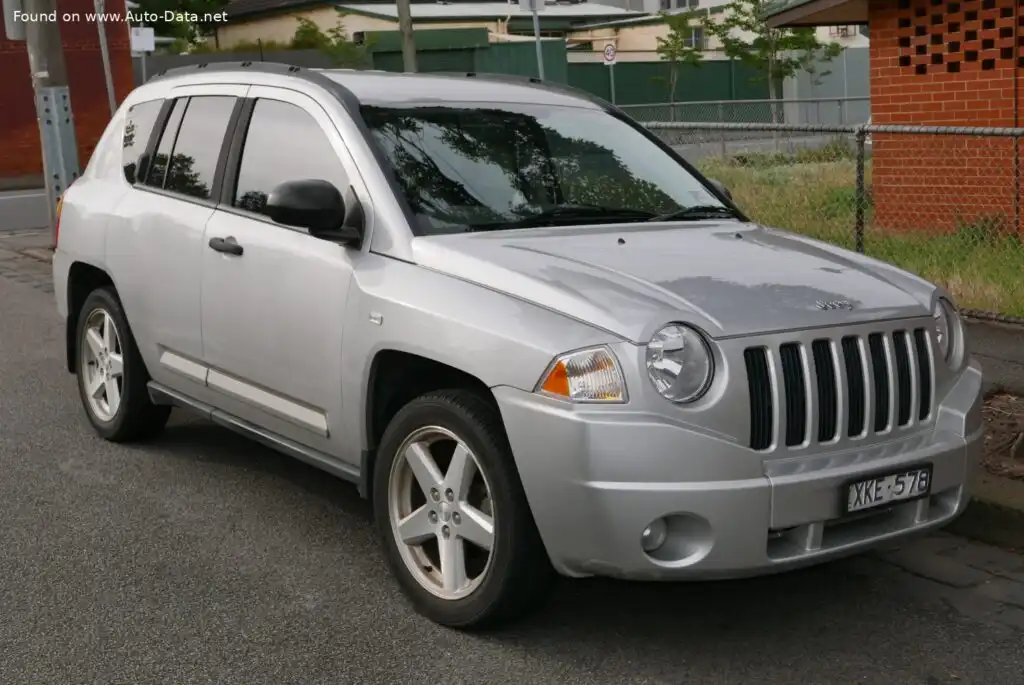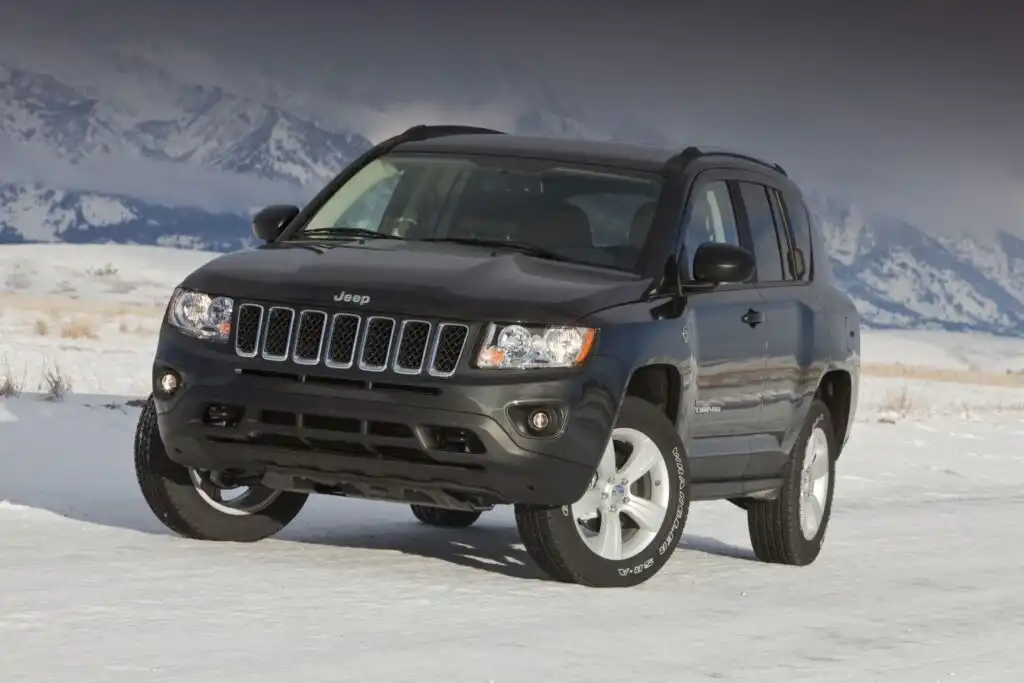
The Jeep Compass I (MK), specifically the facelifted version introduced in 2011, represented Jeep’s entry into the increasingly popular compact crossover SUV segment. Produced from 2013 to 2016, the 2.0-liter (158 horsepower) variant paired with a six-speed automatic transmission occupied a middle ground within the Compass lineup, offering a balance between affordability and acceptable performance. This model aimed to broaden the Compass’s appeal beyond the more rugged, off-road focused trims, targeting buyers prioritizing fuel efficiency and ease of driving. It was primarily sold in North America and select international markets.
Technical Specifications
| Brand | Jeep |
| Model | Compass |
| Generation | Compass I (MK, facelift 2011) |
| Type (Engine) | 2.0 (158 Hp) Automatic |
| Start of production | 2013 |
| End of production | 2016 |
| Powertrain Architecture | Internal Combustion engine |
| Body type | SUV, Crossover |
| Seats | 5 |
| Doors | 5 |
| Fuel consumption (economy) – urban (EPA) | 11.2 l/100 km (21 US mpg, 25.2 UK mpg, 8.9 km/l) |
| Fuel consumption (economy) – extra urban (EPA) | 8.4 l/100 km (28 US mpg, 33.6 UK mpg, 11.9 km/l) |
| Fuel consumption (economy) – combined (EPA) | 9.8 l/100 km (24 US mpg, 28.8 UK mpg, 10.2 km/l) |
| Fuel Type | Petrol (Gasoline) |
| Weight-to-power ratio | 9.1 kg/Hp, 109.9 Hp/tonne |
| Weight-to-torque ratio | 7.5 kg/Nm, 132.8 Nm/tonne |
| Power | 158 Hp @ 6400 rpm |
| Power per litre | 79.1 Hp/l |
| Torque | 191 Nm @ 5000 rpm (140.87 lb.-ft. @ 5000 rpm) |
| Maximum engine speed | 6750 rpm |
| Engine layout | Front, Transverse |
| Engine Model/Code | World / ECN |
| Engine displacement | 1998 cm3 (121.93 cu. in.) |
| Number of cylinders | 4 |
| Engine configuration | Inline |
| Cylinder Bore | 86 mm (3.39 in.) |
| Piston Stroke | 86 mm (3.39 in.) |
| Compression ratio | 10.5:1 |
| Number of valves per cylinder | 4 |
| Fuel injection system | Multi-port manifold injection |
| Engine aspiration | Naturally aspirated engine |
| Valvetrain | DOHC, Dual VVT |
| Engine oil capacity | 4.26 l (4.5 US qt | 3.75 UK qt) |
| Coolant | 6.8 l (7.19 US qt | 5.98 UK qt) |
| Kerb Weight | 1438-1444 kg (3170.25 – 3183.48 lbs.) |
| Trunk (boot) space – minimum | 643 l (22.71 cu. ft.) |
| Trunk (boot) space – maximum | 1519 l (53.64 cu. ft.) |
| Fuel tank capacity | 51.5 l (13.6 US gal | 11.33 UK gal) |
| Length | 4448 mm (175.12 in.) |
| Width | 1812 mm (71.34 in.) |
| Height | 1651 mm (65 in.) |
| Wheelbase | 2635 mm (103.74 in.) |
| Front track | 1520 mm (59.84 in.) |
| Rear (Back) track | 1520 mm (59.84 in.) |
| Front overhang | 916 mm (36.06 in.) |
| Rear overhang | 897 mm (35.31 in.) |
| Ride height (ground clearance) | 206 mm (8.11 in.) |
| Minimum turning circle (turning diameter) | 10.8-11.3 m (35.43 – 37.07 ft.) |
| Approach angle | 19.5° |
| Departure angle | 28.5° |
| Ramp-over (brakeover) angle | 20.6° |
| Drivetrain Architecture | The Internal combustion engine (ICE) drives the front wheels of the vehicle. |
| Drive wheel | Front wheel drive |
| Number of gears and type of gearbox | 6 gears, automatic transmission |
| Front suspension | Independent, type McPherson with coil spring and anti-roll bar |
| Rear suspension | Independent multi-link spring suspension with stabilizer |
| Front brakes | Ventilated discs, 294×26 mm |
| Rear brakes | Drum, 229×35 mm |
| Assisting systems | ABS (Anti-lock braking system) |
| Steering type | Steering rack and pinion |
| Power steering | Hydraulic Steering |
| Tires size | 205/70 R16; 215/60 R17; 225/60 R17; 215/55 R18 |
| Wheel rims size | 6.5J x 17; 7J x 18 |
INTRODUCTION
The 2.0-liter, 158-horsepower Jeep Compass, when equipped with the six-speed automatic transmission, was a significant offering in the facelifted (2011-2016) first-generation Compass range. Positioned as a mainstream option, it aimed to attract buyers who desired the Jeep brand’s image and a comfortable ride without the higher cost or performance focus of the more powerful engine options. Built on the 2HX platform shared with the Dodge Caliber, the Compass sought to provide a more car-like driving experience than traditional Jeep models, emphasizing on-road manners and fuel economy.
Powertrain & Engine Architecture
The heart of this Compass variant is the 2.0-liter inline-four cylinder engine, internally designated as the “World Engine” by Chrysler. This engine, also known as the ECN series, featured a cast iron block and aluminum cylinder head. It employed multi-port fuel injection and a dual variable valve timing (DVVT) system to optimize performance and efficiency. The DVVT system adjusted the timing of both intake and exhaust valves, improving responsiveness and reducing emissions. The six-speed automatic transmission, sourced from Hyundai, was chosen for its smooth shifting and contribution to improved fuel economy compared to the available five-speed manual. This transmission featured a conventional torque converter and electronically controlled shifts.
Driving Characteristics
The 2.0-liter automatic Compass delivered adequate, but not exhilarating, performance. With 158 horsepower and 191 Nm (140.87 lb-ft) of torque, acceleration was best described as leisurely. The automatic transmission, while smooth, prioritized fuel efficiency over aggressive downshifts. The gear ratios were tuned for comfortable cruising, and the transmission often hesitated during quick acceleration maneuvers. Compared to the available 2.4-liter engine, the 2.0-liter felt noticeably less powerful, especially when fully loaded or climbing hills. However, the automatic transmission made it a more user-friendly option for daily commuting and city driving than the manual transmission.
Equipment & Trim Levels
The 2.0-liter automatic Compass typically came standard with features like air conditioning, power windows and locks, a basic audio system with a CD player and auxiliary input, and steel wheels with wheel covers. Higher trim levels, such as the Latitude and Limited, added features like alloy wheels, upgraded audio systems with touchscreen displays, Bluetooth connectivity, and premium interior materials. Optional extras included a sunroof, leather upholstery, and a navigation system. The interior design was functional but not particularly luxurious, with a focus on durability and ease of use.
Chassis & Braking
The Compass utilized an independent McPherson strut suspension in the front and an independent multi-link suspension in the rear, providing a reasonably comfortable ride. The suspension was tuned for on-road comfort rather than off-road capability. Front brakes were ventilated discs, while the rear brakes were drum brakes. Anti-lock braking system (ABS) was standard. The steering was hydraulic power-assisted rack and pinion, offering decent feel and responsiveness. The relatively lightweight construction of the Compass helped to mitigate the effects of the modest engine output.
Market Reception & Comparison
Critics generally viewed the 2.0-liter automatic Compass as a competent, but unremarkable, offering in the compact crossover segment. Its fuel economy was considered acceptable, but not class-leading. Reliability was generally average, with some reports of minor issues with the transmission and electrical systems. Compared to the 2.4-liter engine, the 2.0-liter offered a lower price point but sacrificed performance. The 2.0-liter was often seen as a good choice for budget-conscious buyers who prioritized fuel efficiency and a comfortable ride over sporty handling or strong acceleration.
Legacy
The 2.0-liter engine and six-speed automatic transmission combination in the Jeep Compass has proven to be reasonably durable, with many examples still on the road today. While not known for exceptional longevity, the powertrain is generally considered reliable with proper maintenance. On the used car market, these Compass models are often available at attractive prices, making them a potentially affordable option for buyers seeking a compact SUV with the Jeep brand’s reputation. However, potential buyers should be aware of the engine’s modest power output and the potential for minor issues with the transmission and electrical systems.